

Step by step guide to Shipping from China with Sourcing Agent
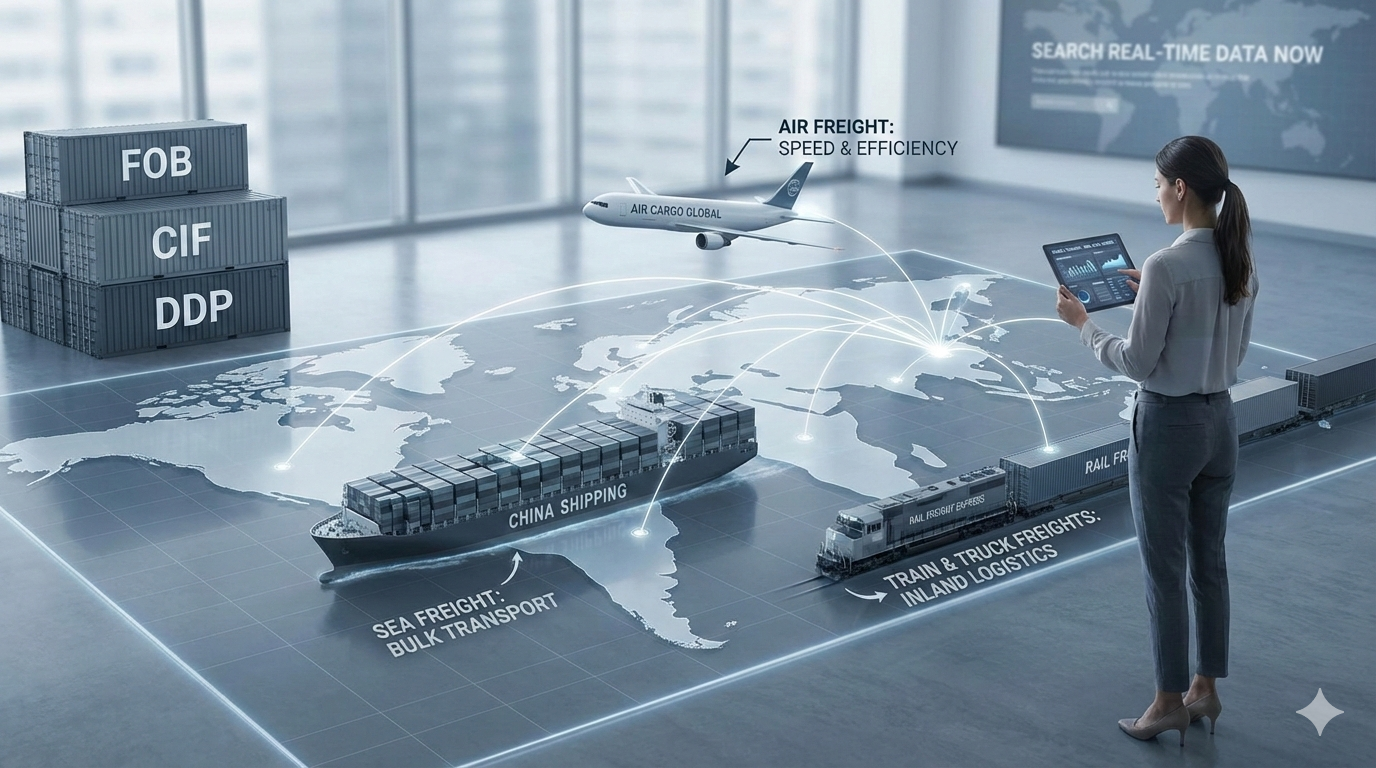
Introduction: How Shipping From China Really Works
Shipping from China may seem simple at first glance you place an order, and the goods arrive, right? In reality, the process involves multiple moving parts: suppliers, freight forwarders, customs, and local delivery. For newcomers, this can be overwhelming hidden costs, shipping delays, and miscommunication are common pitfalls.
A sourcing agent, manage real shipments daily, coordinating suppliers, freight partners, and customs clearance. This hands-on experience ensures clients avoid unexpected delays, extra charges, or compliance errors. Understanding the shipping ecosystem, selecting the right transport method, and calculating total landed costs are critical for smooth imports. By the end of this guide, you’ll have the tools and knowledge to make informed decisions, save money, and ensure timely deliveries.
The Building Blocks of International Shipping
Before diving into methods, some core logistics terms every importer must know:
| Term | Meaning |
| Freight Forwarding | Planning and managing the physical transport of cargo from origin to destination. |
| Freight Forwarder | A company that organizes shipping on behalf of the shipper, handling documentation and carriers. |
| Customs Broker | Specialist who processes import/export clearance and duties at customs checkpoints. |
| Consignee | The receiver of the goods at the destination address. |
| HS Code | Harmonized System code: a global classification for tariffs and import duties. |
Shipping Methods
When choosing how to get goods out of China, you’re balancing speed, cost, reliability, and volume. Below is an expanded look at the major shipping methods with cost ranges, transit times, and decision criteria based on current market data.
Sea Freight from China — Best for Bulk & Cost-Conscious Imports
Sea freight remains the most cost-efficient way to ship large quantities — especially for wholesale, inventory replenishment, machinery, furniture, and heavy goods.
Cost Overview (2026 Estimates)
| Container Type | Typical Cost | Best Use Case |
| 20ft FCL | ~$1,800 – $3,800 | Small-to-medium bulk shipments |
| 40ft FCL | ~$3,700 – $5,500 | Large volumes, palletized cargo |
| LCL (per CBM) | ~$80 – $150 | Shared container for smaller loads |
📌 Note: Door-to-door sea costs (including drayage and customs) typically add extra, often ~$150–$350 per CBM, depending on destination.
Transit Time
- China → USA (West Coast): ~18–25 days
- China → USA (East Coast): ~28–35 days
- China → Europe: ~28–38 days
- China → Australia/Asia: ~7–25 days
(All estimates are port-to-port sea transit time.)
Pros
- Lowest cost per unit for large shipments
- Economies of scale with full containers
- Predictable schedule when planned early
Cons
- Longest transit times (20–45+ days)
- Port congestion or seasonal peaks can delay departure/arrival
Air Freight from China — Fast but Pricey
Air freight is ideal when time matters more than cost — especially for high-value or time-sensitive goods like electronics, fashion samples, or components.
Cost Ranges
| Weight Tier | Estimated Rate (USD/kg) | Notes |
| 45–100 kg | ~$4.0 – $6.0 | Standard commercial cargo |
| 100–300 kg | ~$3.8 – $5.5 | Better rates with higher volume |
| 300 kg+ | ~$3.5 – $5.0 | Most competitive per kg |
Express air (e.g., DHL/FedEx) may cost $6.50–$9+/kg but includes door-to-door handling.
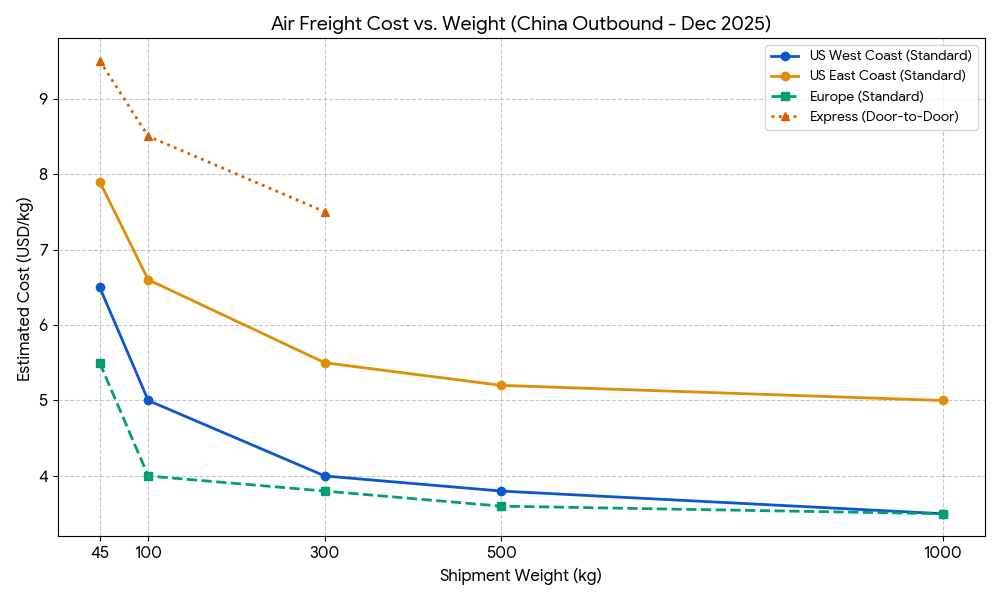
Cost vs. Weight graph
Transit Time
3–7 days (often shorter if flying direct or with priority handling).
Real-Time Data Snapshot (Dec 2025)
The following rates reflect current market conditions, which are higher than the typical averages due to Q4 demand surges.
| Weight Tier | Est. Rate (China → US) | Est. Rate (China → EU) | Notes |
|---|---|---|---|
| 45–100 kg | $6.50 – $7.90 / kg | $5.00 – $6.00 / kg | Pricey; use Courier (DHL/FedEx) if <45kg. |
| 100–300 kg | $5.00 – $6.60 / kg | $4.00 – $5.00 / kg | “Sweet spot” for air freight. |
| 300 kg+ | $4.00 – $5.50 / kg | $3.50 – $4.50 / kg | Most competitive spot rates available. |
| Express | $8.50 – $10.00+ / kg | $8.00 – $9.50 / kg | Includes door-to-door customs & delivery. |
Shows how per kg drops as shipment size rises
Pros
- Fastest international transport
- Reliable schedules, tracking, and security
- Great for urgent or high-value cargo
Cons
- Substantially more expensive than sea freight
- Not economical for heavy, low-value goods
Express & ePackage Shipping — For Samples & Small Parcels
When you have small parcels or samples to send, courier services like DHL, FedEx, UPS, and postal ePacket are the go-to choice. These are essentially air freight with delivery included.
Typical Pricing
- Express courier: $8 – $12+ per kg (door-to-door)
- EPackage / postal: last-mile may be cheaper depending on destination
Transit Time
Generally 2–7 days door to door.
Best Use Cases
- Product samples
- Urgent deliveries
- Small online orders
Pros: Fast delivery with tracking, customs clearance assistance
Cons: Highest per-kg cost, not suitable for large shipments
| Feature | Express Courier | Standard Air Freight |
|---|---|---|
| Typical Pricing | $8 – $12+ per kg (Door-to-Door) | $5.00 – $7.90 per kg (Airport-to-Airport) |
| Transit Time | 2 – 7 days (Door-to-Door) | 3 – 7 days (Airport-to-Airport) |
| Service Type | Door-to-Door (inc. customs handling) | Airport-to-Airport (requires separate haulage) |
| Pros | Fastest, reliable tracking, customs assistance. | More economical for larger shipments. |
| Cons | Highest cost per kg. | Slower, requires more logistical management. |
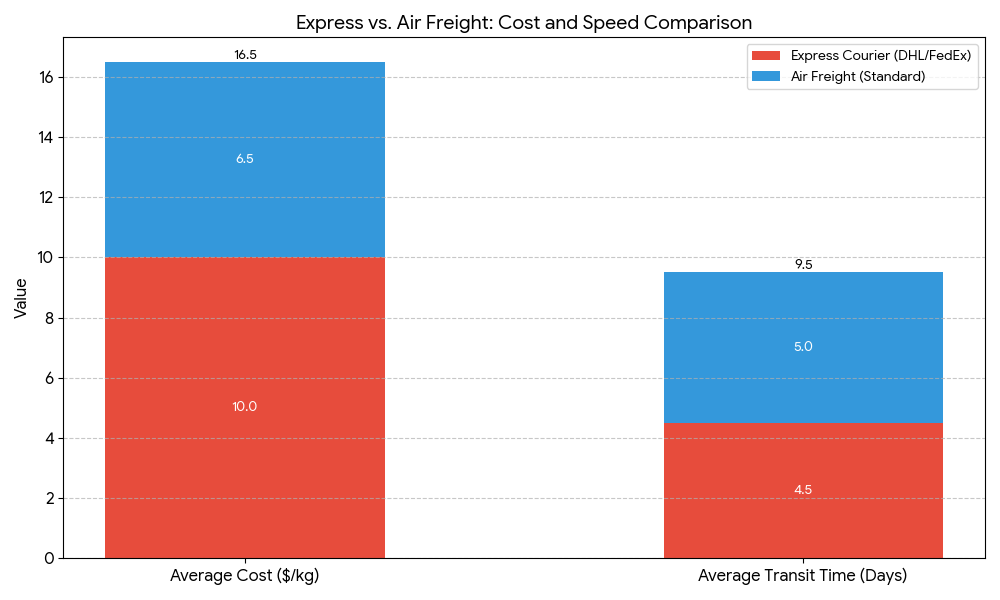
🚚 Stacked bar comparing express vs air freight cost and speed
Railway Freight from China — The Middle Ground
Rail freight is becoming increasingly popular, especially in shipping from China → Europe routes — bridging the gap between sea and air in cost and speed.
Cost Examples to Europe (2025 Estimates)
| Mode | Cost | Transit Time |
| Rail 40ft FCL | ~$2,200 – $3,200 | ~18–25 days |
| Rail LCL | ~$100 – $150 per CBM | ~18–25 days |
Pros
- Faster than sea freight
- More affordable than air freight for many exports
- Predictable overland routes
Cons
- Limited to certain corridors (e.g., China–Europe)
- Still slower than air for urgent needs
How to Choose the Right Method (Quick Decision Guide)
Here’s a simple decision checklist you can use or turn into a visual:
| Criteria | Best Shipping Method |
| Highest speed | Air freight / Express |
| Lowest cost per unit | Sea freight (FCL/LCL) |
| Balanced cost & speed | Rail freight |
| Small parcels/samples | Express/ePacket |
Real-World Market Dynamics (2025 Trends)
- Ocean freight rates have softened compared with the highs seen during tariff rushes, with 40ft containers often around $2,500–$4,000 on major China-USA trade routes.
- Air freight remains volatile — prices fluctuate with cargo capacity and global demand.
- Rail freight is proving robust for Europe-bound cargo, attracting importers who want faster transit than sea without air costs.
Note: These are averages and will vary by season, port congestion, and geopolitical conditions (e.g., tariff or trade shifts).
Shipping Costs Explained (What Suppliers Don’t Tell You)
When importers get a “freight quote,” they often see only the headline rate — the base cost to move cargo from origin to destination. But that number rarely reflects the total landed cost, and this hidden portion is where many businesses lose money or get surprised. Understanding all cost components helps you budget accurately and avoid last-minute payment shocks.
Base Freight / Carrier Rate
This is the basic transport charge quoted by ocean carriers, air carriers, or express services.
- For sea freight, carriers quote based on the container size (e.g., 20ft, 40ft) or volume (LCL).
- For air freight, pricing is usually per kg based on actual or dimensional weight.
- For express courier (DHL/FedEx), rates are per kg with delivery included.
Dimensional weight pricing means a large but light package might cost more than expected.
Formula (common for courier/air):
DIM Weight = (Length × Width × Height) / 5000
Carriers charge the greater of actual vs. dimensional weight.
These base rates do not include extra costs that often add up to 10–30% or more on top of the quoted number.
Origin & Export Fees
Even before the cargo leaves China, several charges may apply:
- Export documentation fees: paperwork preparation by forwarder or agent
- Factory-to-port trucking: hauling goods from supplier to port terminal
- Origin Terminal Handling Charges (OTHC): port fees for loading and yard handling
- Container loading / palletizing fees (especially for LCL)
These can add $25–$150+ per shipment or more depending on volume and carrier.
👉 Tip: Suppliers often exclude these from EXW or FOB quotes unless you explicitly request them.
Fuel & Bunker Surcharges
Almost every mode of transport adds a fuel surcharge, a variable fee to offset changing energy prices. In recent data for 2025:
- Air & express: ~28–32% of base freight
- Ground/residential: ~18–22%
- International air freight: ~28–30%
These are updated weekly and can add significantly to the final cost.
Example:
If your base freight is $1,000 and the fuel surcharge is 30%, you pay an extra $300 — making your real freight cost $1,300.
These can pop up after the initial quote because they’re adjusted monthly or based on global markets.
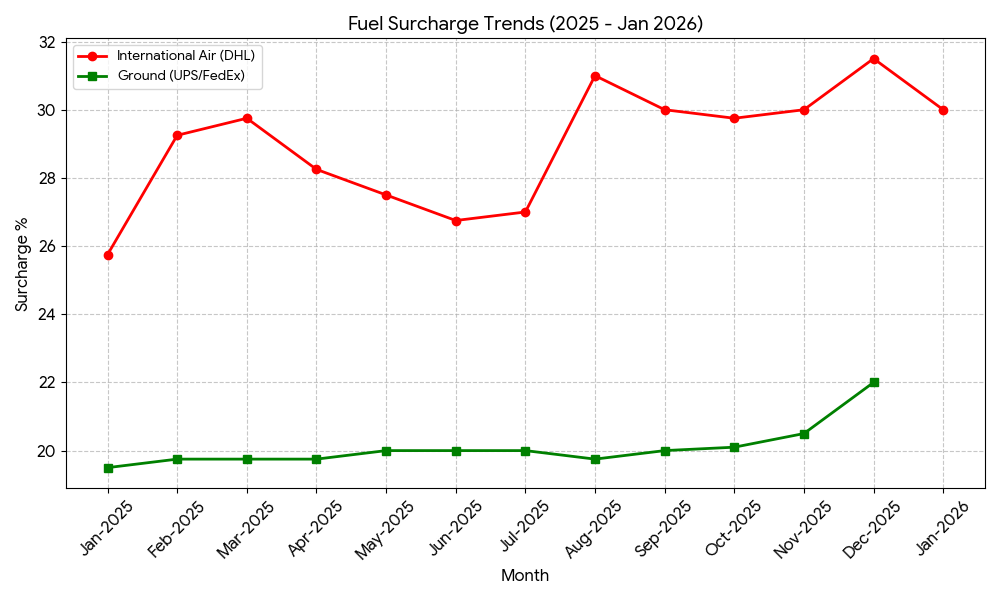
Month-by-month surcharge trend chart for 2025–2026.
Customs, Duties & Brokerage Fees
International shipments especially shipping from China must clear customs at the destination. Costs here include:
- Import duties (0–40%+ of the product’s CIF value)
- VAT or GST (often 5–20%+) depending on import rules in destination
- Customs clearance fees ($25–$100+ per declaration) based on HS code and declared value
- Brokerage fees ($30–$100 or a % of value) charged for submitting import documents and liaising with customs authorities
Customs clearance isn’t included in most basic freight quotes — especially if you’re quoting FOB, CIF, or CNF terms. These are import-side costs that you pay as the importer unless you use DDP (Delivered Duty Paid).
Real-world example: Typical brokerage fees with DHL/FedEx may range from $20–$60 per shipment, depending on the carrier and country.
Port & Terminal Handling Charges
At both origin and destination ports, carriers and terminals assess various fees:
- Terminal Handling Charge (THC)
- Port congestion fees
- Storage or demurrage (if containers aren’t picked up on time)
- Unstuffing / stripping fees (for LCL consolidations)
These can be $150–$500+ per container (sea), and smaller but cumulative on multi-piece shipments. These are often billed separately and can be a significant sum especially during peak seasons or delays.
Inland Delivery & Handling (Destination Side)
If you’re moving goods from the arrival port to your warehouse, inland transportation costs include:
- Drayage / trucking fees (container haulage)
- Rail transport, if used
- Residential delivery surcharges
- Liftgate, inside delivery, or weekend delivery fees (for special services)often $3–$7 per package in 2025.
These can vary widely sometimes more than the freight itself.
In many cases, inland delivery is one of the biggest hurdles for importers who only budget for ocean/air freight.
Insurance & Optional Services
Insurance isn’t mandatory, but it’s highly recommended for ocean and air freight, especially for high-value shipments.
- Typical cargo insurance rates: 0.3%–0.6% of declared cargo value (optional but useful).
Other optional services that can add cost:
- Packaging upgrades
- Palletization
- Temperature control
- Return handling
- Address correction fees
Total Landed Cost: What It Really Means
The total landed cost is the sum of everything above — not just the carrier’s base freight rate. For a complete budget, consider:
Real-World Shipping Cost Formula (Landed Cost)
To help readers visualize final pricing, here’s a simple formula you can use or show as a visual:
Landed Cost = Base Freight
+ Fuel Surcharges
+ Origin Fees
+ Destination/Port Fees
+ Inland Delivery Charges
+ Customs Duties
+ Taxes (VAT/GST)
+ Brokerage Fees
+ Insurance
Without accounting for these, your “cheap quote” may not be cheap once all charges are invoiced.
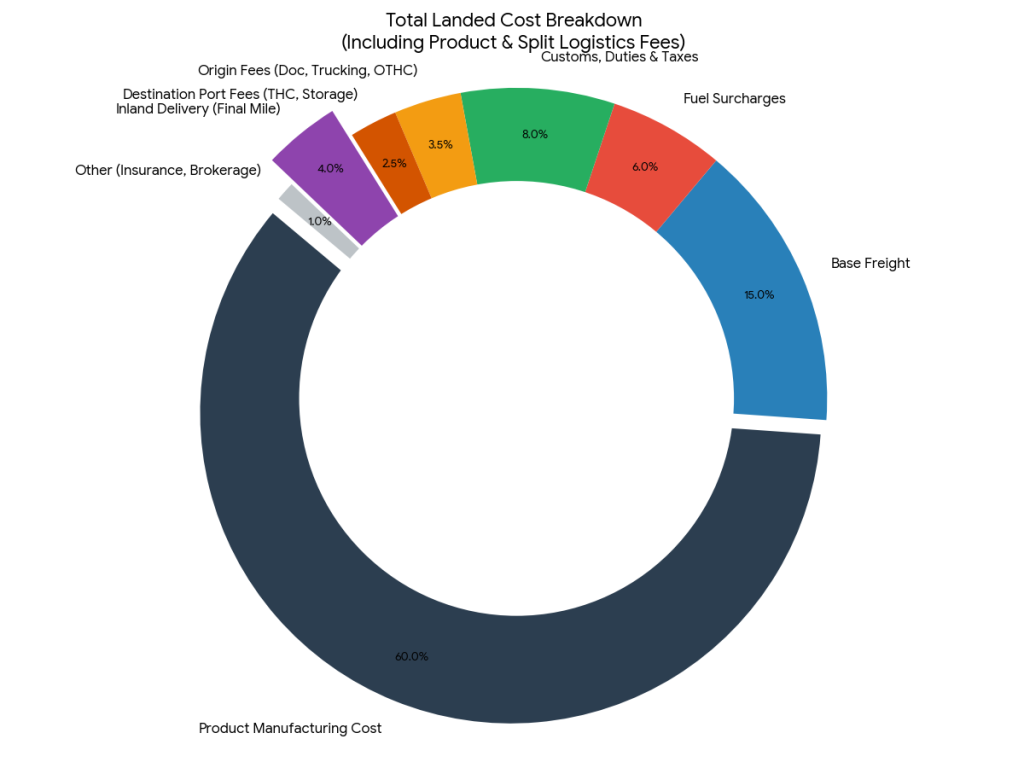
Common Hidden Fees Importers Miss
| Hidden Fee | Typical Impact | Why It Happens |
| Peak season surcharge | +10–30% | Carrier demand spikes in holidays |
| Remote area delivery | +$3–$8 | Extra cost to reach rural zones |
| Oversize fees | +$7–$500 | Non-standard package shapes/weights |
| HS code handling fee | $20–$50 | Misclassification penalties |
Pro Tip: When a supplier says “Shipping is $500,” they are usually quoting CIF (Cost, Insurance, Freight). This means the $500 only covers the journey to the port. You will still have to pay the Destination Fees, Customs, and Inland Delivery yourself, which could easily double that $500.
Shipping From China to the USA: Process & Costs (2025–2026 Case Study)
Shipping a shipment from China to the USA involves several key stages — origin handling, international transit, destination clearance, and last-mile delivery. Each has associated costs and timelines, and understanding them helps avoid surprises.
Typical Freight Costs (2025–2026 Benchmarks)
Sea Freight from China (Most Cost-Effective for Bulk)
| Shipment Type | Cost | Typical Transit Time |
| 20ft FCL | ~$2,500–$4,500 per container | ~20–35 days |
| 40ft FCL | ~$3,200–$6,000 per container | ~25–40 days |
| LCL (per CBM) | ~$50–$200 per CBM | ~25–40 days |
These figures are port-to-port freight rates and don’t include inland delivery, duties, or handling fees. Ocean freight remains the most economical choice for high-volume shipments.
👉 Insight: West Coast routes (e.g., Shanghai → Los Angeles) tend to be cheaper and faster than East Coast (e.g., Shanghai → New York) due to shorter distances and avoiding Panama Canal fees.
Air Freight from China (Fast but Pricier)
Air cargo from China to the U.S. is priced per kilogram and is ideal for urgent or high-value goods:
| Shipping Type | Price per kg | Transit Time |
|---|---|---|
| Standard Air Freight | ~$4–$8 / kg | ~5–10 days |
| Express (DHL/UPS/FedEx) | ~$6–$12+ / kg* | ~2–7 days |
(Express often includes customs processing and delivery.)
💡 Real-world tip: Businesses often pay higher than base rates during peak seasons or capacity shortages when cargo space is tight.
Breakdown of Typical Cost Components
Importing cargo isn’t just about the headline freight cost. A realistic “total cost envelope” in shipping from China → USA shipment includes:
Origin & Export Charges
- Trucking from factory to port: ~$50–$150
- Export customs clearance: ~$30–$75
- Warehousing and labeling (if needed)
International Freight
- Sea or Air freight (as outlined above)
- Fuel surcharges (variable monthly)
Destination/Import Costs
- Customs duties & taxes (based on HS code and CIF value)
- Terminal Handling Charges (THC)
- Import brokerage fees
Inland Delivery
- U.S. trucking or rail from port to warehouse or fulfillment center
- Additional fees (liftgate, residential delivery, storage)
Together, these can add 15–30% or more to a simple freight quote if not planned upfront.
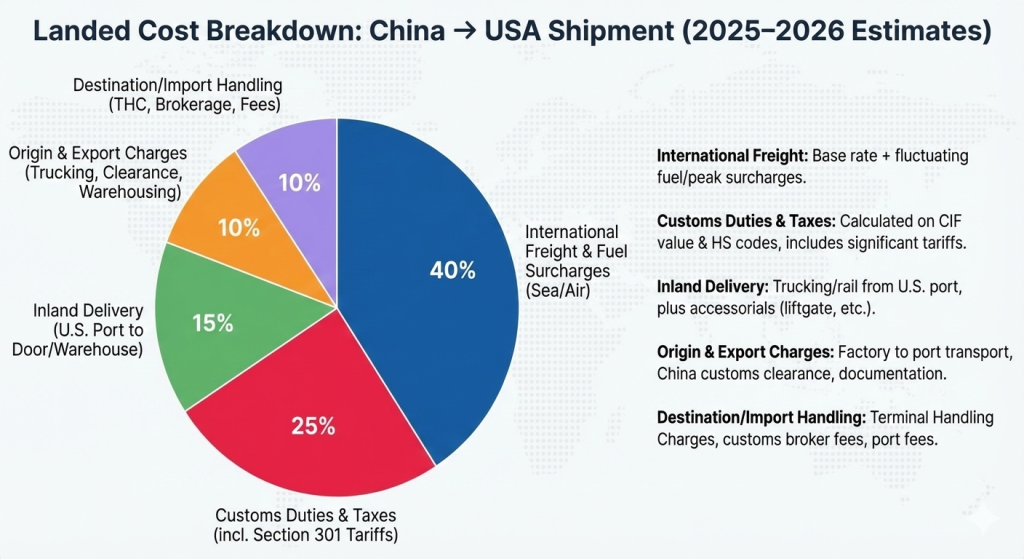
Landed cost pie chart showing freight, duties, handling, inland delivery, and surcharges to grasp “hidden cost” weight.
Real Transit Times by Mode
Understanding how long each shipping method typically takes is vital for planning inventory and sales cycles:
| Method | Typical Transit Time |
| Sea Freight | ~20–40+ days (port-to-port) |
| Air Freight | ~5–10 days |
| Express | ~2–7 days (door-to-door) |
| Combined (Air + Truck) | ~8–14 days |
Transit windows shift with season, port congestion, and customs processing. For instance, shipping from China to the U.S. East Coast is generally slower than to the West Coast.
Step-by-Step Process: Shipping from China to US
Here’s what an importer typically goes through:
Supplier Pull & Export Prep
- Goods are packed and labeled per regulations.
- Export clearance done at the Chinese port.
Freight Booking & Transit
- Sea/air space booked weeks ahead, especially in peak times.
- Freight cost determined by seasonal demand and capacity.
Arrival & Customs in the U.S.
- Duties/taxes calculated based on HS codes.
- Customs may inspect; proper documentation is critical.
Inland Delivery
- Door-to-door delivery handled by U.S. carriers or 3PL partners.
- Additional services like palletizing or liftgate may be added.
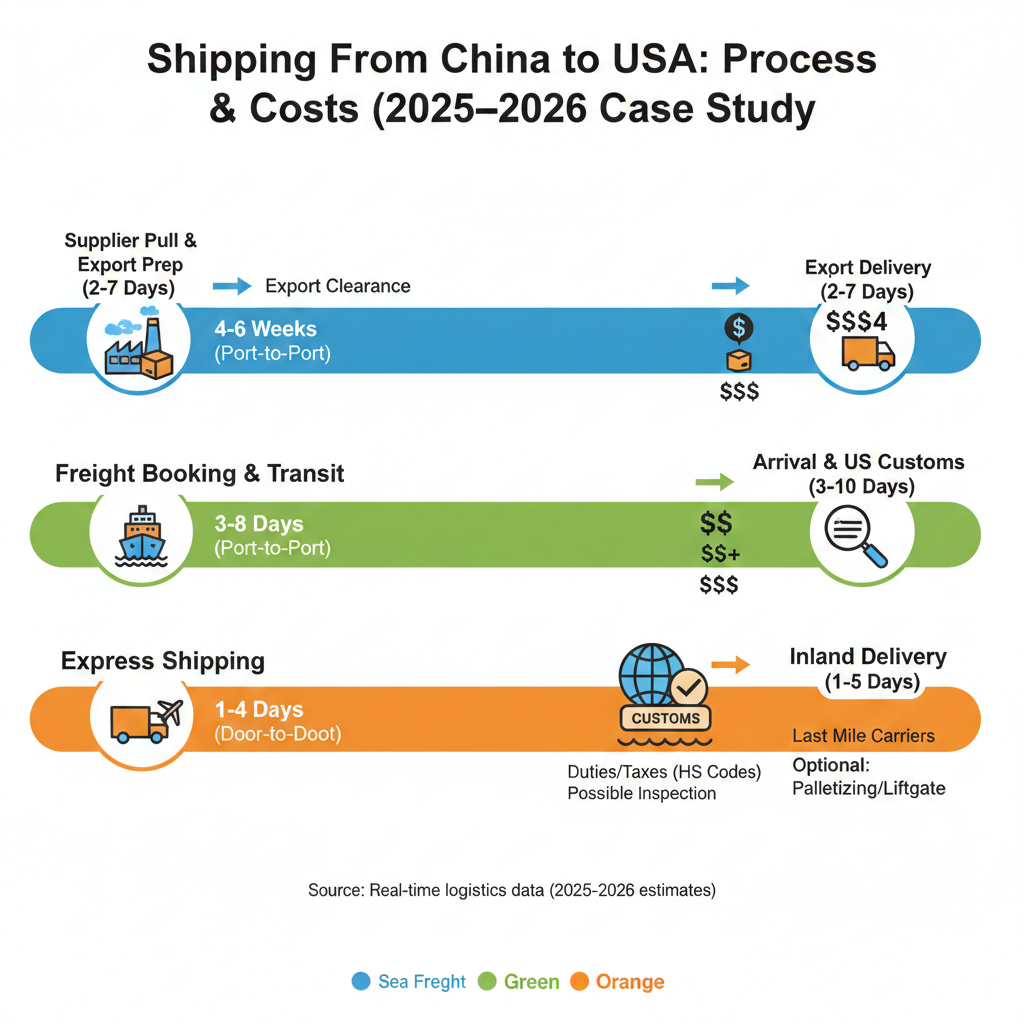
Timeline graphic showing expectations from factory pickup to final delivery (sea vs air vs express) in shipping from China to US.
Practical Example Scenario
Let’s say you’re importing electronics in a 40ft FCL container from Shanghai to Los Angeles in 2025:
- Ocean freight (FCL 40ft): ~$3,800–$5,000
- Export/Origin charges: ~$200–$400
- Import duties & THC: ~$300–$600
- Inland delivery (LA → warehouse): ~$300–$600
- Total landed cost: ~$4,600–$6,600+ (before insurance)
This example illustrates how freight cost is only a portion of the overall budget — duties, handling, and delivery matter too.
Case Study Insights for 2026 Planning
- Ocean freight rates fluctuate monthly; budget flexibility for cargo rates is crucial.
- Air freight remains volatile due to capacity and fuel pricing, but it’s unbeatable for urgent restocks.
- Customs policies (like formal entry rules) can affect processing times and cost variability for any valued shipments.
Incoterms Explained (EXW, FOB, CIF, DDP, DAP)
Incoterms (International Commercial Terms) are global trade standards that define who bears what responsibility, cost, and risk across the shipment journey — from the supplier’s factory to your doorstep or port. These terms are essential when shipping from China (or any export market) because they dictate logistics control, cost allocation, and risk exposure in your import contracts.
EXW — Ex Works (Buyer Takes Full Responsibility)
EXW means the seller’s job is done once the goods are made available at their premises. From that point on, everything else including transport, export clearance, freight, insurance, customs, duties is your responsibility.
✔ Best for: Buyers with strong logistics support or sourcing agents
⚠ Risk level: Very high — you control everything but also bear all risk and coordination effort
📍 When to use:
- You have a freight forwarder or China agent handling export and transport.
- You want high control over carrier choice and cost optimization.
FOB — Free On Board (Common for Sea Freight)
FOB means the supplier will deliver the goods to port, complete export procedures, and load them onto the vessel. Once they’re on board, ownership, cost, and risk transfer to you.
✔ Best for: Sea freight shipments (FCL/LCL)
✔ Good balance of risk and control
Buyer pays:
- Sea freight
- Insurance
- Destination clearance & delivery
Supplier pays:
- Domestic trucking to port
- Export customs
- Loading on vessel
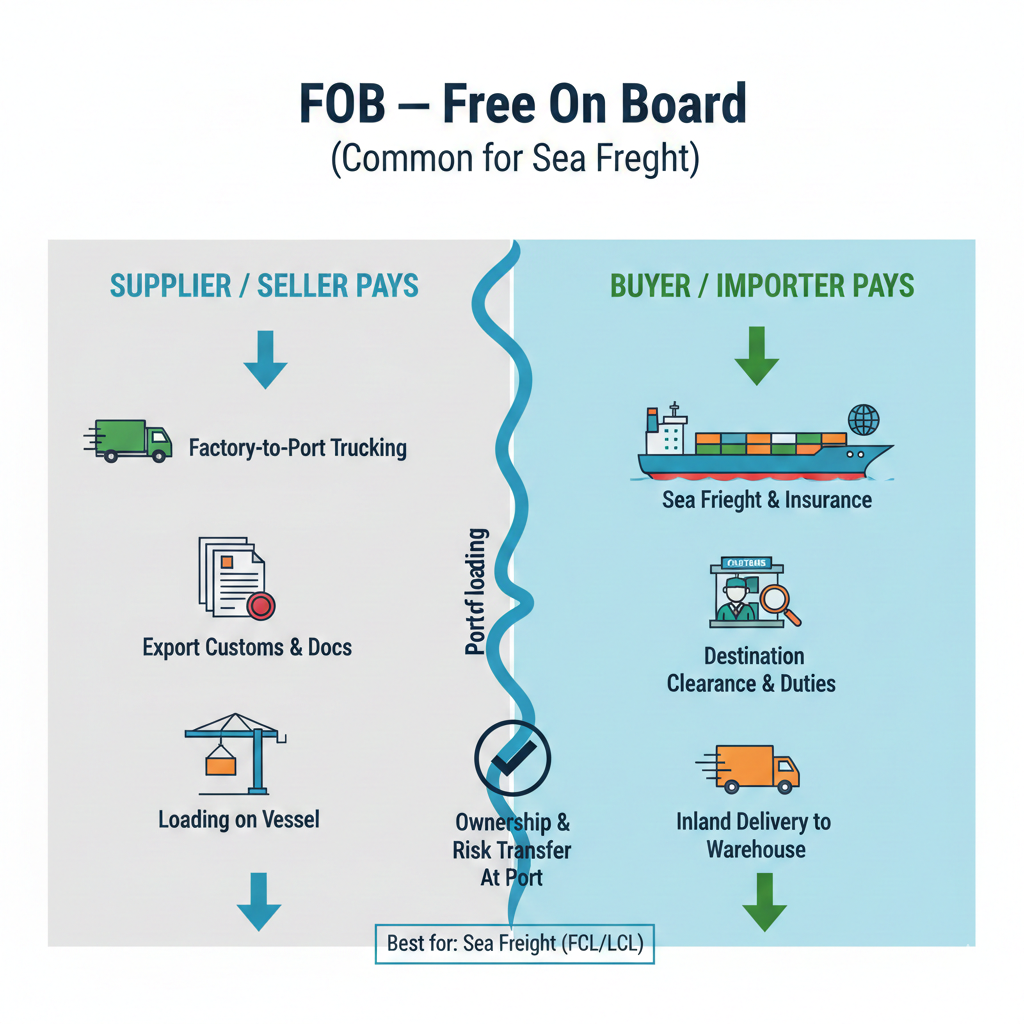
Split chart: responsibilities before port vs after port.
CIF — Cost, Insurance & Freight (Seller Covers Sea Freight)
CIF builds on FOB: the seller pays for the sea freight and minimum insurance up to the destination port. However, risk still transfers to you once goods are loaded on the ship.
✔ Good for: Buyers who want freight + insurance bundled, but will handle import side
⚠ Remember: CIF does not cover inland delivery, customs, duties, or final delivery
DAP — Delivered at Place (Seller Delivers, Buyer Pays Import)
DAP means the seller handles transport to a named place in your country, covering costs and risks up to delivery ready for unloading. But you handle customs clearance, duties, and taxes.
✔ Best for: Importers who want logistics done but okay handling import process
⚠ You still pay: duties, taxes, and customs clearance
📍 When to use:
- You want minimal involvement in freight logistics
- You’re comfortable with local customs procedures
DDP — Delivered Duty Paid (Most Buyer-Friendly)
DDP means the supplier takes maximum responsibility: freight, insurance, export and import customs, duties, taxes, and delivery to your specified location. Risk and cost remain with them until goods are delivered.
✔ Best for: Buyers who want turnkey delivery and minimal coordination
✔ No surprise import costs on delivery
⚠ Can be costly because seller prices risk into the quote
📍 Note: In some countries, foreign sellers face legal limits clearing customs for you — so DDP may require local representation.
Quick Responsibility Matrix of Incoterms
| Incoterm | Supplier Pays | Buyer Pays | Risk Transfer Point |
| EXW | None except goods at warehouse | Everything after pickup | At seller’s facility |
| FOB | To port & on board | Freight, insurance, import, inland | Once loaded on vessel |
| CIF | Sea freight & minimum insurance | Import, inland delivery | Once loaded on vessel |
| DAP | All transport to place | Import duties & clearance | At named place before unload |
| DDP | All costs including duties | Unloading only | After arrival at destination |
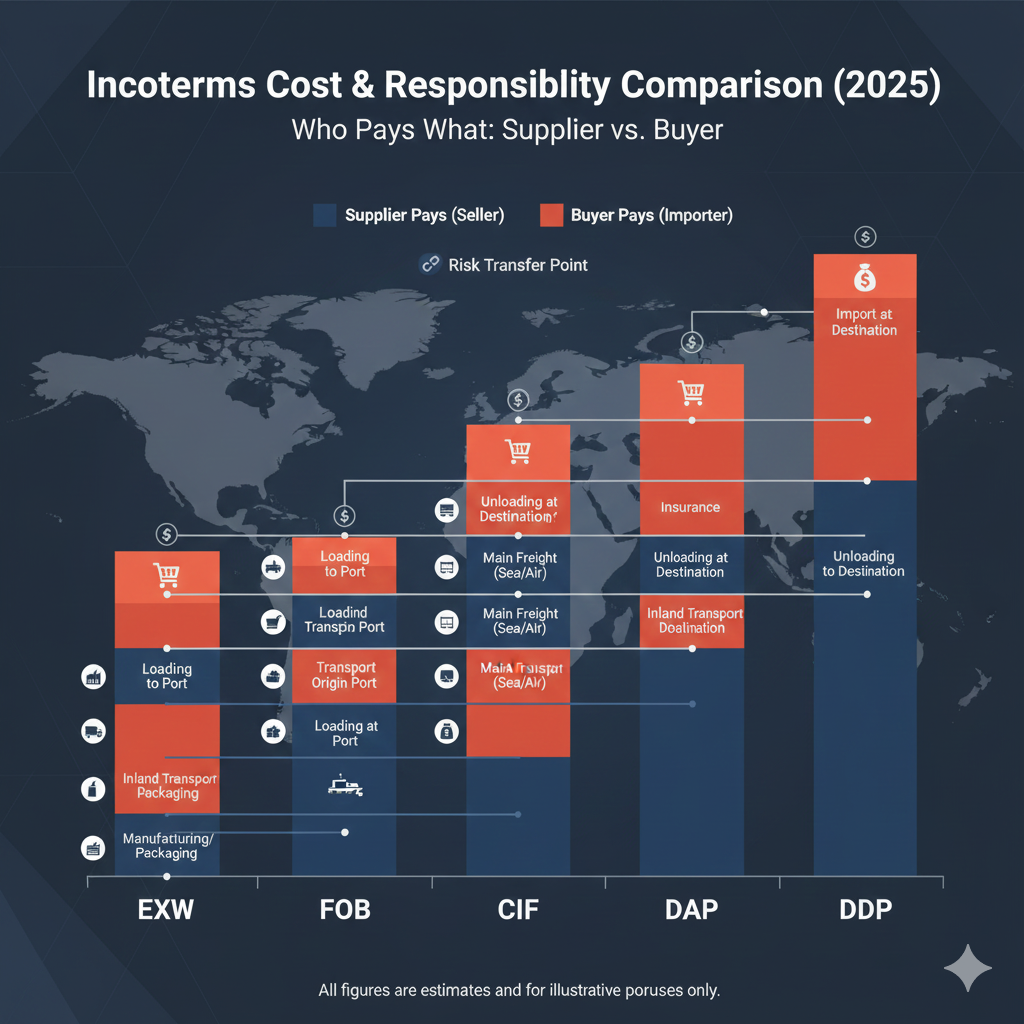
Stack bars of cost coverage under each Incoterm
How to Choose the Right Incoterm
🔹 You want control of logistics & cost? → FOB or EXW
🔹 You want simplicity and less coordination? → DAP
🔹 You want delivery with duties included? → DDP
🔹 You want seller to cover freight + insurance but handle import yourself? → CIF
Common Shipping Problems & Mistakes Importers Make
Shipping from China can be highly profitable — but only if you avoid the common pitfalls that catch new importers off-guard. Based on industry insights, here are the most frequent mistakes, why they hurt you, and how to prevent them.
Letting the Supplier Control Shipping Unilaterally
The mistake: Many importers simply hand shipping logistics to the supplier — assuming they’ll get the best rates and proper documentation.
Why it causes problems
- Suppliers often choose their preferred forwarder without transparent pricing
- You get less visibility on transit status, costs, and compliance
- Suppliers may over-declare or mislabel goods to simplify paperwork
How to avoid it
- Always compare freight quotes from at least two forwarders or freight agents
- Get shipment control in writing via Incoterms (e.g., FOB/DAP/DDP)
- Require pre-shipment photos of packaging and documents
👉 Best practice: Use a sourcing agent or freight forwarder you trust to handle shipping tasks — don’t assume the supplier has your best interests first.
Misusing Incoterms (Wrong Terms = Unexpected Costs)
The mistake: Confusion around Incoterms leads to misunderstandings about who pays for what and when risk transfers.
Typical scenarios
- Buying EXW without realizing you must arrange export clearance
- Choosing CIF and assuming destination duties/taxes are included
Why it hurts
- You may unexpectedly pay export fees, customs duties, or inland trucking
- Risk may transfer earlier than expected (e.g., at the port of loading instead of final delivery)
How to avoid it
- Study responsibility matrices (who pays what) before contracts
- Ask your supplier to confirm Incoterm interpretation in writing
- If unsure, go with DAP or DDP for first shipments
👉 Misused Incoterms are one of the #1 causes of hidden costs and disputes.
Skipping Insurance — That One Cost You Shouldn’t Cut
The mistake: Importers often skip cargo insurance to save a small upfront fee.
Why that’s risky
- Goods in transit can be lost, stolen, damaged, or delayed
- Damage claims are hard without insurance and proper documentation
Types of insurance to consider
- All-risk coverage: covers most causes of loss/damage
- Total loss only: covers complete loss but not partial damage
How to avoid claims issues
- Always insure high-value shipments, especially air/express
- Keep detailed photos and packing lists prior to dispatch
👉 Even if a shipment is delayed — insurance often covers demurrage or storage fees up to policy limits.
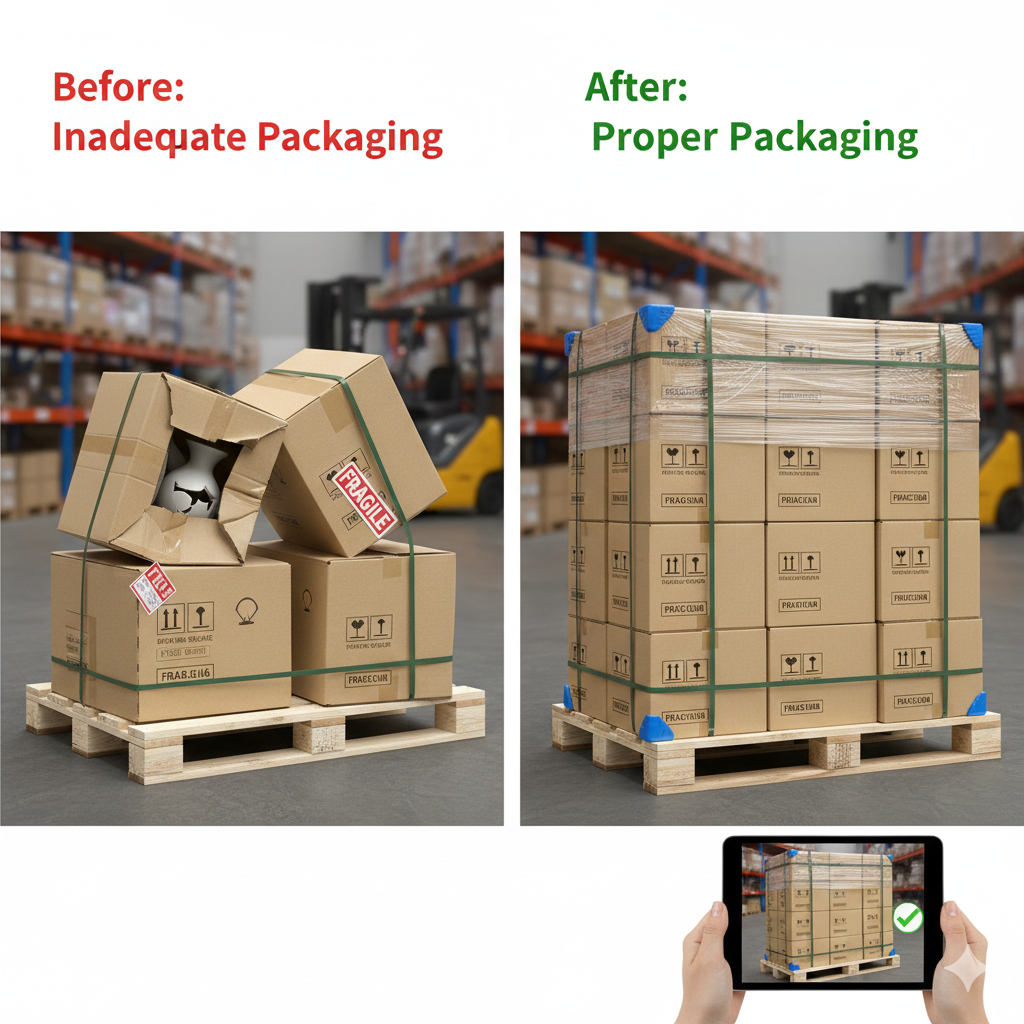
Inadequate Packaging and Labeling
The mistake: Poor packaging, incorrect labeling, or stacked packaging without internal protection.
Common consequences
- Product damage during handling or sea voyage
- Customs holds due to labeling errors
- Compliance violations (e.g., prohibited/incorrect HS code labeling)
Best practices
- Use industry-standard packaging materials (e.g., pallets, straps, corner protectors)
- Label boxes with HS codes, product descriptions, and handling instructions
- Ask suppliers for package quality photos
Before vs After packaging comparison (fragile vs properly cushioned).
Documentation Errors & Customs Delays
The mistake: Incomplete or inaccurate documentation causes customs to detain shipments.
Common problem documents
- Commercial invoices missing HS codes or incorrect values
- Packing lists with mismatched quantities
- Bills of Lading with errors in consignee names
Why it matters
- Customs rejects or inspects shipments
- Additional storage/demurrage fees
- Delayed clearance and missed delivery windows
Preventive steps
- Double-check all fields on invoices and packing lists
- Cross-verify HS codes with product categories
- Use experienced customs brokers for clearance
👉 A simple typo on a commercial invoice can cost days in customs holds.
Ignoring Transit Times and Seasonality
The mistake: Assuming freight times are static year-round.
Seasonal factors that cause delays
- Peak shipping season (Aug–Oct for China exports)
- Golden Week / Chinese holidays
- Port congestion at major hubs
How to avoid delays
- Build lead time buffers into your schedule
- Confirm departure and arrival dates with carriers
- Avoid peak season if possible (or book early)
👉 Real-world example: Sea freight in peak season can be 10–20 days slower than off-peak periods.
Underestimating Inland Costs & Last-Mile Charges
The mistake: Focusing only on sea/air freight and ignoring inland trucking or last-mile fees.
What gets missed
- Port drayage fees
- Rail or truck transfer to warehouse
- Residential delivery surcharges
How to prevent surprises
- Ask for door-to-door pricing rather than port-to-port
- Get clear breakdowns of inland delivery fees
- Compare quotes from inland carriers
Failing to Plan for Returns & Reverse Logistics
The mistake: Many importers forget to plan what happens if products are defective or unsold.
Consequences
- No clear return logistics
- Higher cost to get goods back to China or recycle locally
How to prepare
- Define return terms with your supplier
- Budget for reverse logistics costs
- Consider warehousing that supports returns processing
👉 Reverse logistics can sometimes cost as much as the original forward freight if not planned.
Preventive Checklist — Avoid These Problems Early
✅ Confirm Incoterm responsibility in writing
✅ Get pre-shipment photos of goods & packaging
✅ Use freight insurance based on value & risk
✅ Validate documentation before shipment
✅ Compare multiple freight quotes
✅ Align packaging with carrier & customs needs
📌 Tip: Create a pre-shipment checklist to tick off before release — this alone eliminates most common shipping issues.
Why Work With a Sourcing Agent for Shipping From China
Working with a sourcing agent for shipping from China saves time, money, and headaches by providing local expertise, vetting reliable suppliers, ensuring quality control, handling complex logistics, and overcoming language/cultural barriers, ultimately reducing risk and streamlining your entire import process from start to finish.They act as your on-the-ground eyes and ears, managing everything from factory audits to customs, letting you focus on growing your business. A sourcing agent offers:
- Supplier liaison and purchase coordination
- Freight and carrier comparison
- Quality and pre-shipment checks
- Timeline oversight
- Transparent landed cost figures
Instead of making decisions alone, you leverage expert planning and avoid the common traps that new importers fall into.
Conclusion: Shipping From China Made Simple With the Right Partner
Shipping from China in 2026 doesn’t have to be a guessing game. With evolving regulations, variable freight costs, and new shipping options, a clear strategy is essential. The right sourcing agent bridges the gap between suppliers, carriers, and customs, providing visibility, accountability, and cost control.
By understanding shipping methods — from sea, air, express, to rail — managing costs, selecting the right Incoterms, and avoiding common mistakes, importers can streamline operations and reduce risk. Expert coordination doesn’t just save time; it protects your budget, ensures product quality, and simplifies compliance.
In short, with proper planning, informed decision-making, and professional support, shipping from China becomes predictable, efficient, and stress-free.
Need a trusted sourcing and shipping partner to manage your end-to-end logistics? Learn more…
FAQ Section (High SEO Value, Conversational & B2B-Friendly)
Q1: What is the cheapest shipping method from China?
Sea freight (FCL or LCL) is generally the most cost-effective, especially for bulk shipments. Smaller shipments may combine LCL to reduce per-unit costs.
Q2: Air freight vs sea freight — which should I choose?
Air freight is fastest (3–7 days) but expensive. Sea freight is slower (up to 35+ days) but cheaper per unit. Choose based on urgency and shipment volume.
Q3: What’s the difference between EXW and FOB?
EXW puts almost all shipping responsibility on the buyer — you handle export, freight, insurance, and customs. FOB means the supplier delivers goods to the port, handles export, and loads them; from that point, the buyer takes over.
Q4: How much duty do I pay when shipping from China to the USA?
Duty depends on the product’s HS code and declared value. Most consumer goods fall between 5–25% tariffs, though some items may vary.
Q5: Should I use DDP shipping from China?
DDP is ideal for first-time importers or ecommerce businesses. The supplier handles freight, customs, duties, and delivery — minimizing surprises, though it may cost more than EXW or FOB.
Q6: Can I avoid customs delays and hidden fees?
Yes — by ensuring proper documentation, using a reliable freight forwarder or sourcing agent, and understanding landed costs, you can significantly reduce delays and unexpected expenses.
Q7: How do I choose the best shipping method for my products?
Consider product size, weight, urgency, and budget. Sea freight for bulk, air for urgent/high-value items, rail for Europe-bound medium shipments, and express/ePacket for samples or small parcels.

