

What is the Lead Generation (Lead Gen) for Marketing & Digital Growth in 2026
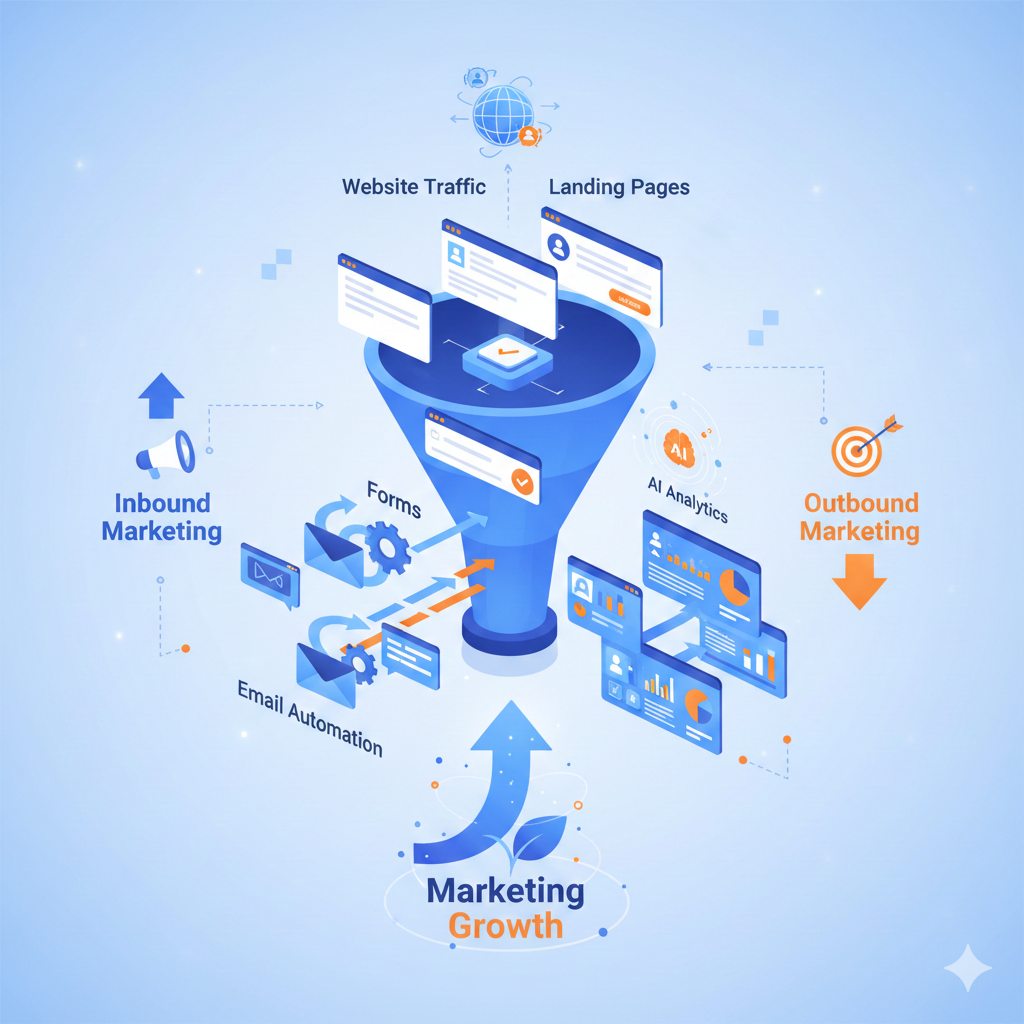
What Does “Lead” Mean in Marketing
In marketing, a lead refers to any individual or business that shows interest in a product or service. This interest can appear through actions like submitting a form, joining a newsletter, downloading a resource, or requesting a demo. A lead is essentially a potential customer who enters your marketing ecosystem with varying levels of intent. Some leads may already be looking to buy (warm leads) while others are simply exploring options (cold leads).
What is Lead Generation
This process (lead gen) is the structured process of attracting potential buyers, capturing their information, and guiding them toward becoming paying customers. Instead of relying on cold outreach, lead generation focuses on identifying prospects who already show early interest. This approach makes digital marketing, demand generation marketing, and lead generation marketing significantly more efficient.
This complete guide explores the entire lead generation process,types and lead generation strategies, tools, real estate lead generation ideas, and how lead generation differs from demand generation. You will also see where images, charts, and diagrams can enhance the content.
Why Lead Generation Matters
A Strong Sales Pipeline & Predictable Revenue
This approach helps businesses build a consistent pipeline of potential buyers. Instead of waiting for random inquiries, a structured lead generation process produces continuous leads that can be nurtured into sales. This makes revenue more predictable and improves marketing efficiency.
Better Customer Insights
Each lead you collect provides valuable information about customer behavior, intent, and challenges. This data helps refine your demand generation, lead sourcing software, content strategy, and product decisions. Over time, it improves both lead quality and conversions.
Trust-Building Through Value
Effective lead gen isn’t about hard selling; it’s about providing value through content, tools, or offers. This builds trust long before the sales stage, making customers more likely to convert.
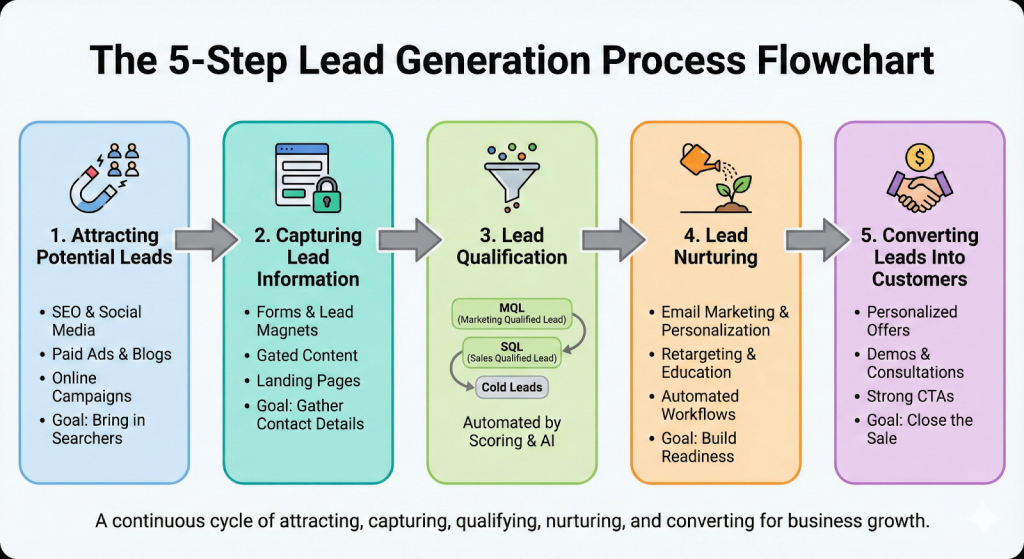
The Lead Generation Process
1. Attracting Potential Leads
The first step in the Customer Acquisition process is attracting the right audience. This is done through SEO, social media content, online lead generation campaigns, paid ads, and value-driven blogs. The goal is to bring people who are already searching for answers.
2. Capturing Lead Information
Once visitors reach your landing page or website, the next step is capturing their information. This is usually done through forms, lead magnets, lead ads, Facebook lead ads, or gated content. A highly optimized landing page for lead generation is essential here.
3. Lead Qualification
Not every lead is ready to buy. Lead qualification separates high-intent leads from low-intent leads. Businesses typically classify leads as:
- MQL (Marketing Qualified Lead)
- SQL (Sales Qualified Lead)
- Cold Leads
Lead scoring software or AI lead generation tools often automate this process.
4. Lead Nurturing
Through email marketing, personalization, retargeting, and educational content, leads are nurtured until they are ready to buy. Automated workflows, AI for lead generation, or lead gen tools make nurturing easier and scalable.
5. Converting Leads Into Customers
The final stage of the lead generation process is converting a qualified lead into a customer. This often involves personalized offers, demos, consultations, or strong CTAs that encourage action.
Types of Lead Generation
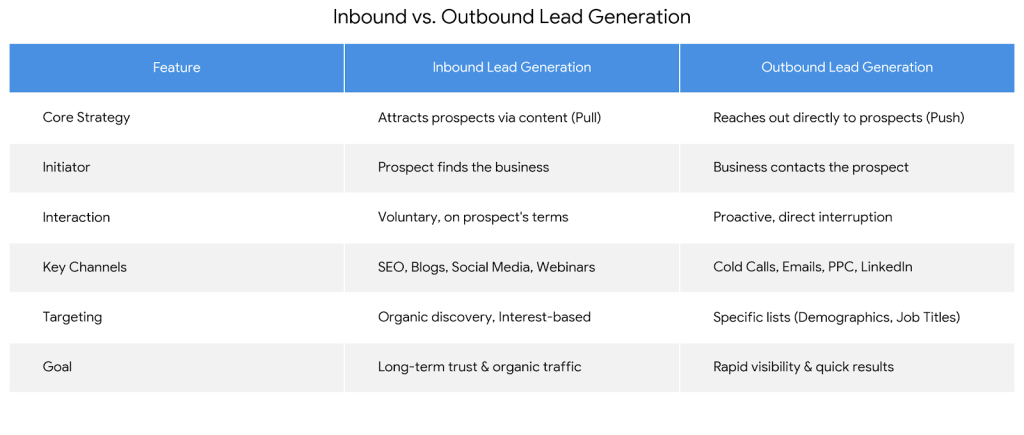
Lead generation typically falls into two major categories: inbound lead generation and outbound lead generation. While both aim to acquire qualified prospects, they differ significantly in strategy, communication style, level of engagement, and targeting methods.
1. Inbound Lead Generation
Inbound strategies focuses on attracting prospects to you through valuable content and digital experiences. Instead of reaching out directly, you create resources that draw users in on their own terms.
What Is Inbound Lead Generation?
Inbound lead gen is the process of attracting website visitors organically and converting them into leads. Here, the prospect controls how and when they interact with your content. They choose whether to provide their contact information based on the value you offer.
Inbound Lead Generation Process
The inbound process works by consistently publishing content, optimizing visibility, and nurturing users through their journey:
Website Presentation
Your website is often the first touchpoint. A clean, attractive, and easy-to-navigate layout increases trust and reduces bounce rates. If visitors exit quickly, it signals a need for redesign or improved user experience.
Quality Content
Providing original, helpful content—enhanced with visuals, clean formatting, and clear explanations—helps answer users’ questions. Quality content increases organic traffic and improves conversion rates.
Blogging
Blogs play a major role in generating inbound leads. With a large percentage of internet users relying on blogs for information, well-crafted blog posts can attract high volumes of interested visitors and guide them further into your funnel.
SEO
Search engines are a critical source of traffic. Ranking on the first page dramatically increases visibility. Using optimized keywords, titles, URLs, headers, and image tags boosts your chances of consistently attracting qualified visitors.
Social Media Marketing
Social media platforms allow targeting by age, location, interest, and behavior. Engagement through likes, shares, comments, and followers helps amplify brand visibility and attract inbound leads.
Product Videos & Webinars
Videos create trust by humanizing your brand and explaining your product visually. Webinars allow deep engagement and powerful tools for capturing lead information. Product demo videos alone can increase conversions by up to 30%.
Effective CTAs
Strong Calls to Action guide visitors from one content piece to the next. Strategic CTAs help transition users through the buying journey and give the sales team more qualified conversion opportunities.
2. Outbound Lead Generation
Outbound lead gen is a proactive strategy where businesses initiate direct contact with potential customers instead of waiting for them to discover the brand. Unlike inbound methods where prospects come through content, SEO, or organic discovery, outbound lead generation pushes your message outward, making it possible to reach highly targeted audiences quickly and efficiently. This approach is especially valuable for businesses that want rapid visibility, predictable results, and a steady flow of qualified leads entering the sales funnel.
Outbound Lead Generation Process
Outbound lead gen refers to the process of reaching out to prospects using direct communication channels. Common outbound methods include cold calling, cold emailing, direct mail, paid ads (PPC), SMS campaigns, LinkedIn outreach, and targeted sales outreach campaigns. In this approach, your sales team takes the first step by introducing your product or service to potential customers who may not yet know you exist.
Because you control who you contact, outbound marketing allows you to target specific demographics, industries, job titles, or geographic regions. This makes it highly effective in B2B lead generation, enterprise sales, and any market where decision-makers need a personalized touch before considering a solution.
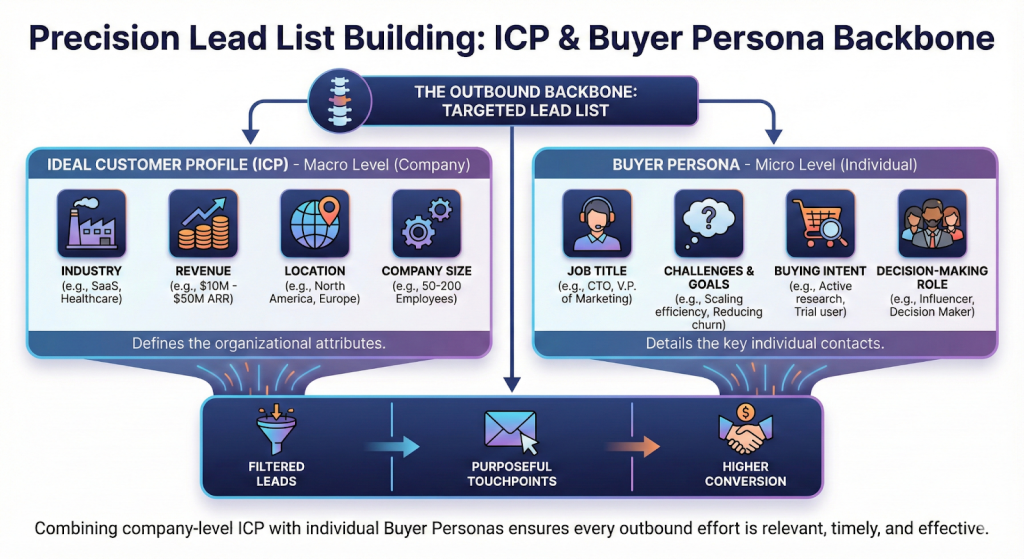
1. Targeted Prospect Lists
Building a precise list is the backbone of outbound marketing. You can filter leads by industry, revenue, job title, or buying intent, ensuring every touchpoint is purposeful.
2. Personalized Outreach
Modern outbound lead gen requires personalization to stand out. Cold emails, messages, or ad campaigns that address the prospect’s challenges or goals outperform generic outreach.
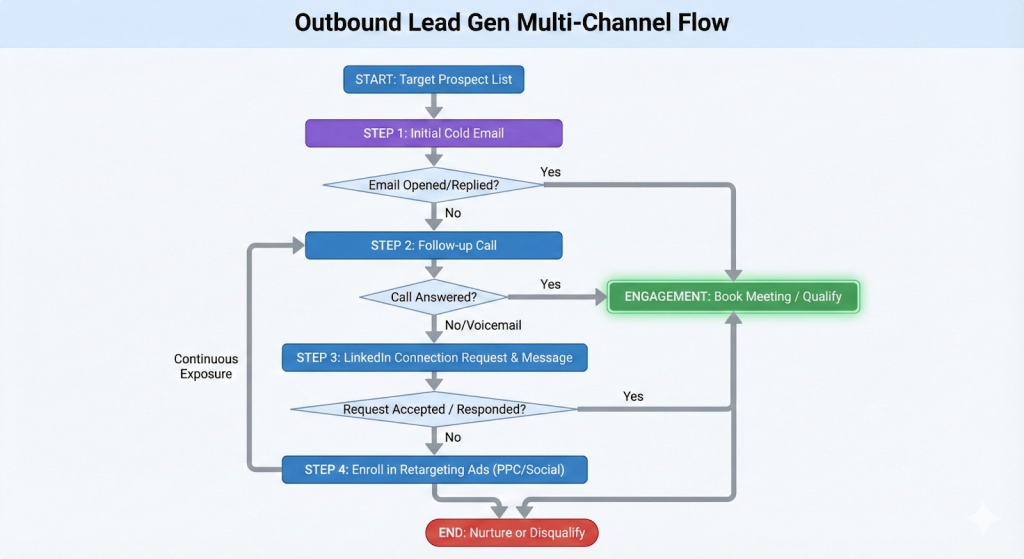
3. Multi-Channel Campaigns
Combining channels like phone, email, LinkedIn, SMS, and PPC increases the chance of reaching the prospect at the right time.
4. A/B Testing and Optimization
Outbound success depends heavily on continuous testing subject lines, call scripts, ad creatives, targeting filters, and CTAs should be regularly optimized.
5. Strong Sales Scripts & Messaging Frameworks
High-performing teams use structured scripts that highlight the problem, offer value quickly, and invite prospects into a conversation rather than forcing a sale.
Outbound + Inbound: A Powerful Combination
Outbound lead gen works best when paired with inbound strategies. For example:
- A cold email can redirect prospects to an inbound asset like a blog or landing page.
- Retargeting ads can follow users who visited your site through outbound ads.
- Cold calling becomes more effective when supported by inbound brand awareness.
This combination creates a complete lead-generation ecosystem, ensuring prospects receive multiple touchpoints across both direct and organic channels.
Types of Leads
To manage leads effectively, they are commonly categorized into four main types:
1. Marketing-Qualified Leads (MQLs)
These are prospects who showed interest through meaningful actions, such as:
- Downloading a resource
- Filling out a form
- Attending a webinar
- Requesting gated content
They are interested but not yet ready to speak to sales.
2. Sales-Qualified Leads (SQLs)
SQLs are leads that the sales team has reviewed and deemed ready for direct conversation. They match buyer persona criteria and show stronger intent to purchase.
(Note: Industry standard — SQL = Sales-Qualified Lead)
3. Product-Qualified Leads (PQLs)
A PQL is a prospect who has experienced your product firsthand—usually through:
- A free trial
- A freemium version
- A demo environment
Because they already know the product, they often convert faster.
4. Service-Qualified Leads
These are leads who have explicitly requested to speak with your team about a service offering—such as requesting a consultation, quote, or audit. They show direct intent to purchase.
Lead Generation Tools & AI Platforms
AI Lead Generation Tools
AI lead generators and AI lead gen platforms automate tasks like email outreach, lead scoring, data enrichment, and CRM updates. These tools reduce manual workload and speed up the qualification process.
CRM & Automation Tools
Lead gen software such as HubSpot, Salesforce, or Zoho CRM help manage, organize, and nurture leads. Automation makes follow-ups nearly effortless.
Free Lead Generation Tools
Many free tools help small businesses run low-cost campaigns. Examples include free landing page builders, email tools, and marketing automation platforms.
Lead Sourcing Software
Lead sourcing software helps collect B2B leads from online platforms, directories, and databases. This is especially beneficial for B2B lead generation companies and agencies.
Download our free Lead Generation Checklist & Conversion Calculator to track leads, measure performance, and optimize your funnel.
Industry-Specific Lead Generation
Real Estate Lead Generation
Real estate prospect acquisition is the process of attracting potential buyers, sellers, investors, or renters who show interest in a property or real estate service. It focuses on using online and offline strategies to identify prospects, build trust, and guide them toward making a purchase or listing decision.
1. Targeted Local SEO:
Optimize your website and listings for local searches like “homes for sale near me” to get discovered by high-intent buyers in your area.
2. Property Listing Platforms:
Use websites like Zillow, Realtor.com, and regional listing portals to showcase properties and gain steady organic inquiries.
3. Social Media Ads for Buyers & Sellers:
Run targeted Facebook or Instagram campaigns promoting featured listings or home-valuation offers to attract both buyers and homeowners.
4. Virtual Tours & 3D Walkthroughs:
High-quality virtual experiences help generate leads from remote buyers and increase property interest without in-person visits.
5. Open Houses & Local Events:
Hosting open houses or neighborhood meetups helps realtors capture walk-in leads and build personal trust.
6. Lead Magnets (Market Reports, Home Valuation Tools):
Offer free resources like local market insights or instant property value estimates in exchange for contact details.
7. Email Drip Campaigns:
Nurture prospects through automated emails that share new listings, price changes, and helpful buying/selling tips.
8. Partnerships with Mortgage Brokers:
Collaborate with lenders to exchange referrals and reach clients who are already financially prepared to buy.
9. Real Estate CRM Systems:
Use CRM tools to organize leads, automate follow-ups, and track each prospect’s buying journey.
Roofing Lead Generation
Roofing lead gen refers to attracting and capturing potential customers who need roofing services (repairs, replacements, maintenance, etc.). It combines online and offline marketing, trust‑building, and targeted outreach to create a steady flow of interested homeowners or property‑owners that can convert into actual jobs.
Key Approaches & Strategies for Roofing Lead Generation
- Paid Ads (PPC & Social Ads): Run targeted ads (e.g. Google Ads or Facebook/Instagram ads) with keywords like “roof repair near me,” “emergency roofer,” or “roof replacement cost.” This helps your roofing business appear when people are actively searching — generating leads quickly.
- Search Engine Optimization (SEO) & Local Search: Optimize your website for relevant, location‑specific keywords (e.g. “roofing contractor [City]”), keep content regular (blogs, FAQ pages), and ensure your site is mobile‑friendly. A strong SEO presence helps homeowners find you organically.
- Online Reviews & Social Proof: Encourage satisfied clients to leave reviews and display before/after photos or case studies. Positive reviews and social proof build credibility — crucial for clients hiring roofers.
- Free Inspections & Offers: Offering free roof inspections or free estimates can attract homeowners who are researching or evaluating options. This helps convert interest into real enquiries because people appreciate no‑obligation assessments.
- Email Marketing & Lead Nurturing: After a lead expresses interest (via form, call, or inspection request), follow up quickly via email or SMS, send reminders, quotes, or seasonal maintenance offers. Timely follow‑up and consistent communication improve conversion and increase repeat business.
- Referrals & Community / Local Networking: Encourage referrals from past clients and collaborate with local businesses (e.g. real estate agents, home improvement firms). Also, community engagement — participating in local events or sponsoring community activities — helps build local trust and visibility.
- Multi‑Channel & Retargeting Strategy: Use a mix of channels — PPC, SEO, social media, emails, referrals — instead of relying on a single method. For visitors who didn’t convert initially, retargeting (e.g. ads, follow-up emails) brings them back and increases chances of conversion.
- Automation & Lead‑Management Tools / CRM: Use software to track enquiries, schedule follow-ups, send estimates, and automate reminders. Such tools ensure no lead is lost, streamline operations, and help roofers close more jobs efficiently.
Insurance, Mortgage & HVAC Leads
Industries like insurance leads, mortgage leads, and HVAC leads depend on urgency-based search intent, making paid ads and strong landing pages essential.
HVAC Lead Generation
HVAC lead gen focuses on attracting homeowners or property-owners who need heating, ventilation, or air-conditioning services. Effective strategies include:
- Local SEO & Listings: Optimize for local searches like “AC repair near me.”
- Paid Ads: Google Ads, PPC, or Local Service Ads to capture high-intent leads.
- Social Media & Content: Share maintenance tips, seasonal checklists, and videos to build credibility.
- Reviews & Trust Signals: Encourage customer reviews and showcase testimonials.
- Lead Capture & Automation: Use forms, chatbots, or scheduling tools for fast follow-up.
- Referrals & Networking: Partner with local businesses and leverage word-of-mouth.
Mortgage Lead Generation
Mortgage lead gen attracts people seeking home loans or refinancing. Key strategies include:
- Targeted Ads: Social media and PPC ads targeting potential homebuyers.
- Email Nurturing: Automated campaigns to provide guidance and stay top-of-mind.
- Partnerships & Referrals: Collaborate with real estate agents and brokers.
- High-Intent Keywords: PPC campaigns on queries like “best mortgage rates.”
- Exclusive Lead Services: Purchase or exchange leads with prompt follow-up.
Insurance Lead Generation
Insurance lead focuses on attracting prospects for life, health, or property insurance. Core tactics include:
- PPC & Search Ads: Capture leads searching for “home insurance quotes” or “life insurance online.”
- Content Marketing: Provide educational articles or guides to build trust.
- Landing Pages & Forms: Collect leads efficiently through dedicated pages.
- Referrals & Partnerships: Partner with brokers, real estate, or mortgage agents.
- Email Drip Campaigns: Nurture leads with reminders and personalized offers.
Demand Generation vs. Lead Generation
Understanding the Difference
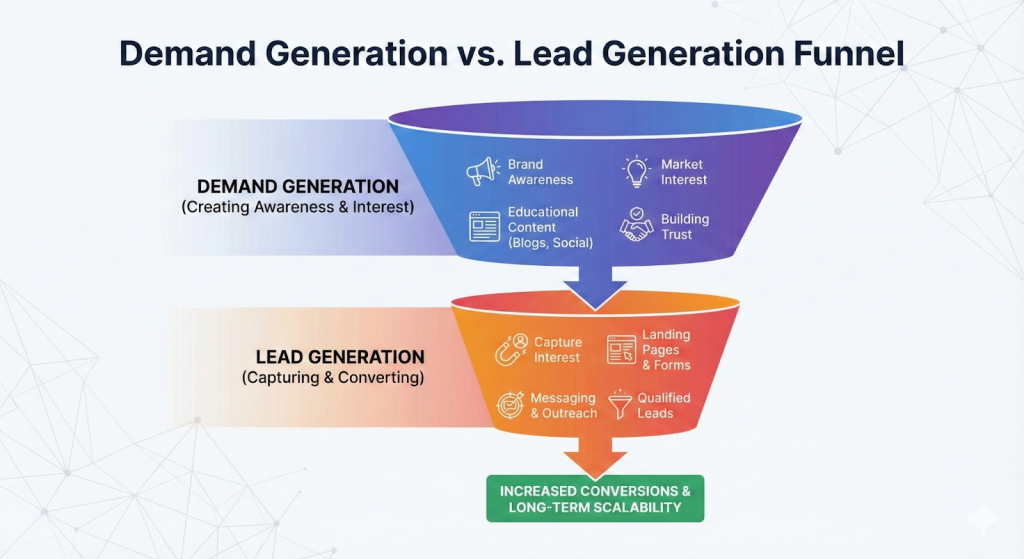
Demand generation marketing focuses on creating awareness and interest long before a customer is ready to buy. It builds trust, brand presence, and market demand.
Lead generation, on the other hand, is about capturing interest and converting visitors into leads using landing pages, forms, and messaging.
How Both Work Together
A strong lead gen business or agency uses both:
- Demand generation to create awareness
- Lead gen to collect and convert leads
This combination increases conversions and ensures long-term scalability.
Common Mistakes to Avoid
While working on lead generation, avoid broad targeting, long forms, weak landing pages, inconsistent follow-ups, and generic content that does not address customer problems. Not using analytics or ignoring lead scoring can also reduce lead quality.
Conclusion
Lead generation is the backbone of modern digital marketing. Whether you’re working in B2B lead generation, real estate lead generation, or industry-specific sectors like roofing, insurance, HVAC, or mortgage leads, a solid lead generation strategy helps attract the right audience, capture their interest, nurture them with value, and convert them into loyal customers.
By combining SEO, content marketing, paid advertising, AI lead generation tools, and optimized landing pages, businesses can continually generate leads online and scale their revenue. Integrating demand generation marketing with lead generation marketing ensures both long-term brand growth and consistent lead flow.
What is lead generation in simple words?
Lead generation is the process of finding people who are interested in your product or service and collecting their contact information so you can turn them into customers.
What is an example of lead generation?
A common example of lead generation is offering a free guide or consultation on a website and asking visitors to fill out a form to access it.
Why is lead generation important for businesses?
Lead generation helps businesses create a steady flow of potential customers, reduce dependence on cold outreach, and build predictable revenue growth.
What are the main types of lead generation?
The two main types of lead generation are inbound lead generation (SEO, content, social media) and outbound lead generation (cold emails, calls, paid ads).
What is the difference between inbound and outbound lead generation?
Inbound lead generation attracts customers through content and search, while outbound lead generation involves directly reaching out to prospects through ads, emails, or calls.
How does lead generation work step by step?
Lead generation works by attracting visitors, capturing their information, qualifying their interest, nurturing them with content, and converting them into customers.
What is a qualified lead?
A qualified lead is a prospect who has shown strong interest and matches your target customer profile, making them more likely to buy.
What is the difference between MQL and SQL?
An MQL (Marketing Qualified Lead) has shown interest through marketing actions, while an SQL (Sales Qualified Lead) is ready for direct contact from the sales team.
What tools are used for lead generation?
Lead generation tools include CRM systems, landing page builders, email marketing platforms, AI lead generation software, and automation tools.
Is lead generation part of digital marketing?
Yes, lead generation is a core part of digital marketing and works alongside SEO, content marketing, paid advertising, and social media strategies.
How long does lead generation take to show results?
Inbound lead generation may take several weeks or months, while outbound methods and paid ads can generate leads much faster.
Can small businesses do lead generation effectively?
Yes, small businesses can use SEO, social media, email marketing, and free lead generation tools to attract and convert leads without large budgets.
What industries use lead generation the most?
Industries like real estate, B2B services, roofing, insurance, HVAC, finance, and SaaS rely heavily on lead generation to grow sales.
What makes a lead generation strategy successful?
A successful lead generation strategy focuses on the right audience, clear messaging, strong offers, fast follow-ups, and consistent optimization.
Is AI used in lead generation?
Yes, AI is widely used in lead generation for lead scoring, automation, personalization, email outreach, and predictive analytics.

