

7 Powerful Customer Journey Mapping Secrets That Transform Conversions
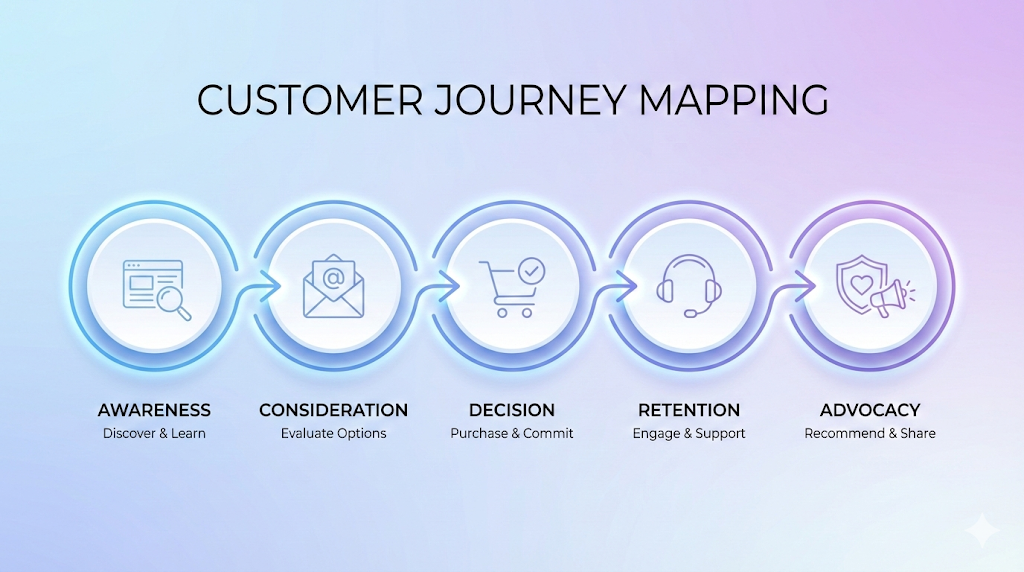
Customer journey mapping or client journey mapping is a useful tool that helps organizations figure out how customers go from learning about a company to becoming devoted supporters. It shows clearly what customers go through at each phase, including what they think, feel, require, and expect. Businesses may figure out what is functioning well and what needs to be fixed by attentively examining this trip. This will make the experience smoother and more significant.
Customer journey mapping is an organized way to show the whole path a customer takes with your brand in a visual way. This encompasses every encounter, touchpoint, pain point, and moment of truth that happens online and offline. A well-designed trip map emphasizes the motives, feelings, and behavioral patterns that affect decision-making in addition to outlining processes. In short, it serves as a roadmap that helps companies maximize customer satisfaction and increase conversions.
I’ll lead you through every step of constructing a successful customer journey map in the following articles, from understanding each step of the process to recognizing touchpoints, developing emotional pathways, utilizing templates, and refining your approach with real-world examples. Additionally, you will discover how trip planning enhances client happiness, retention, and conversions. By the end, you’ll have a comprehensive, streamlined, and useful approach to making trip maps specifically for retail, eCommerce, SaaS, and service-based enterprises.
What Is a Customer Journey Map?
A customer journey map (CJM) is a visual representation of what customers do, feel, think, and experience at each stage of their relationship with your brand.
It shows:
- Touchpoints
- Emotions
- Pain points
- Needs
- Opportunities for improvement
It may cover the full lifecycle or focus on a specific part such as onboarding, purchase, or support.
Difference between Customer Journey Map and User Story Map
1. Purpose
- Customer Journey Map: Understands the user’s overall experience, emotions, and pain points across all interactions.
- User Story Map: Plans product features and organizes development work based on user tasks.
2. Focus
- Journey Map: User feelings, behaviors, and touchpoints.
- Story Map: What the product must do and how features should be prioritized.
3. Structure
- Journey Map: Follows stages of the user’s experience from start to finish.
- Story Map: A structured layout of activities, tasks, and user stories for development.
4. When Used
- Journey Map: Early research and discovery.
- Story Map: Planning, building, and release sequencing.
5. Outcome
- Journey Map: Reveals gaps, frustrations, and improvement opportunities.
- Story Map: Creates a clear development plan and organizes features into releases.
6. Relationship
- Journey maps show what users go through;
- Story maps turn that understanding into what the team needs to build.
Why is Customer Journey Mapping Important?
Deep Empathy & Customer Insight
Through Customer journey mapping, teams may observe the user experience from the perspective of the consumer, exposing unmet needs, emotional triggers, and hidden problems.
Spot & Fix Friction
By visualizing the journey, businesses can identify where customers drop off, get confused, or feel frustrated, and then improve those touchpoints.
Enable Personalization
Knowing how customers move across touchpoints helps you deliver tailored messaging, offers, and content at the right moment.
Align Teams Around the Customer
Journey maps unify marketing, sales, service, and product teams around one shared understanding of the customer.
Power Innovation
They highlight “moments of truth” where improving experience has the biggest impact.
Support Strategy & Decision-Making
They guide resource allocation by showing which improvements matter most.
Improve Omnichannel & CX
By mapping all channels, brands deliver a consistent experience across web, mobile, email, social, apps, and in-person touchpoints.
Drive ROI & Efficiency
Reducing friction increases retention, lowers service costs, and boosts customer lifetime value.
Benefits of Customer Journey Mapping
Here are the key benefits you get when you invest in mapping your customer journey.
Build Better Experiences
- You may identify friction and optimize for more seamless transitions by seeing how consumers travel between touchpoints. “Improving the customer experience: identify potential areas for optimization.”
- increases conversion and satisfaction by assisting in the delivery of customized communications based on customer behaviors and preferences.
Enable Customer Success
- When customers have consistent, important interactions after making a purchase, retention as well as loyalty are enhanced. It improves client retention.
- Although precise reward program details are outside the purview of these sources, mapping helps you create incentive/loyalty programs and post-purchase interaction more wisely.
Work Better as a Team
- By providing a cohesive perspective of the trip, mapping helps dismantle corporate silos, coordinate various departments (such as marketing, sales, and service), and guarantee that everyone is working toward a common consumer-focused goal.
- Improved team alignment: Visualizations serve as a uniting tool for different departments.”
Set Yourself Apart from the Competition
- In a world where customer experiences are key differentiators, companies that map and optimise journeys can gain a competitive edge. ‘’Increasing competitive advantage” is listed as a benefit.
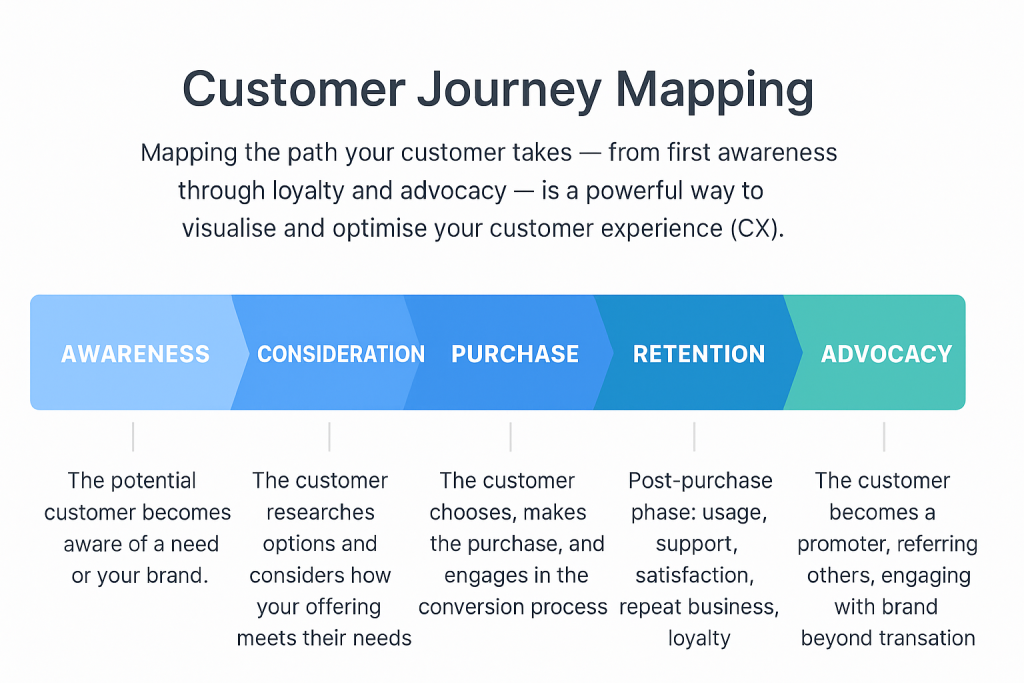
The Five Stages of the Customer Journey Mapping
A typical customer journey may be summed up as the following five major stages, according to a number of sources:
Awareness: The prospective client learns about your brand or a necessity. mentions initial encounters with a product, service, or brand.
Consideration: The consumer looks into their choices, evaluates brands, and determines whether your product or service could satisfy their needs.
Purchase/Decision: The buyer selects, purchases, and participates in the conversion process.
Retention: use, support, contentment, repeat business, and loyalty during the post-purchase period.
Advocacy: The consumer becomes a brand ambassador by recommending others and interacting with the company outside of a transaction.
Customer Touchpoints (With Examples)
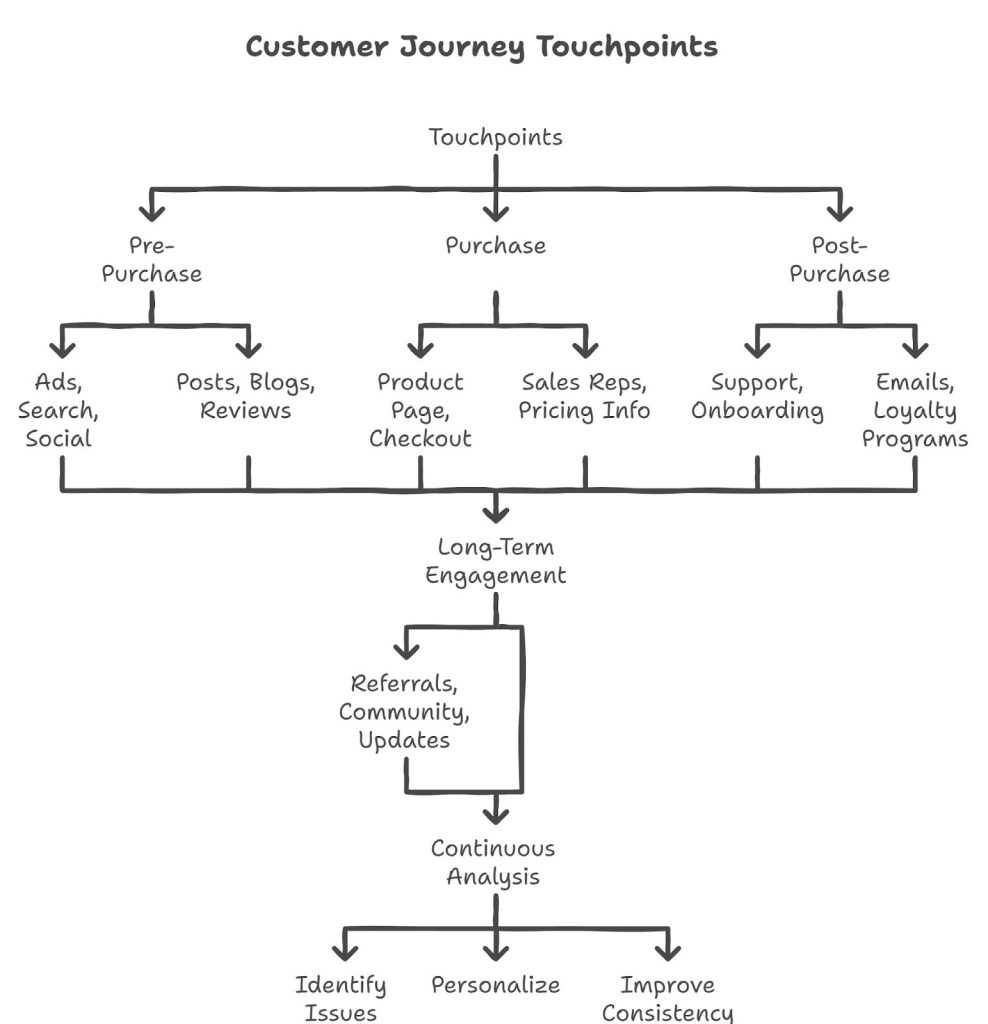
Customer touchpoints are the various moments when people encounter or interact with a brand. These can be digital, physical, or indirect. Every touch shapes how someone thinks and feels about the company.
1. Where customer Touchpoints Show Up
- Before a purchase: Ads, search results, social posts, blogs, referrals.
- During the buying process: Product pages, checkout flow, sales reps, pricing interactions.
- After a purchase: Onboarding messages, support channels, follow-up emails, loyalty programs.
- Long-term relationship stage: Referral programs, community spaces, ongoing updates, surveys.
2. Why Customer Touchpoints Matter
- They influence perceptions, trust, and decision-making.
- Smooth interactions reduce frustration and make experiences feel more natural.
- Every touchpoint offers an opportunity for personalization.
- Brands can analyze these interactions to discover issues, improve communication, and enhance satisfaction.
3. Types of Touchpoints
- Online: Websites, apps, chat support, email campaigns, digital ads, webinars, social content.
- Offline: Stores, call centers, printed materials, product packaging, in-person events.
- External: Reviews, influencer mentions, third-party content, forums.
4. How to Identify Important Touchpoints
- Analyze customer behavior using interviews, feedback, and analytics tools.
- Sort individuals according to persona parts or behavioral characteristics.
- Describe how people usually engage with the brand from the moment they first come into touch with it.
- Monitor performance by looking at things like response rates, time spent, complaints, and drop-offs.
5. How to Improve Touchpoints
- Keep your messaging consistent throughout all channels of contact.
- Adapt interactions to the purchase stage or user behavior.
- Make sure that switching between both online and offline contexts is seamless.
- Respect privacy regulations and safeguard user data.
- As expectations change, update and improve touchpoints on a regular basis.
How to Create a Customer Journey Map: A Step-by-Step Approach
- Establish consumer profiles and segmentation. Recognize your customers’ motivations, ambitions, and behaviors. The map could fall short without it.
- Identify key touchpoints and behaviors: Map where the customer interacts with you (touchpoints), how they act, what they feel. Marketers often guide customers to take a customer journey that they think will lead to the best outcome/service for both the brand and customer.”
- Gather data from CRM systems and CX platforms: Use analytics, feedback, surveys to understand actual behavior (not just assumptions). It emphasizes improving the journey by capturing data across stages.
- Map emotions, pain points, and goals: A good map includes how customers feel at each stage, not just what they do. A customer journey map provides you with a visual storyline of how a buyer or a customer persona engages with your business at every touchpoint.
- Visualize and refine your customer journey map: Use templates/tools, revisit the map, make it a living document. Once you’ve mapped out your customer journey, it should be revisited on a regular basis to make sure it’s still relevant and up-to-date.”
Tools & Technology for Journey Mapping
- CRM: HubSpot, Salesforce, Zoho.
- CX Platforms: Adobe Customer Journey Analytics, Qualtrics
- Mapping Tools: Miro, Lucidchart, Smaply
- Loyalty Tools: Smile.io, LoyaltyLion
- Support Tools: Intercom, Zendesk
Customer Journey Mapping Examples
Customer journey maps help you understand thoughts, emotions, and decision triggers at every stage of your customers’ journey from awareness to loyalty. These eight real-world examples demonstrate how path mapping may be used by various businesses to improve consumer experiences.
1. SaaS Customer Journey Map
Example: Subscription-based CRM or project management software.
- Journey Stages: Awareness → Trial → Onboarding → Product Usage → Renewal
- Key Touchpoints: Website visit, free trial signup, onboarding emails, feature adoption, renewal notifications.
- Pain Points: Complex onboarding, unclear product value, poor retention communication.
- Solutions: Use walkthrough videos, automated onboarding, and in-app messaging.
Template Idea: Funnel-style flowchart with columns for actions, emotions, and pain points.
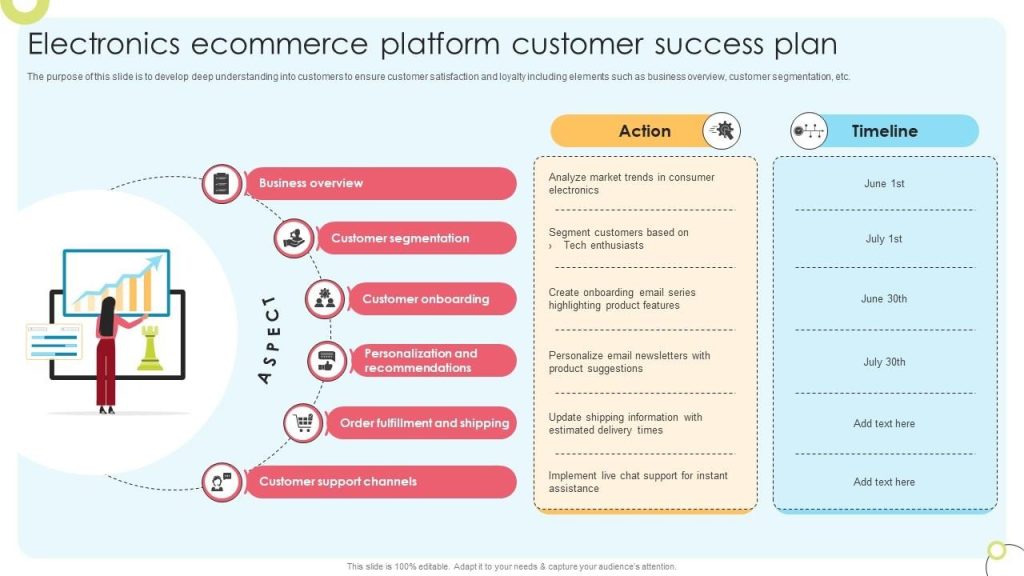
2. eCommerce Customer Journey Map
Example: Fashion or electronics store.
- Journey Stages: Awareness → Consideration → Purchase → Delivery → Post-Purchase
- Touchpoints: Social media ads, website product pages, checkout, delivery tracking, email follow-up.
- Pain Points: Abandoned carts, delayed shipping, lack of post-purchase engagement.
- Solutions: Personalized product recommendations, retargeting emails, transparent delivery tracking.
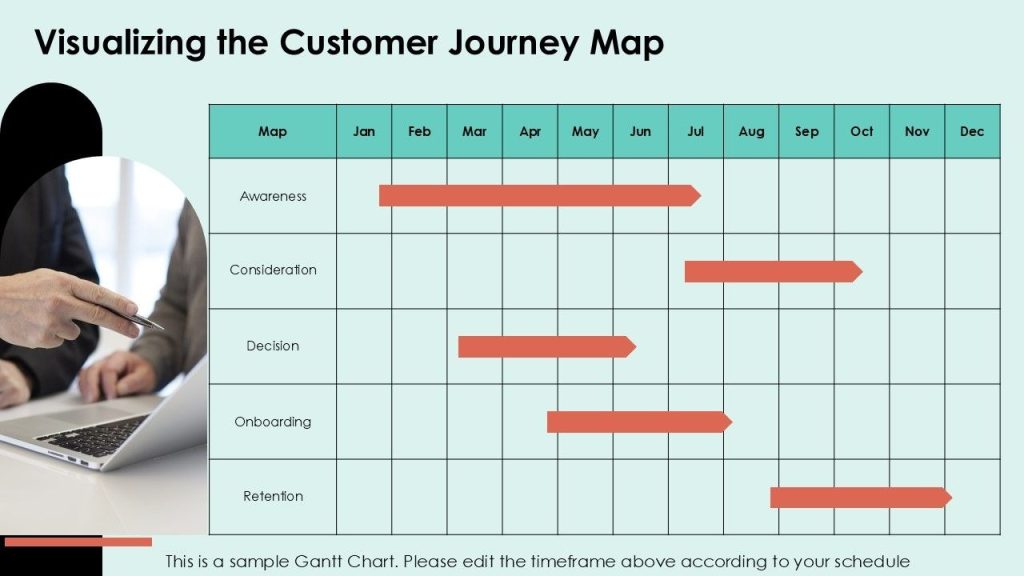
Template Idea: Horizontal timeline with rows for customer actions, emotions, and improvement ideas.
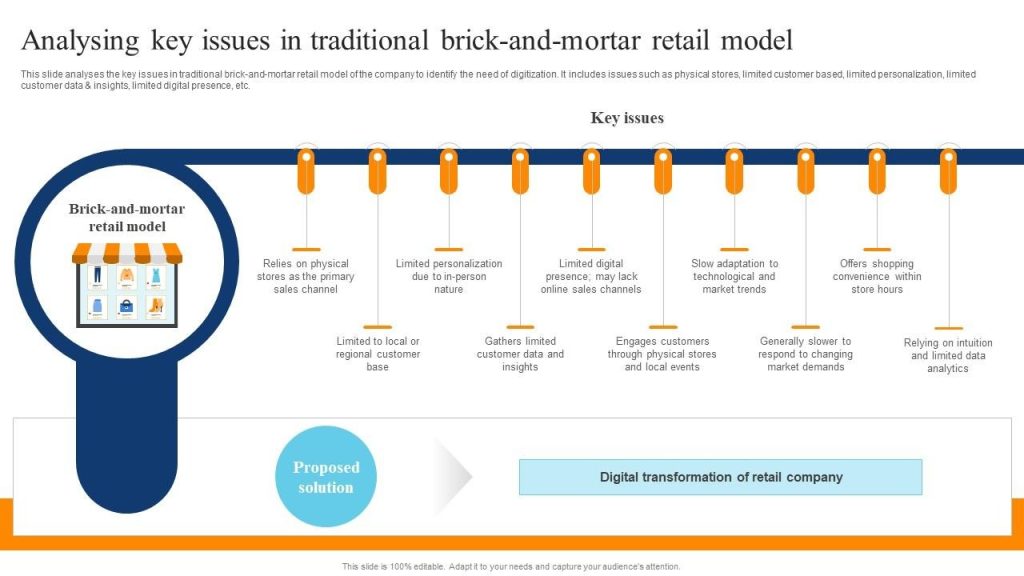
3. Brick-and-Mortar Store Journey Map
Example: Coffee shop or retail chain.
- Journey Stages: Awareness → Visit → Purchase → Experience → Loyalty
- Touchpoints: Local advertising, store signage, checkout, staff interactions, loyalty program.
- Pain Points: Long lines, inconsistent service, lack of recognition for repeat customers.
- Solutions: Staff training, POS loyalty systems, real-time feedback collection.
Template Idea: Circular diagram showing emotional peaks and drops during the in-store visit.
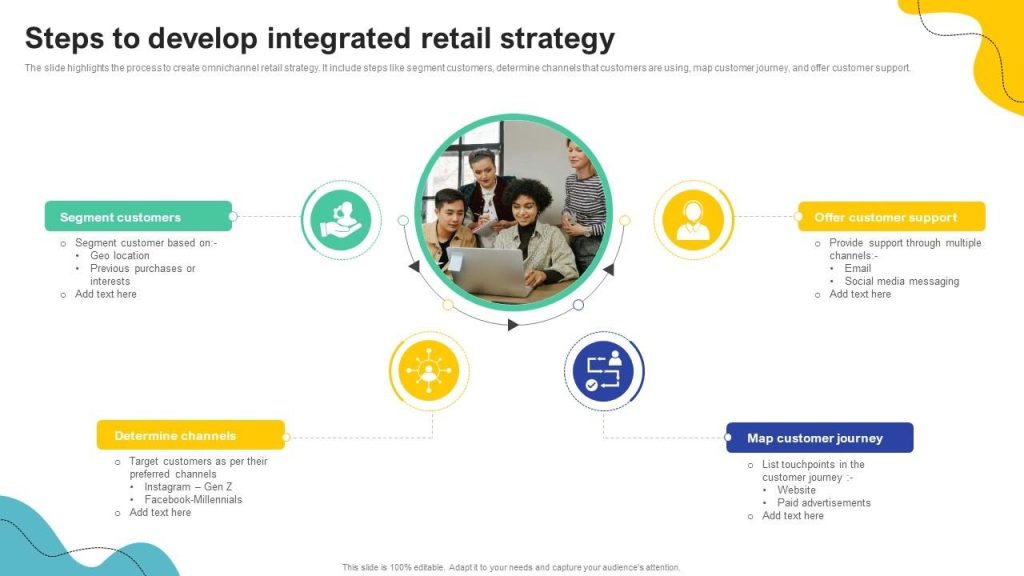
4. Omnichannel Retail Journey Map
Example: Brand that combines online and in-store shopping (e.g., Nike or Apple).
- Journey Stages: Research → Comparison → Purchase → Fulfillment → Re-engagement
- Touchpoints: Mobile app, website, physical store, customer support, social media.
- Pain Points: Inconsistent experience between online and offline touchpoints.
- Solutions: Sync inventory across systems, unified CRM, consistent brand tone across platforms.
Template Idea: Grid-style visual connecting digital and physical journey paths.
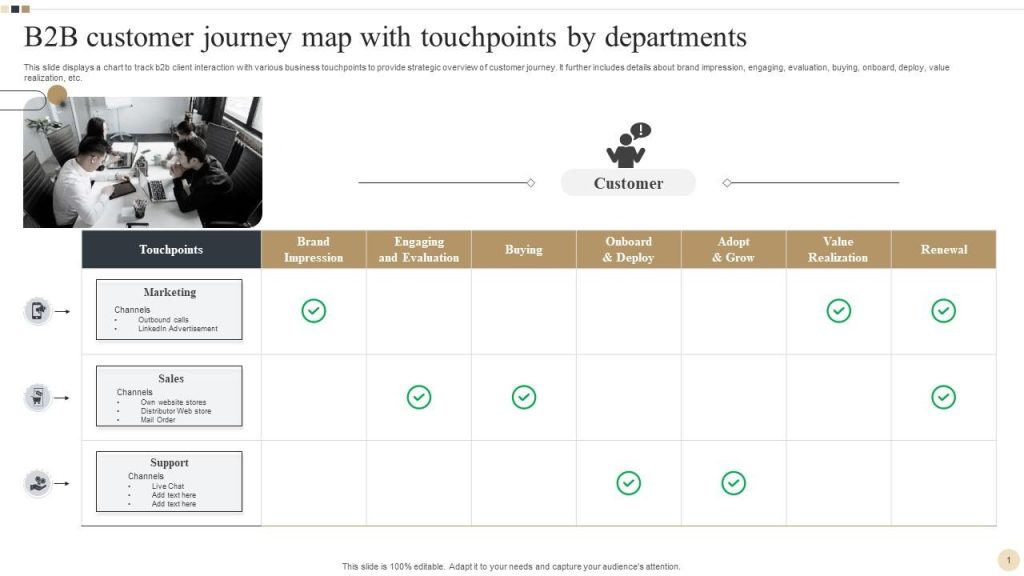
5. B2B Customer Journey Map
Example: Marketing agency or enterprise software provider.
- Journey Stages: Awareness → Consideration → Negotiation → Implementation → Partnership
- Touchpoints: Webinars, proposal emails, demos, onboarding calls, success reviews.
- Pain Points: Long approval cycles, unclear ROI, misaligned expectations.
- Solutions: Offer educational content, transparent pricing, and dedicated account managers.
Template Idea: Flowchart with parallel lanes for decision-makers and end-users.
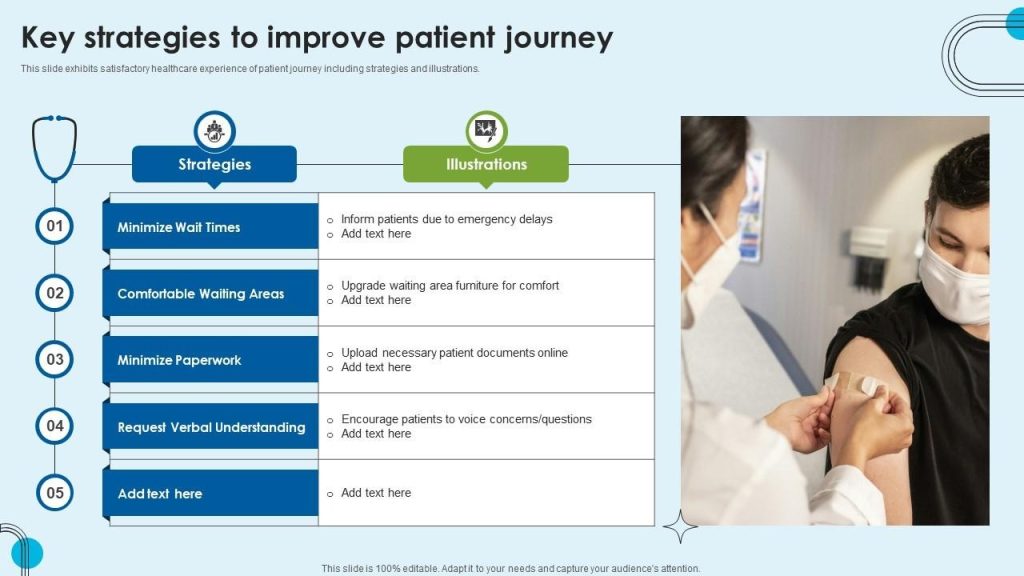
6. Healthcare Patient Journey Map
Example: Hospital or clinic patient experience.
- Journey Stages: Symptom Awareness → Appointment Booking → Visit → Treatment → Follow-Up
- Touchpoints: Website info, phone scheduling, reception desk, doctor consultation, feedback survey.
- Pain Points: Difficulty booking appointments, long waiting times, poor follow-up communication.
- Solutions: Automated reminders, telemedicine options, post-visit satisfaction surveys.
Template Idea: Empathy map layout focusing on feelings, actions, and pain points.
7. Hospitality & Restaurant Journey Map
Example: Hotel or restaurant.
- Journey Stages: Research → Booking → Arrival → Experience → Review
- Touchpoints: Online listings, booking form, check-in, dining/service, feedback form.
- Pain Points: Inconsistent service, slow responses, missed personalization.
- Solutions: Train staff, automate booking confirmations, offer loyalty rewards.
Template Idea: Step-by-step storyboard visualization showing guest experience flow.
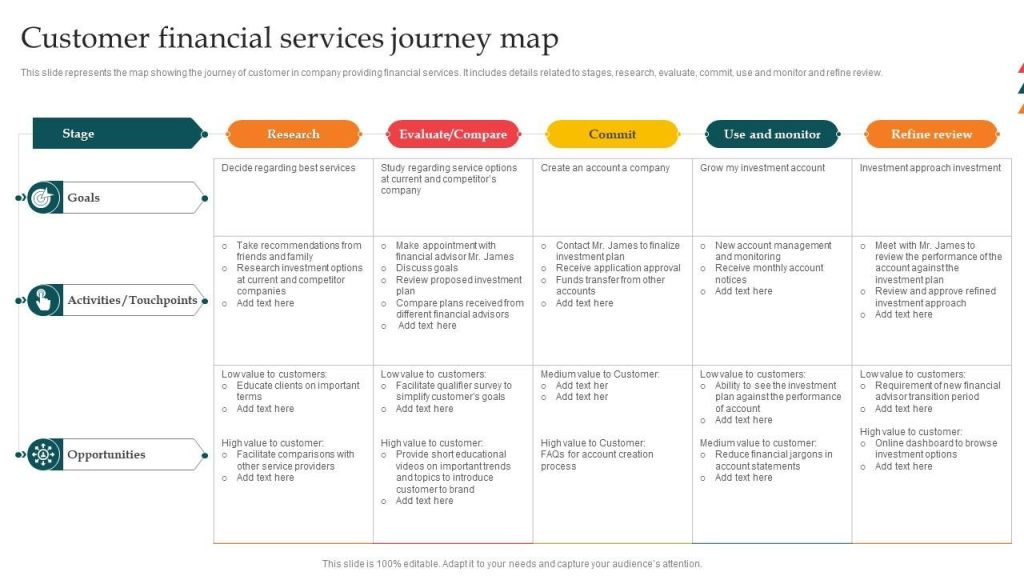
8. Financial Services Journey Map
Example: Bank, fintech, or insurance company.
- Journey Stages: Awareness → Account Setup → Product Use → Support → Retention
- Touchpoints: Website, mobile app, onboarding calls, statements, renewal offers.
- Pain Points: Complicated signup forms, unclear fees, weak customer support.
- Solutions: Simplify onboarding, transparent pricing, proactive communication.
Template Idea: Multi-step linear map showing trust level at each touchpoint.
Overcoming Common Challenges in Customer Journey Mapping
Data Silos
Solution: Consolidate CRM, analytics, and support data.
Lack of Team Alignment
Solution: Use journey mapping workshops.
Outdated Journeys
Solution: Refresh maps quarterly.
No Measurable KPIs
Solution: Track conversion, retention, NPS, CSAT.
The Technology to Create a Great Customer Journey
CRM and CX Platforms
Platforms such as CRM systems, CX management tools and data platforms help capture, visualise and act on journey data. CRM data, service/ticket systems, marketing automation all feed into mapping and optimisation.
Loyalty and Retention Tools
Designing loyalty and reward programs, tracking post-purchase engagement, and analyzing retention are part of the later stages of the journey enabled by data platforms and loyalty program tools.
Training and Strategy
Mapping the customer journey also involves aligning workforce, training for CX, building internal culture where every department sees themselves as part of the journey.
The Evolution of the Customer Journey Map
- With digital commerce, the customer journey has become more complex websites, apps, chatbots, support centers, stores all part of the mix.
- Modern B2B journeys are non-linear, multi-threaded, with multiple stakeholders and many touchpoints requiring real-time, cross-channel analytics.
- The journey map concept now includes not just purchase but full-lifecyle, advocacy and retention.
Conclusion
Mapping the customer journey is now necessary rather than discretionary.
Teams may better understand their consumers, pinpoint problems, tailor experiences, and foster enduring loyalty with the aid of a well-designed route map.
Journey maps become a potent force behind customer happiness and business expansion when they are handled as a dynamic document backed by CRM, CX analytics, and ongoing improvement. Learn more…
Customer Journey FAQs
When does the customer journey begin?
At the moment a customer becomes aware of a problem or sees your brand.
What’s the difference between a customer journey and a user journey?
Customer journey covers full lifecycle; user journey often focuses on product interaction.
Why use a customer journey map?
To uncover pain points, personalize experiences, and improve retention.
How does automation improve journeys?
By delivering consistent and personalized communication at each stage.

