

Skincare Market Size, Share, Trends | Growth Analysis [2034]
Global Skin Care Market Size & Forecast
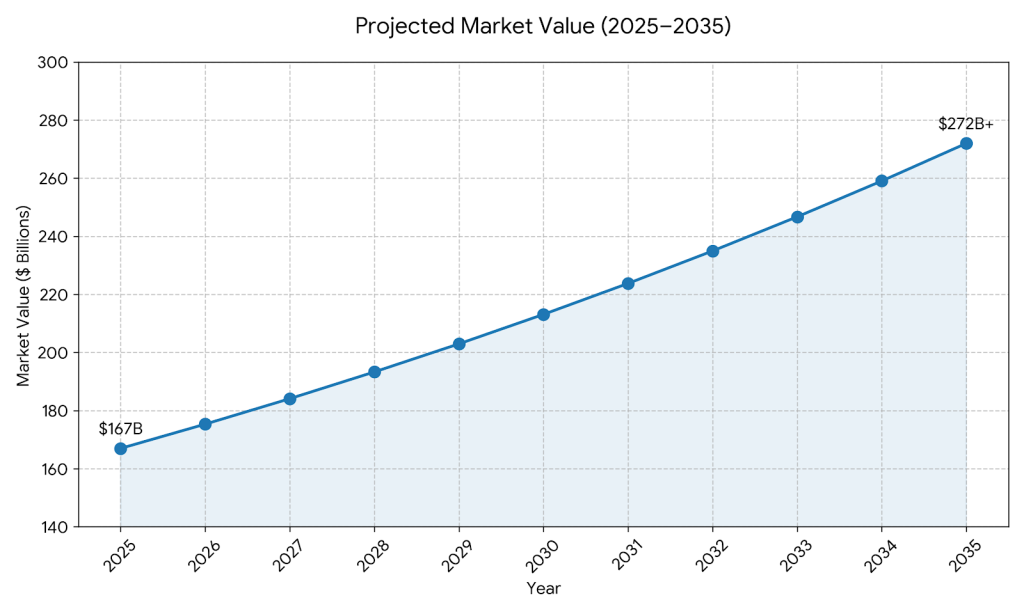
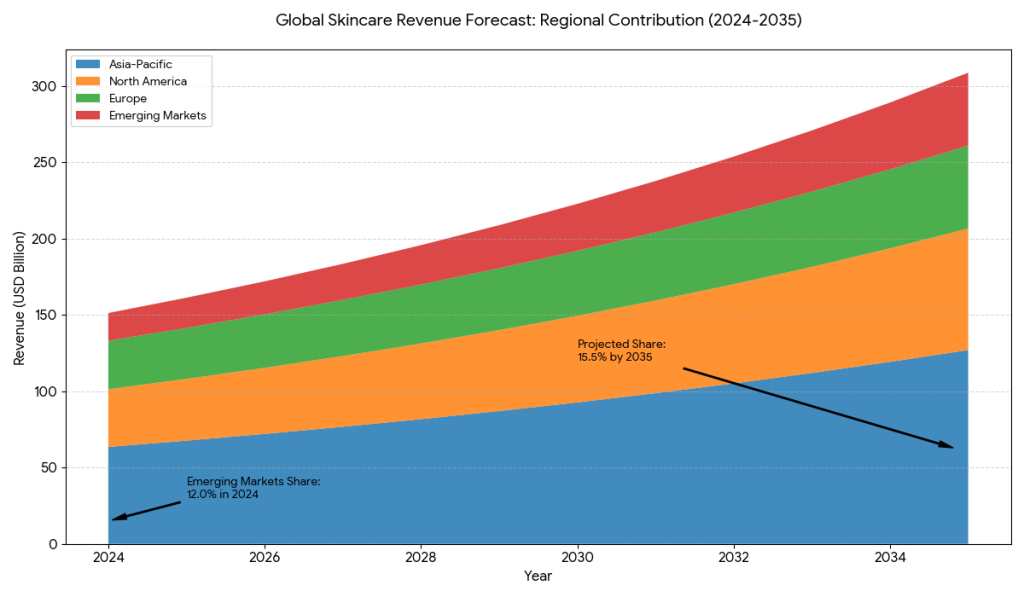
The global skin care industry continues to expand steadily, driven by rising consumer interest in personal wellness and daily skincare routines. Most industry analyses estimate that the market will be worth well over USD 200 billion by the early 2030s, with some forecasts projecting values above USD 270 billion by 2035 as demand broadens across regions and product segments. This growth reflects a compound annual increase in the mid-single digits, showing that skincare remains one of the most resilient parts of the broader beauty and personal care landscape over the long term.
Factors contributing to this rising value include increased spending on advanced formulations (like serums, anti-aging solutions, and barrier-repair products), expansion of digital retail and online consultations, and a widening consumer base that now includes younger shoppers and men’s grooming niches alongside traditional female buyers.
Facial Care Leads Revenue
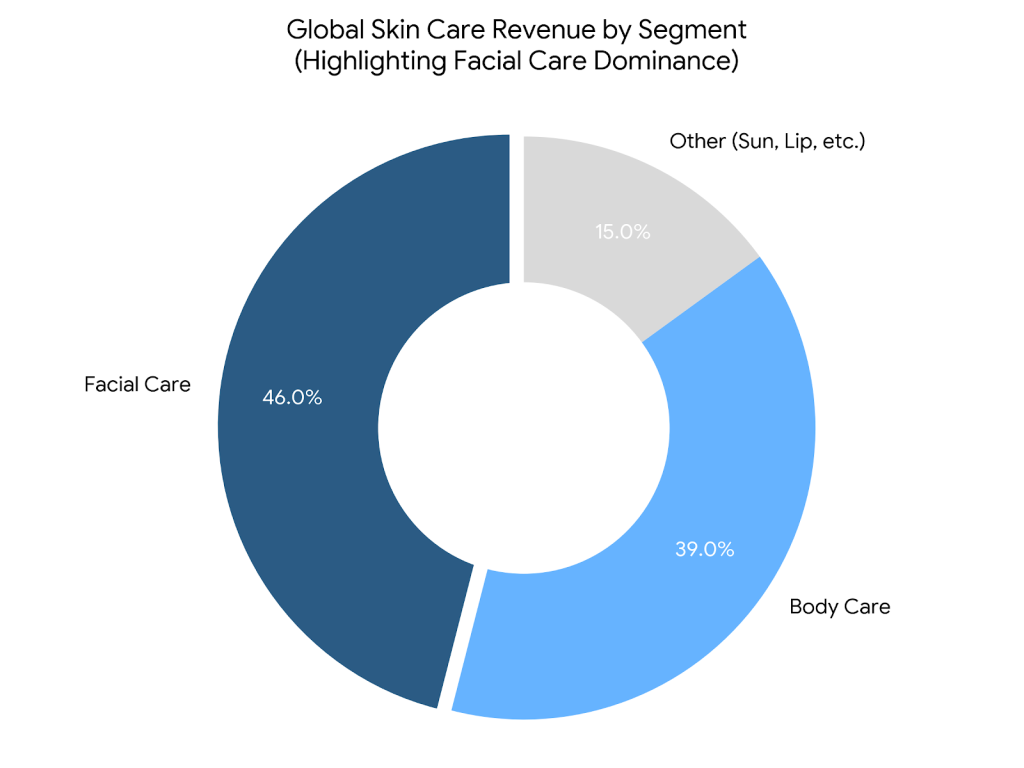
Within the broader skin care market, facial care products consistently account for the largest share of revenue worldwide. These products, which include cleansers, moisturizers, serums, toners, and sunscreens dominate because they address high-priority consumer concerns like hydration, anti-aging, acne control, and daily protection from environmental stressors.
Analysts estimate that facial care routinely captures a significant majority of overall skin care sales, often close to or above half of total market value, due to its broad usage and frequent repurchase cycle. Ongoing innovations such as ingredient-driven formulations (e.g., antioxidants, peptides, ceramides) and personalized serums further amplify this segment’s growth compared to body care, lip care, or niche categories.
Key Data Highlights
- Market valuation: Estimates for the global skin care market in 2025 range from around USD 155 billion to USD 178 billion, depending on methodology and what types of products are included.
- Mid-term growth: Projections to 2035 show the industry growing steadily, often at CAGR in the 4–7 % range, reflecting continued global demand expansion.
- Facial dominance: Facial care products form the core revenue driver globally, often representing a major portion of total revenue due to high usage and frequent consumer repurchases.
- E-commerce and innovation: Growth is supported by online retail, digital beauty recommendations, ingredient-focused solutions, and personalized formulations all helping extend skincare’s reach across demographics and regions.
Key Drivers Behind Market Growth
Digital Demand & E-Commerce Penetration
One of the strongest forces propelling the global skin care market is the rapid adoption of digital platforms and e-commerce. Online retail has shifted how consumers discover, research, and purchase skincare products replacing many traditional in-store shopping habits with digital exploration and direct-to-consumer buying. Today’s shoppers can easily compare ingredient lists, read reviews, watch tutorials, and buy products straight from websites, mobile apps, and social media marketplaces. Online retail also enables smaller niche brands to reach global audiences without the limitations of physical shelf space, helping them scale quickly.
This shift boosts market growth because digital channels offer convenience, broader selection, and personalized experiences that traditional retail can’t easily match. Subscription models, virtual consultations, and social commerce connect consumers more deeply with brands and encourage repeat purchases especially among millennials and Gen Z shoppers who rely heavily on digital discovery before buying products.
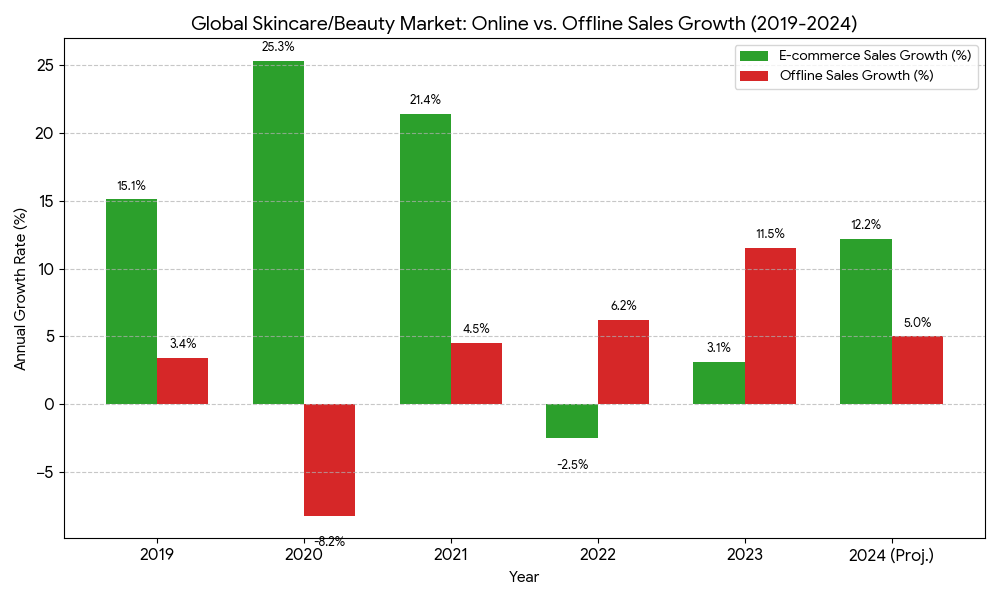
A bar graph comparing e-commerce vs offline sales growth over the last few years, showing how online channels are gaining share year-over-year.
Awareness of Skincare Routines
Consumer understanding of skincare has evolved significantly in recent years. Far from seeing skincare as a luxury, people now view it as a necessary part of daily wellness and self-care. Digital education through influencers, dermatologists online, and community forums has helped shift perceptions from basic cleansing to structured, multi-step routines that address specific concerns like hydration, sun protection, and aging.
This awareness has led more consumers to buy multiple products tailored to specific steps in a routine, such as toners, serums, masks, and targeted treatments. As research shows, many buyers now own an average of more products than before, increasing overall consumption and market revenue. Trends like “K-Beauty” routines, which popularized multi-step application, further reinforce this demand for layered skincare regimens.
Natural, Clean & Organic Preferences
Another major growth driver is the shift toward natural, clean, and eco-friendly skincare products. Modern buyers are more ingredient-savvy than ever and want transparency about what they apply to their skin. Products framed as free from harsh chemicals like parabens, sulfates, phthalates, and artificial fragrances are in high demand, especially among health-conscious and environmentally aware demographics. This trend is partly due to broader wellness movements that link overall health with product choices, pushing skincare brands to reformulate legacy products or introduce new organic lines with plant-based ingredients.
Environmental and ethical values also play a role consumers increasingly prefer brands that use sustainable sourcing, biodegradable packaging, and cruelty-free practices. This doesn’t just drive segment growth within the industry; it influences broader product development strategies as companies aim to align with evolving consumer values.
Personalization & Tech Integration
The most cutting-edge driver shaping future skincare demand is personalization through technology. Advances in artificial intelligence (AI), augmented reality (AR), and data analytics now allow brands to tailor recommendations and product formulations to individual skin profiles. From digital skin scans that assess concerns like dryness or pigmentation to AI-powered recommendation engines that suggest products based on lifestyle and goals, technology is making personalized skincare solutions more common and accessible.
Tech isn’t only improving product recommendations it’s shaping how consumers experience skincare. Virtual try-ons, at-home diagnostic tools, and apps that track progress over time all contribute to a more intimate, customized consumer experience. This resonates strongly with modern consumers who expect beauty solutions to be tailored, not generic. Early research even shows emerging tools that recommend products based on skin microbiome or other personal attributes, hinting at the next frontier of personalization.
Emerging Trend: Personalized Skincare
Market Size & Growth
The global personalized skin care product market is valued at over USD 33 billion in 2025 and expected to more than double by 2034, highlighting consumer demand for custom formulations and tech-enabled routines.
Tech-Led Product Discoveries
Innovations like AI-based skin analysis and diagnostics are revolutionizing product recommendations, improving customer engagement, and driving repeat purchases.
Regional Growth & Market Dynamics
The global skincare market exhibits distinct regional patterns shaped by consumer preferences, economic maturity, cultural beauty norms, and digital adoption. While demand grows everywhere, Asia-Pacific, North America, Europe, and the Middle East & Africa each contribute uniquely to overall market expansion based on consumption habits and purchasing power.
Asia-Pacific Leads the Market
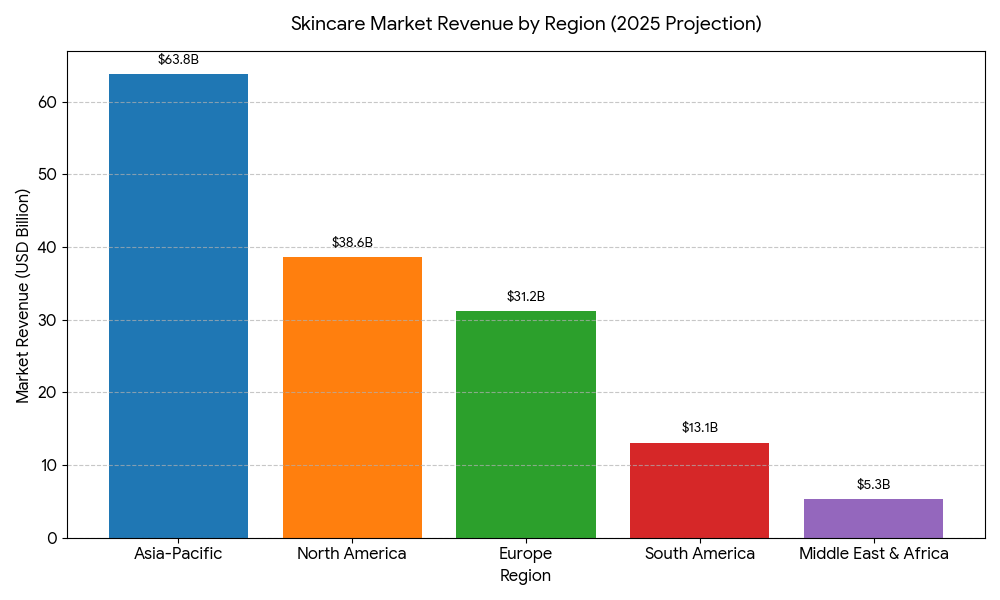
The Asia-Pacific region remains the dominant force in the global skincare market, earning the largest share of volume and value. In 2025, Asia-Pacific accounted for around 40–51 % of the total market share, driven by rising disposable incomes, strong beauty culture, and rapid digital adoption.
Key growth factors in Asia-Pacific include:
- Cultural emphasis on skincare routines: Traditions like K-Beauty (South Korea) and J-Beauty (Japan) have shaped product expectations toward multi-step, innovative regimens.
- Expanding middle class: Countries like China, India, and Southeast Asian markets show rising purchasing power and premium product demand.
- E-commerce penetration: Urban consumers increasingly buy skincare online, pushing digital sales to over 40 % of regional purchases.
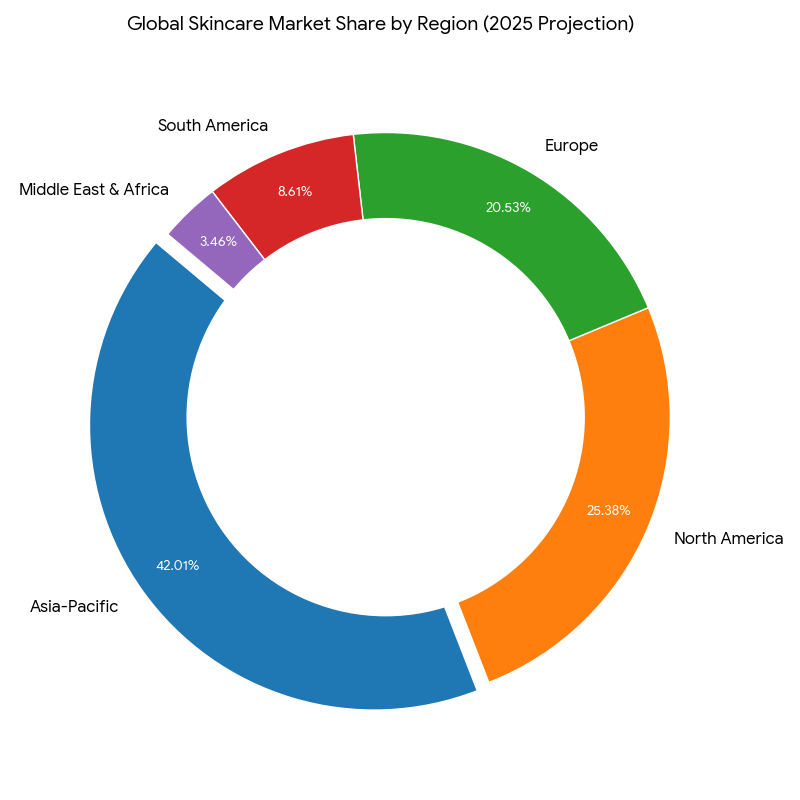
Because of its scale and innovation dynamics, Asia-Pacific is expected to hold the lead throughout the forecast period, with robust compound growth outpacing most other regions.
North America & Europe Trends
North America
North America maintains a significant share of the skincare market, accounting for roughly 25–32 % of global volume in 2025.
Drivers of North American growth include:
- High consumer awareness: Consumers here prioritize sun protection, anti-aging, and medical-grade formulations.
- Strong premium and dermatologist-backed demand: The region shows keen interest in scientifically validated, dermatologist-approved products.
- E-commerce & omnichannel retail: Digital and hybrid channels bolster accessibility and brand loyalty among younger and older demographics alike.
North America’s stable healthcare infrastructure and dermatology culture further reinforce market resilience and premium product uptake.
Europe
Europe represents around 20–28 % of global skincare revenue, with strong demand for natural, organic, and clinically tested solutions.
Key European characteristics include:
- Preference for organic and clean formulations: Ingredient transparency and safety are major purchase drivers.
- Dermatological credibility: Consumers favor brands backed by clinical validation and dermatology endorsements.
- Specialty retail influence: Pharmacies and premium beauty boutiques hold solid market positions due to trusted health and beauty consultations.
Middle East & Emerging Markets
Although smaller in total size compared with Asia-Pacific or North America, the Middle East & Africa region is one of the fastest-growing parts of the skincare market, accounting for ~3–14 % share depending on segmentation.
Growth catalysts in this region include:
- Climate-specific skincare needs: High sun exposure increases demand for sun protection and moisture products.
- Premium & imported brand appeal: A strong preference for luxury and international skincare brands fuels purchases, especially in UAE and Saudi Arabia.
- Rising urbanization: Younger consumers in urban centers exhibit expanding grooming routines and brand exploration.
Emerging markets in Africa and the Middle East also show increasing awareness of skincare benefits, often sparked by social media, influencer culture, and beauty education campaigns — generating long-term potential for category expansion.
Consumer Behavior & Market Preferences
Ingredient-Driven Purchases
Clean-label, natural ingredients, and efficacy-focused formulations are now influencing majority consumer purchase decisions, with anti-aging and protective products especially popular.
Demographic Expansion
Men’s skincare adoption is rising fast, narrowing the gender gap and expanding market segments beyond traditional female consumers.
Social Media & Influencer Impact
Platforms like Instagram, TikTok, and YouTube significantly influence skincare learning, brand discovery, and purchasing behavior worldwide.
Market Challenges & Future Considerations
The skin care market is expanding rapidly, but it also faces a set of meaningful challenges that brands and investors need to navigate proactively. These obstacles span regulatory hurdles, supply chain fragility, consumer trust issues, sustainability demands, and pricing pressures all of which shape how the industry evolves in the next decade.
Regulatory Complexity & Compliance Pressure
One of the most consistent barriers in the skincare industry is navigating complex and evolving regulations across different regions. Regulatory bodies such as the U.S. FDA, the European Union’s Cosmetics Regulation, and standards in Asia Pacific and other markets impose strict guidelines on ingredient safety, product claims, labeling, and testing procedures. Compliance often increases development timelines, raises legal and documentation costs, and may delay market entry for new products.
For brands operating globally, differing rules across countries add another layer of complexity. A formulation that’s compliant in one market might require alteration or re-testing in another, which increases operational burdens and slows innovation.
| Region | Milestone | Effective date | Business Impact |
|---|---|---|---|
| USA | MoCRA Registration | July 1, 2024 | Mandatory facility & product listing; non-compliance blocks US sales. |
| Global | GHS Revision 11 | Feb 1, 2025 | New hazard categories for endocrine disruptors; requires SDS updates. |
| China | Full Safety Reports | May 1, 2025 | Intensive toxicological data required for all registered products. |
| USA | State PFAS Bans | Jan 1, 2025/26 | Bans on “Forever Chemicals” in CA, CO, and WA; requires reformulation. |
| EU | Fragrance Allergens | July 31, 2026 | Disclosure list expands to 80+; massive packaging redesign needed. |
| EU | INCI Glossary | July 30, 2026 | Mandatory use of updated ingredient nomenclature (Decision 2025/1175). |
| USA | Talc Testing | March 2026 | Final rule for asbestos detection methods in talc-based powders. |
A regulatory compliance timeline or world map showing major regional regulatory milestones and their effects on product launches.
Supply Chain & Ingredient Challenges
The skincare industry relies on a diverse set of raw materials — botanical extracts, specialty actives, carrier oils, and advanced chemicals. However, raw material volatility and supply chain disruptions remain persistent issues. Events like geopolitical instability, agricultural yield fluctuations, environmental stresses, and logistics bottlenecks can disrupt sourcing and delay production schedules, impacting product availability and pricing.
Premium or organic ingredients like exotic plant extracts or sustainably harvested botanicals often come with higher costs and limited supply, prompting brands to balance between aspirational formulations and cost efficiency.
Brand Trust, Counterfeits & Consumer Skepticism
Consumer trust is a critical but fragile asset in skincare. Two major pain points here are:
- Proliferation of counterfeit and low-quality products: Fake items sold through unauthorized channels can contain harmful ingredients, undermine brand credibility, and even pose health risks.
- Skepticism around product claims: With so many products promising dramatic results, some consumers have become wary of exaggerated claims, pushing brands to invest in scientific validation, clinical testing, and transparent communication.
- These trust issues make it harder for brands, especially new or smaller ones — to differentiate themselves and maintain loyal customer bases.
Environmental Sustainability & Packaging Pressures
Sustainability is no longer optional for a large segment of skincare consumers it’s expected. People increasingly demand eco-friendly packaging, biodegradable formulas, ethical sourcing, and lower carbon footprints. Meeting these expectations often necessitates redesigning packaging, adopting circular-economy principles, or investing in new materials, all of which increase production costs and complexity.
Brands that fail to address environmental concerns risk reputational damage and loss of market share, especially among environmentally conscious millennial and Gen Z consumers.
Market Saturation & Price Competition
The skincare category is highly competitive, with thousands of new products launched annually. This saturation creates price pressures and promotional wars, making it difficult for brands to stand out without significant marketing investment.
In many mature markets, premium and mass segments co-exist, and differentiation hinges on strong brand values, science-backed efficacy, or unique positioning all of which require continuous investment in R&D and branding.
Future Considerations: Innovation, Tech & Inclusion
While challenges are substantial, the market also holds avenues for long-term resilience and leadership:
- Scientific and tech innovation from AI personalization to ingredient delivery systems can differentiate brands and improve consumer outcomes.
- Inclusivity in product development catering to diverse skin tones, types, and cultural needs can unlock underserved segments.
- Education and community building, investing in clear, evidence-based education can mitigate skepticism and build loyal communities.
Top Skincare Trends to Watch in 2026 and Beyond
The skincare industry is constantly evolving, and 2026 is poised to bring several defining trends that reflect both consumer preferences and technological innovation. As routines deepen and expectations grow, brands that align with these trends are more likely to drive engagement and long-term loyalty.
Skinification of New Categories
“Skinification” refers to applying skincare principles to areas beyond the face, and it continues to gain momentum. Instead of siloed categories like just body or hair care, consumers now expect skincare-grade formulations for hands, lips, scalp, and even body washes. This trend elevates products to a treatment mindset rather than basic cleansing or moisturizing for example, scalp serums designed like face serums, or body lotions with active ingredients for texture and pigmentation issues.
Ingredient Storytelling & Clean Beauty Evolution
In 2026, ingredient transparency will be table stakes. Consumers now expect brands to clearly explain what each ingredient does, why it’s included, and how it benefits the skin. “Clean beauty” is shifting away from vague marketing toward evidence-based formulations that remove harmful ingredients and emphasize sustainable sourcing, biodegradability, and safety profiles. Ingredients like niacinamide, ceramides, bakuchiol, and peptides remain perennial favorites,
Holistic Self-Care Integration
Skincare is no longer viewed in isolation it’s part of a broader self-care and wellness routine. Consumers increasingly connect skin health with nutrition, mental wellness, sleep quality, and stress management. Products that reflect this narrative (e.g., adaptogen-infused serums, skin supplements, calming CBD-adjacent formulas) are gaining popularity. The emphasis is less on quick fixes and more on long-term skin ecology and resilience.
Personalization Through Tech & Data
Personalized skincare whether through AI diagnostics, custom formulations, or ongoing digital tracking is expanding fast. Apps and smart devices that analyze skin texture, hydration, sun damage, and environmental impact allow brands to tailor recommendations in real time. Instead of generic serums, consumers may receive custom blends based on data collected from daily habits and genetic predispositions. This trend bridges technology with everyday routines and deepens consumer-brand relationships.
Sustainable & Refillable Packaging
Environmental concerns aren’t fading they are becoming central to purchase decisions. Refillable packaging, recyclable materials, and reduced plastic footprint products are no longer niche; they’re expected by a growing base of conscious consumers. Brands are testing biodegradable formulas, refill stations, minimalist designs, and reuse programs tied to loyalty incentives. The emphasis is on closing the loop without sacrificing performance.
Community-Driven Brand Experiences
Brands that build authentic communities whether through social channels, forums, or loyalty apps will continue to outperform those that rely solely on ads. Trendsetters are co-creating with users, inviting feedback on formulations, and creating spaces for consumer storytelling. This fosters trust, boosts user-generated content, and allows brands to pivot quickly based on real-time preferences.
Conclusion
The skincare industry heading into 2026 and beyond is defined by intelligence, transparency, and intention. Trends are no longer surface-level aesthetics — they reflect deeper shifts in how consumers think about skin health, sustainability, and personalization.
From the skinification of scalp and body care to ingredient-led formulations and science-backed clean beauty, the market is moving toward high-performance solutions. Technology-driven personalization, refillable packaging systems, and community-centered brand ecosystems are transforming how products are developed, marketed, and experienced.
At the same time, holistic wellness integration is reshaping routines — linking skin health with sleep, stress, nutrition, and lifestyle habits. Brands that align innovation with authenticity and measurable results will lead the next growth phase of the global skincare market.
In short: 2026 skincare isn’t just about looking better, it’s about smarter, sustainable, data-driven skin health.
FAQ Section
The biggest skincare trends in 2026 include AI-powered personalization, skinification of body and scalp care, sustainable refillable packaging, ingredient transparency, and holistic wellness integration.
Yes, but it has evolved. Clean beauty in 2026 focuses on scientifically backed ingredients, safety data transparency, and sustainable sourcing rather than just “free-from” marketing claims.
AI enables personalized skincare recommendations through skin analysis apps, smart diagnostics, and custom formulations based on user data, improving treatment accuracy and customer retention.
Consumers increasingly prefer refillable, recyclable, and low-waste packaging options. Sustainable packaging improves brand trust and aligns with environmental responsibility expectations.
Skinification refers to applying facial skincare-grade ingredients and treatment concepts to other areas such as scalp, lips, and body.

