

Why Ecommerce Marketing Feels So Expensive in 2026: Rising Ad Costs, Google PPC & What to Fix
Introduction
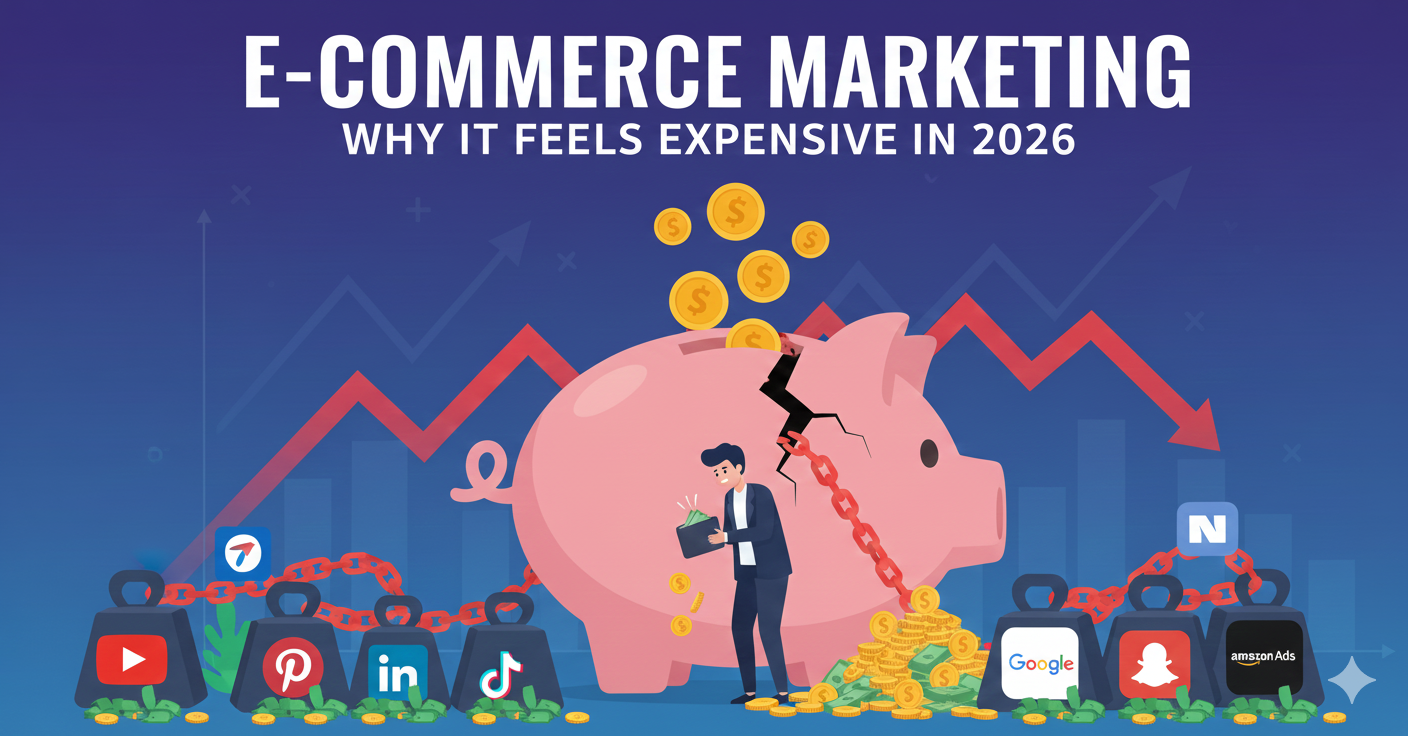
By 2026, ecommerce brands across the globe are asking the same question: why does marketing feel so expensive, even when sales are growing? Google Ads cost more than they did a few years ago, Facebook and Instagram CPMs fluctuate aggressively, Amazon PPC is eating into margins, and newer platforms like TikTok demand constant creative investment. But the truth is, rising ad costs alone aren’t the real problem. What’s changed is how digital advertising works: more competition, automated bidding systems, stricter data privacy, and higher expectations from consumers.
Ecommerce marketing hasn’t just become more expensive; it has become more complex. Brands that rely on default campaign settings, weak conversion funnels, or paid traffic alone feel the pressure fastest. This article breaks down why ecommerce marketing feels expensive in 2026 and, more importantly, what you can realistically fix to regain control over your advertising spend.
The Macro Reality; Why Ecommerce Marketing Costs Are Rising in 2026
Online advertising isn’t just “a bit more expensive” — it’s structurally changed. As ecommerce competition grows globally, platforms like Google, Meta, TikTok, and Amazon have expanded their auction systems and automated bidding tools, which increase CPC and CPM by default when demand is high. Average CPCs are rising year-on-year for example, Google Ads saw a ~13% increase across industries in 2025, while the overall digital ad market tightened as more advertisers bid for the same audiences.
Demand Outstrips Ad Inventory
There are fewer premium ad slots available on SERPs and social feeds, but more brands bidding for them. This imbalance especially in high-competition niches — drives CPC higher and forces advertisers to spend more for the same visibility.
Automation Has Made Spend Easier But Costlier
Google’s Performance Max and Meta’s Advantage+ automation reduce manual work, but they often spread budgets across placements automatically and sometimes inefficiently especially if conversion tracking isn’t optimized.
Costs Are Multiplied by Poor ROI, Not Just High Pricing
Many brands feel expensive marketing because returns aren’t proportional. Spending without optimizing conversion funnels, audience targeting, or retention strategies means dollars disappear with little to show for them.
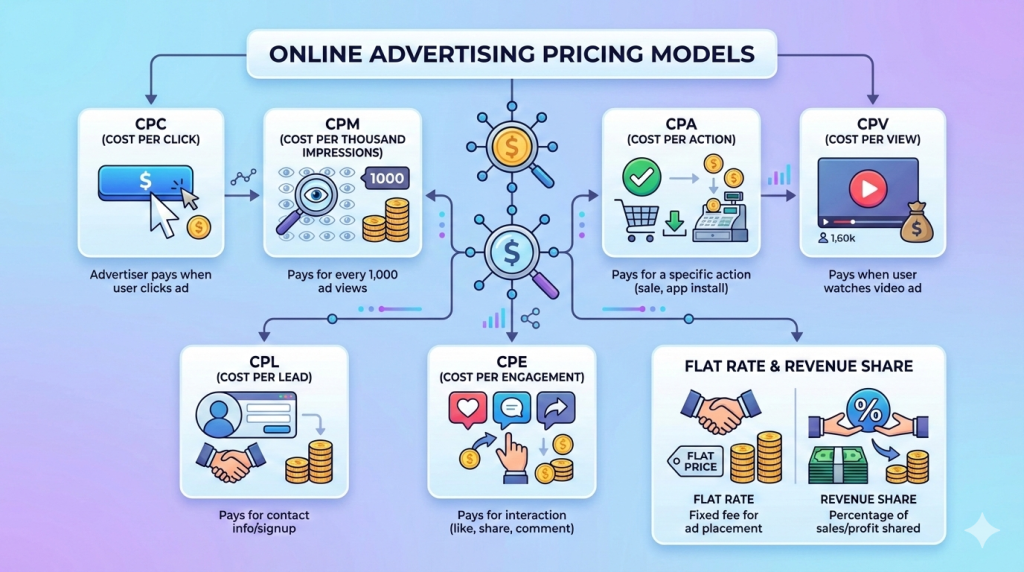
What are the main online advertising pricing models?
The most common online advertising pricing models are CPC (cost per click), CPM (cost per thousand impressions), CPA (cost per action), CPV (cost per view), CPL (cost per lead), CPE (cost per engagement), Flat Rate, and Revenue Share. Each model supports different goals such as traffic generation, brand awareness, lead capture, or direct sales across platforms like Google, Meta, Amazon, and TikTok.
| Pricing Model | What You Pay For | Best Use Case | Typical Platforms |
| CPC (Cost Per Click) | User clicks | Traffic & purchase intent | Google Ads, Meta Ads, Amazon Ads |
| CPM (Cost Per 1,000 Impressions) | Ad visibility | Brand awareness & reach | Meta, TikTok, Display Networks |
| CPA (Cost Per Action) | Completed action | Sales & conversions | Google Ads, Meta Ads |
| CPV (Cost Per View) | Video views | Video awareness & launches | YouTube, TikTok |
| CPL (Cost Per Lead) | Lead capture | Email & CRM growth | Meta Lead Ads, Google Forms |
| CPE (Cost Per Engagement) | Likes, comments, interactions | Engagement & social proof | Meta, TikTok |
| Flat Rate | Fixed placement cost | Premium brand exposure | Publisher sites, newsletters |
| RevShare | % of revenue | Performance partnerships | Affiliates, marketplaces |
Advertising Pricing Models by Platform (Examples)
Google Ads
- CPC: Search ads, Shopping ads, Performance Max
- CPA: Conversion-optimized campaigns
- CPM: Display Network & YouTube awareness campaigns
Meta (Facebook & Instagram)
- CPM: Feed, Stories, Reels ads
- CPC: Traffic and conversion campaigns
- CPL: Lead generation forms
- CPE: Engagement-focused campaigns
Amazon Ads
- CPC: Sponsored Products, Sponsored Brands, Sponsored Display
- CPA (Indirect): Optimized toward purchases but charged per click
TikTok Ads
- CPM: In-feed and brand awareness ads
- CPV: Video view campaigns
- CPE: Engagement-based objectives
Google PPC Advertising; Costs and Common Mistakes in 2026
Google remains the dominating ecommerce paid channel, but its CPCs reflect fierce competition for high-intent shopping keywords. Average CPC on Google Search can range from $1–$5+ depending on industry and seasonal demand, while Shopping and Performance Max campaigns — commonly used by ecommerce — often see inflation above industry averages.
| Campaign Type | Typical CPC Range | Average CPC | Best use case |
|---|---|---|---|
| Search Ads | $1.50 – $8.00 | $4.50 – $5.25 | High-intent lead gen & services |
| Performance Max (PMax) | $0.20 – $1.50 | $0.60 – $0.70 | Automated cross-channel scaling |
| Shopping Ads | $0.30 – $1.20 | $0.65 – $0.85 | E-commerce & retail product sales |
There are some common mistakes in google ppc advertising to avoid.
Default Campaign Setups Waste Budget
Using default campaign strategies for Shopping without product prioritization causes many dollars to be spent on products that never sell — up to 80% of the budget going to low-ROI SKUs in some cases.
Overbidding on Competitive Keywords
Businesses often overbid on generic, high-competition terms (“running shoes”, “fashion accessories”), pushing CPCs higher — especially when larger advertisers dominate auctions.
Lack of Intent-Driven Keyword Segmentation
Grouping high and low intent keywords together increases cost without improving conversions. Segmenting by buyer intent (e.g., exact match for “buy waterproof hiking boots”) can reduce wasted spend.
Facebook Ads Ecommerce Costs in 2026; Cheaper Clicks, But Harder Conversions
Facebook and Instagram remain essential channels for ecommerce social media advertising, but their pricing ecosystems have changed. The average CPM for Meta platforms in 2026 is around $6.59 globally — with US averages much higher — and CPCs are influenced by how ads are optimized and targeted.
| Market/ Segment | 2026 CPM Benchmark (Est.) | Why the difference |
|---|---|---|
| Global Average | $6.59 – $8.75 | Includes low-cost regions like India, SE Asia, and LATAM. |
| US Market (Average) | $14.50 – $22.00 | High competition and high purchasing power drive up prices. |
| Awareness Campaigns | $5.00 – $9.00 | Optimized for reach (cheaper impressions). |
| Conversion Campaigns | $18.00 – $35.00+ | Optimized for “likely buyers” (premium audience segments). |
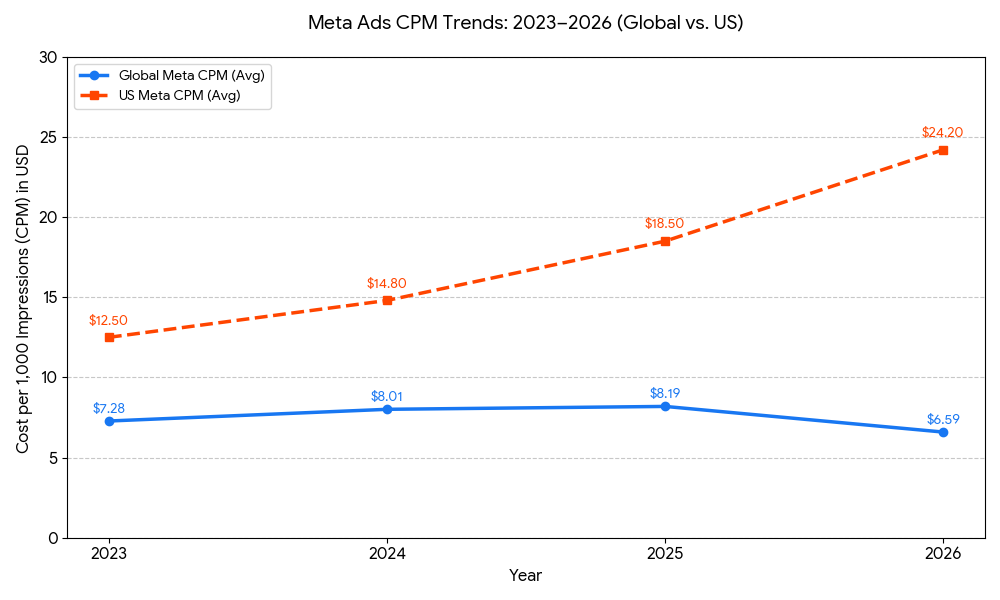
Graph of Meta CPM trends (2023–2026).
Lower CPC Doesn’t Always Mean Lower CAC
While Facebook CPCs are often cheaper than Google’s, the cost per actual acquisition can still be high because social clicks are usually mid-funnel, requiring more nurturing to convert.
Creative Fatigue Drives Up Costs
Platforms like Meta charge more when audiences stop engaging with stale creative. Frequent creative testing prevents expensive impressions on low-performing ads.
First-Party Data Is Now Essential
Privacy changes and iOS tracking limits mean poor data visibility leads to wasted spend. Brands that invest in first-party lists and tighter remarketing see better efficiency.
TikTok Advertising Cost vs Return for Ecommerce Brands
TikTok has become a major paid platform, but it’s not immune to rising costs. Average TikTok CPC often hovers around $1–$2, and CPMs near $8–$10 making it a viable but competitive channel.
The trick isn’t just paying for traffic it’s creating content that performs well within TikTok’s algorithmic feed, or your ROI suffers.
Amazon PPC Ads; Rising Costs and Hidden Pressure on Margins
Amazon PPC continues to be one of the most competitive ad ecosystems, with average costs between $0.80 to $1.20 per click in 2026. Sponsored Products, Sponsored Brands, and Display placements all compete for visibility, driven by increased advertiser participation and seasonal spikes.
Shrinking Organic Reach Forces Paid Dependence
| Ad Type | Avg. CPC Range (2026 Forecast) | Seasonal Spike (Q4/Prime Day) | Competition by Category | Creative Type Nuance |
|---|---|---|---|---|
| Sponsored Products | $0.95 – $1.45 | +60% to +100% | High: Health, Beauty, Electronics ($2.50+)Low: Books, Grocery ($0.45+) | Static Only: Highest intent; core driver for “Buy Box” conversion. |
| Sponsored Brands (Static) | $1.15 – $2.60 | +80% to +120% | High: Home, Personal Care ($3.00+)Low: Industrial, Arts & Crafts ($0.80+) | Brand Logo + Products: Best for Top-of-Search awareness & “New-to-Brand” (NTB) growth. |
| Sponsored Brands (Video) | $1.30 – $3.10 | +50% to +90% | High: Tech Gadgets, Fitness ($3.50+)Low: Office Supplies ($1.10+) | Auto-Play Video: 2.5x higher CTR than static; lower ACoS despite higher CPC. |
| Sponsored Display (CPC) | $0.85 – $1.75 | +40% to +70% | High: Baby, Supplements ($2.00+)Low: Pet Supplies ($0.65+) | Contextual/Retargeting: Best for poaching competitor detail pages. |
| Sponsored Display (vCPM) | $8.00 – $14.00(per 1k) | +100% to +150% | High: Lifestyle, Fashion (Mass Market)Low: Niche Hobbyist items | Image/Video: Optimized for reach. 2026 shift: Higher focus on “Customer Personas.” |
Table of Amazon ad CPC ranges by ad type (Sponsored Products, Sponsored Brands, Display).
As Amazon’s algorithm favors paid placements, brands without strong PPC strategies risk losing both paid and organic traffic.
Seasonal Spikes Make PPC Volatile
Events like Prime Day and Q4 shopping periods can double or triple CPCs in certain categories.
Broad Targeting Means More Wasted Spend
Using broad keywords without careful negative keyword lists drains budget fast and drives up total advertising costs.
PPC Advertising Management; Agencies, Fees, and Value in 2026
Hiring agencies to manage PPC and social campaigns adds to the expense.
Typical digital marketing and PPC management fees in 2026 can run from $100 to $10,000+ per month, depending on scope and expertise.
And social media management alone can cost $650–$6,000 per month plus ad spend, not including platform costs.
This means businesses are often paying both ad platforms and ad managers — doubling perceived spend.
Visual: Infographic comparing in-house vs agency PPC costs and returns.
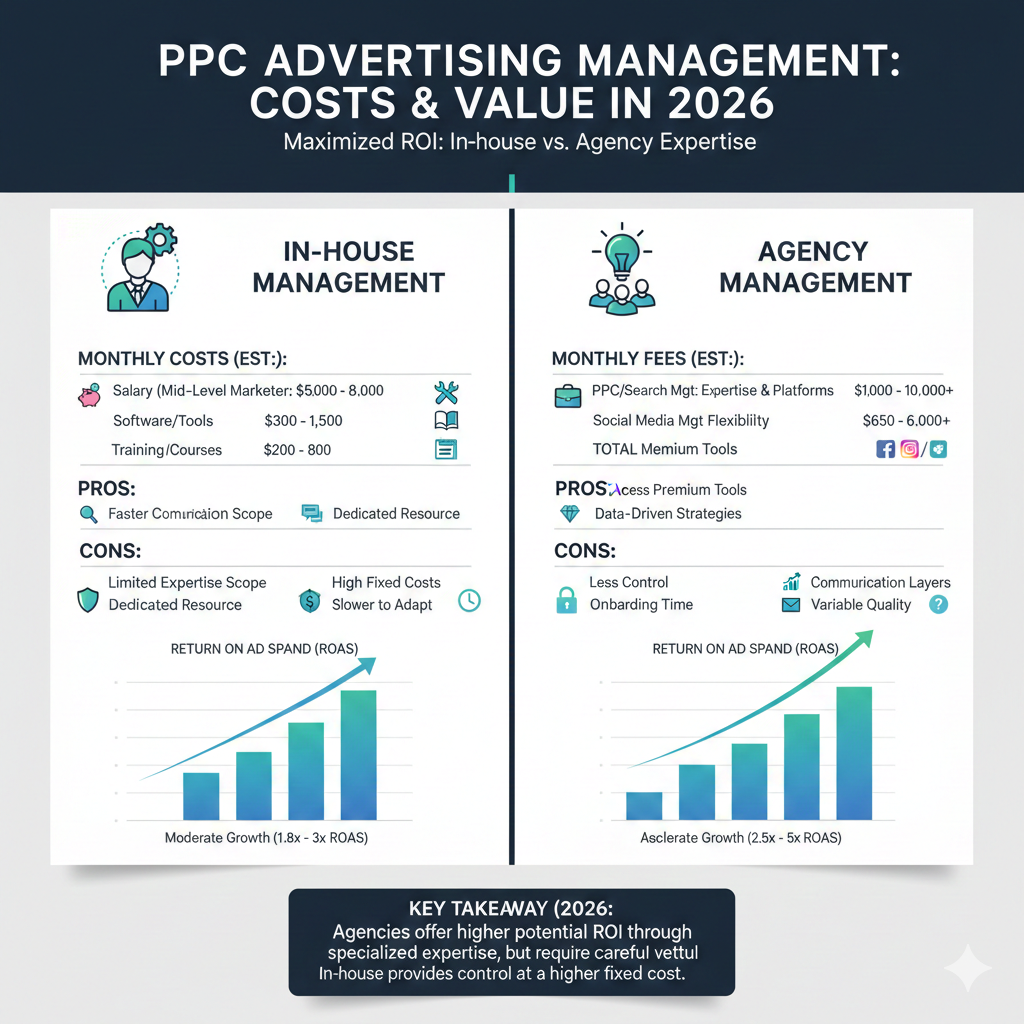
Agency Fees vs Internal Costs
Understanding when outsourcing makes sense — especially for complex multi-platform campaigns — ensures you aren’t paying premiums for underperformance.
Choosing the Right PPC Agency
Look for agencies with ecommerce PPC expertise, platform certifications, and proven case studies in your niche.
Transparency Matters
Clear reporting, KPI alignment, and performance reviews keep agency costs from becoming black holes.
Poor Site Experience Makes Every Ad Dollar Costlier
Ads only pay off if your landing page and website convert. Slow load times, confusing UX, or weak checkout flows mean you pay for clicks that never turn into conversions essentially increasing your effective marketing cost.
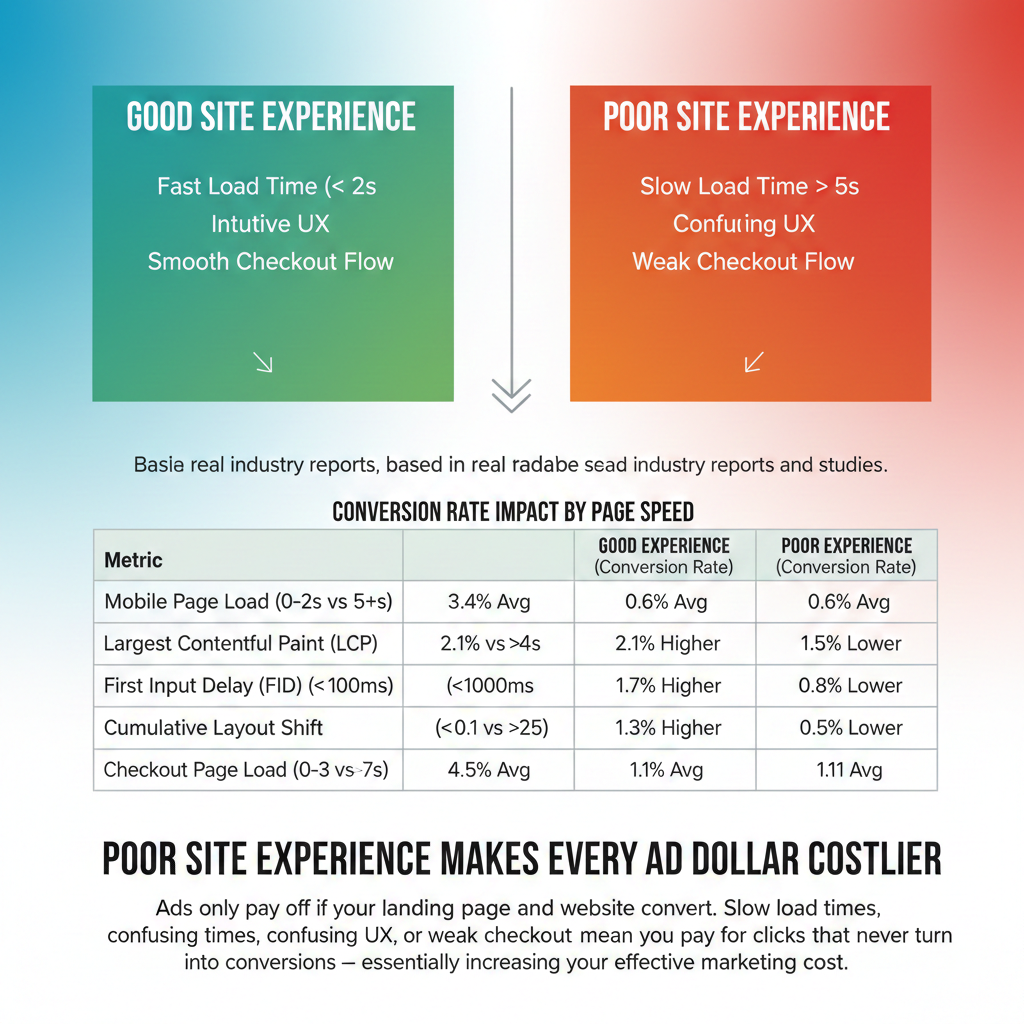
Comparison of conversion rate impact by page speed metrics.
Website Speed Optimization
Faster sites increase Quality Score for Google PPC and improve mobile engagement, reducing CPC pressure.
Mobile-First UX
More ecommerce traffic is mobile; if your site isn’t optimized, ad spend warms up but doesn’t convert.
Landing Page Relevance
Tailoring landing page content to the ad message boosts conversions and lowers cost per acquisition.
Product Photography & Creative Costs; Hidden Lift or Hidden Drain?
Creative assets like professional product photography, motion video, and social visual content are expensive up front but low-quality visuals directly increase CPC, reduce engagement, and lower conversion rates, making advertising feel costly even when media spend is optimized.
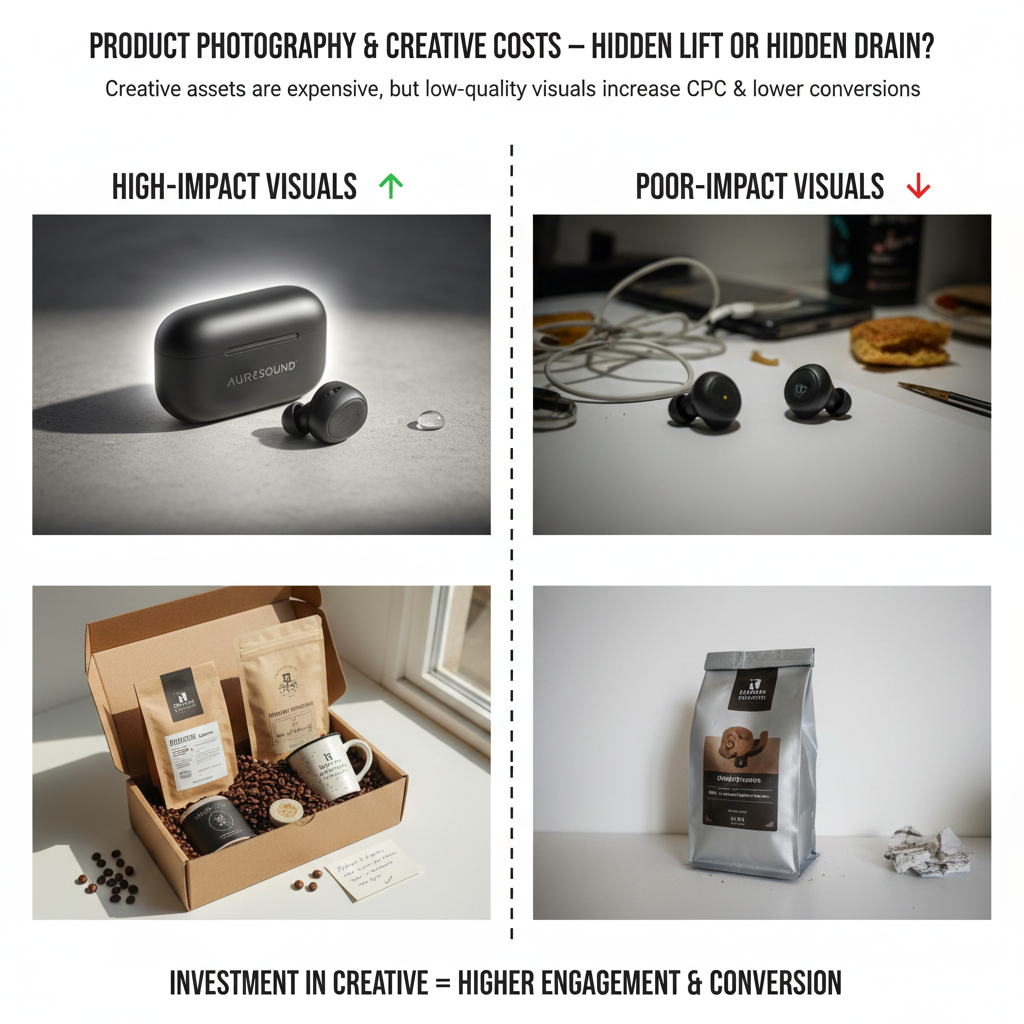
High-Quality Visuals Reduce CPC
Better visuals lead to stronger CTRs and better ad relevance scores.
AI vs Professional Photography
AI tools reduce cost but often underperform real product photography in high-value niches.
Visual Consistency Across Channels
Consistent creative across Google, Meta, TikTok, and Amazon builds trust and improves conversion rates.
Creative Quality vs Advertising Cost in 2026
More platforms mean more creative demand. Generic ads are dead — today’s consumer expects high-quality, native content.
Lower creative quality often leads to:
- Lower CTR
- Higher CPC
- Poor ROAS
Brands that invest heavily in varied creative testing often see better ad efficiency — even when costs are high.
Email Marketing Ecommerce Brands Ignore (But Shouldn’t)
Many brands treat email & retention as afterthoughts but retention channels reduce reliance on paid traffic.
Email and SMS costs are mostly fixed (platform subscriptions), and maximizing existing customers lowers overall acquisition costs by raising LTV (lifetime value).
Why Marketing Feels Expensive; It’s Often Efficiency, Not Cost
Many ecommerce brands feel “ads are expensive” when the real issue is marketing inefficiency poor product positioning, fragmented reporting, and weak funnel optimization make ad spend feel wasteful.
Lack of Clear Brand Positioning
Without a strong value proposition, every ad has higher acquisition costs.
Poor Conversion Tracking
If you don’t measure ROAS, CAC, LTV, or attribution properly, every dollar feels like a guess.
No Retention or Upsell Strategy
Ignoring email marketing, repeat purchase flows, and loyalty funnels increases dependence on paid ads.
What to Fix First When Your Ecommerce Ads Feel Too Expensive
Here’s a practical action list you can implement immediately:
- Fix tracking & attribution (ensure every channel reports correctly).
- Improve site speed & UX (this lowers CPC via better Quality Score).
- Focus budgets on high-profit products & high-intent keywords.
- Improve creative quality & testing cadence.
- Build first-party audiences (email, retargeting).
Ecommerce Marketing Cost Strategy for 2026 and Beyond
Paid ads will continue to be costly but a balanced, multi-channel approach that integrates SEO, email marketing, product photography, automation, and customer retention will protect margins and make your marketing feel invested, not expensive.
Focus on:
- First-party data
- Full-funnel strategy
- Owned assets
- Creative excellence
- Landing page effectiveness.
Spend smarter, not just more.
Ecommerce Automation Is Now a Cost-Control Tool
Marketing automation from segmentation to behavioral triggers helps reduce waste by sending the right message to the right people instead of paying for untargeted clicks.
Using automation means:
- Better retargeting,
- Smarter spend,
- Higher purchase rates.
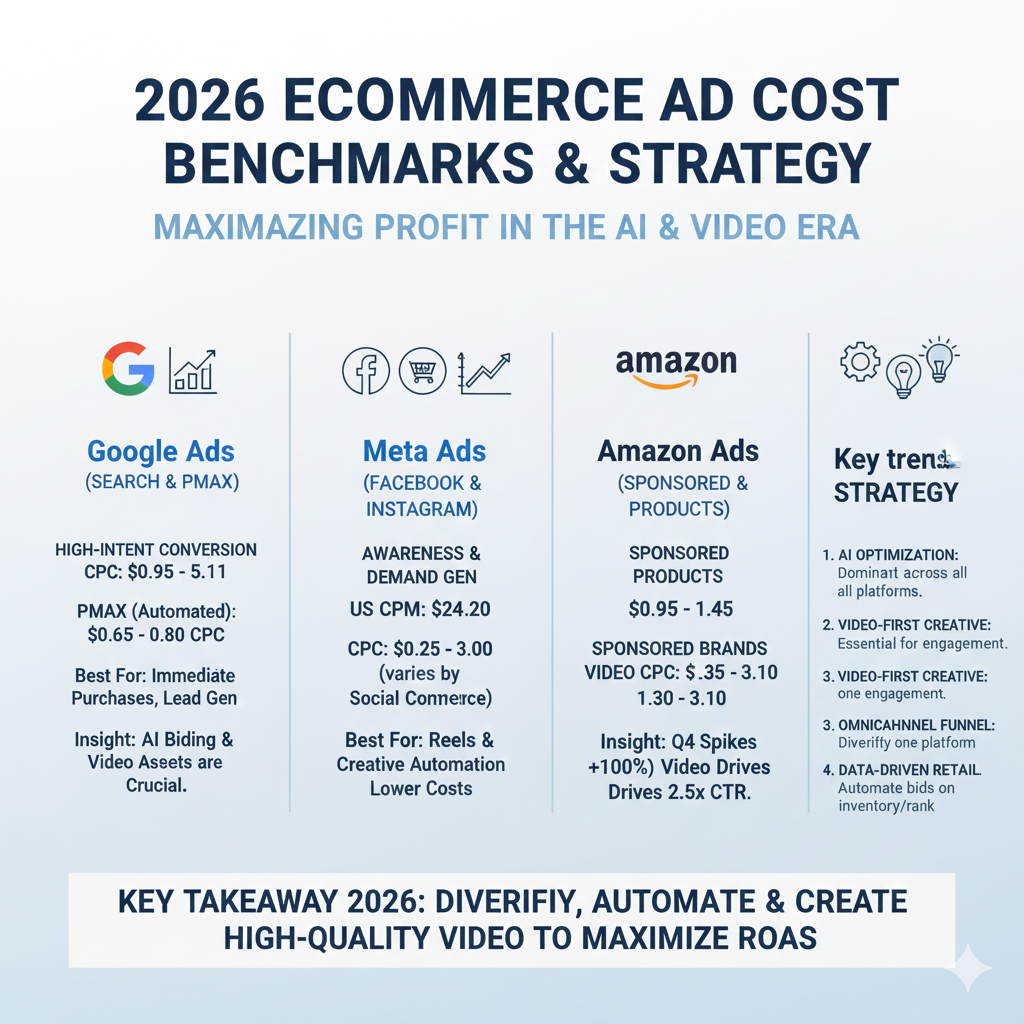
Channel comparison chart (Google vs Facebook vs Amazon vs TikTok)
Conclusion
Ecommerce marketing in 2026 isn’t broken it’s simply unforgiving. Rising ad costs on Google, Facebook, Amazon, and TikTok are the surface-level issue, but the real cost problem lies in inefficiencies: poor campaign structures, slow websites, weak landing pages, low-quality creative, and overdependence on paid traffic without retention systems. Brands that continue to treat advertising as a traffic-buying exercise will always feel squeezed by CPCs and CPMs.
The brands that win are the ones that optimize the full system from website performance and product presentation to audience data, automation, and post-click experience. When those fundamentals are strong, paid ads stop feeling like an expense and start functioning like a scalable investment. Fix the system, not just the ad spend, and ecommerce marketing in 2026 becomes sustainable, predictable, and profitable again.

