

What is Sales Funnels: Stages, Strategies, and Tools for Better Conversions in 2026
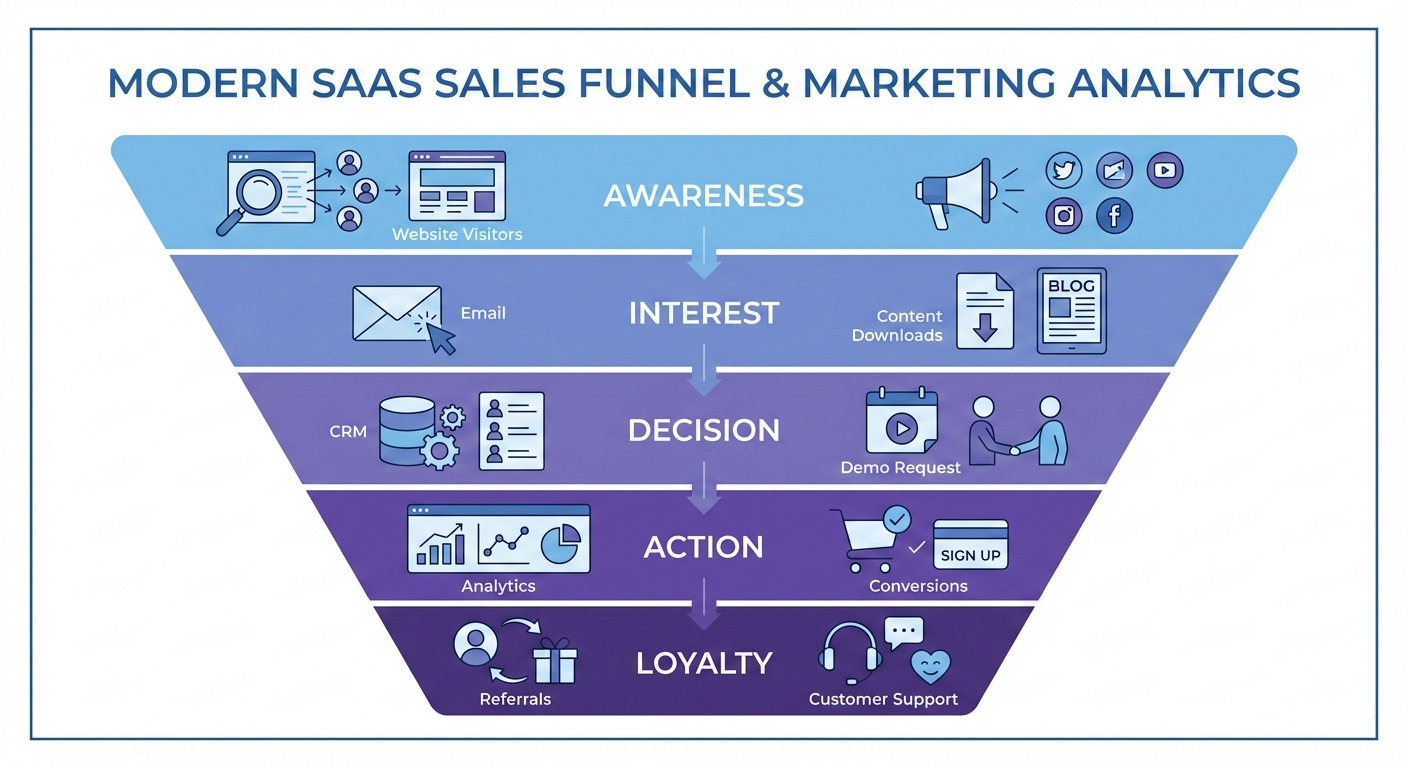
A sales funnel is a strategic framework that illustrates how potential customers transition from initial interest to final purchase. It visualizes the gradual narrowing of prospects as businesses engage, qualify, and convert them through purposeful marketing and sales actions. Each stage reflects a deeper level of customer intent, helping organizations focus on guiding leads efficiently toward conversion.
A well-designed sales funnel is more than just a marketing diagram it’s a psychology-based roadmap that helps businesses understand what motivates customers at every stage. By identifying where prospects lose interest or hesitate, you can fine-tune your message, improve engagement, and move leads smoothly toward a purchase. This data-driven process ensures that no potential customer slips through the cracks.
In this guide, you’ll learn everything you need to know about what a sales funnel is, how it works, and how to build one effectively. You’ll also discover which websites and tools are best for creating high-performing funnels, so you can confidently design systems that attract, nurture, and convert leads into loyal, long-term customers.
Why Sales Funnels Matter in Modern Marketing
1. Clear Customer Journey
A sales funnel maps the customer’s path from awareness to purchase, helping marketers understand and guide prospects effectively.
2. Better Marketing Efficiency
It highlights which channels and strategies perform best, allowing businesses to focus on what truly drives conversions.
3. Marketing and Sales Alignment
Funnels keep both teams aligned, ensuring smooth communication and a consistent experience for potential customers.
4. Personalized Engagement
By understanding where each lead stands, marketers can deliver tailored messages that build trust and encourage action.
5. Data-Driven Decisions
Funnels provide measurable insights that help refine marketing strategies and forecast future sales more accurately.
6. Stronger Customer Relationships
A well-managed funnel nurtures leads even after purchase, promoting loyalty and long-term customer retention.
Sales Funnel stages
Awareness
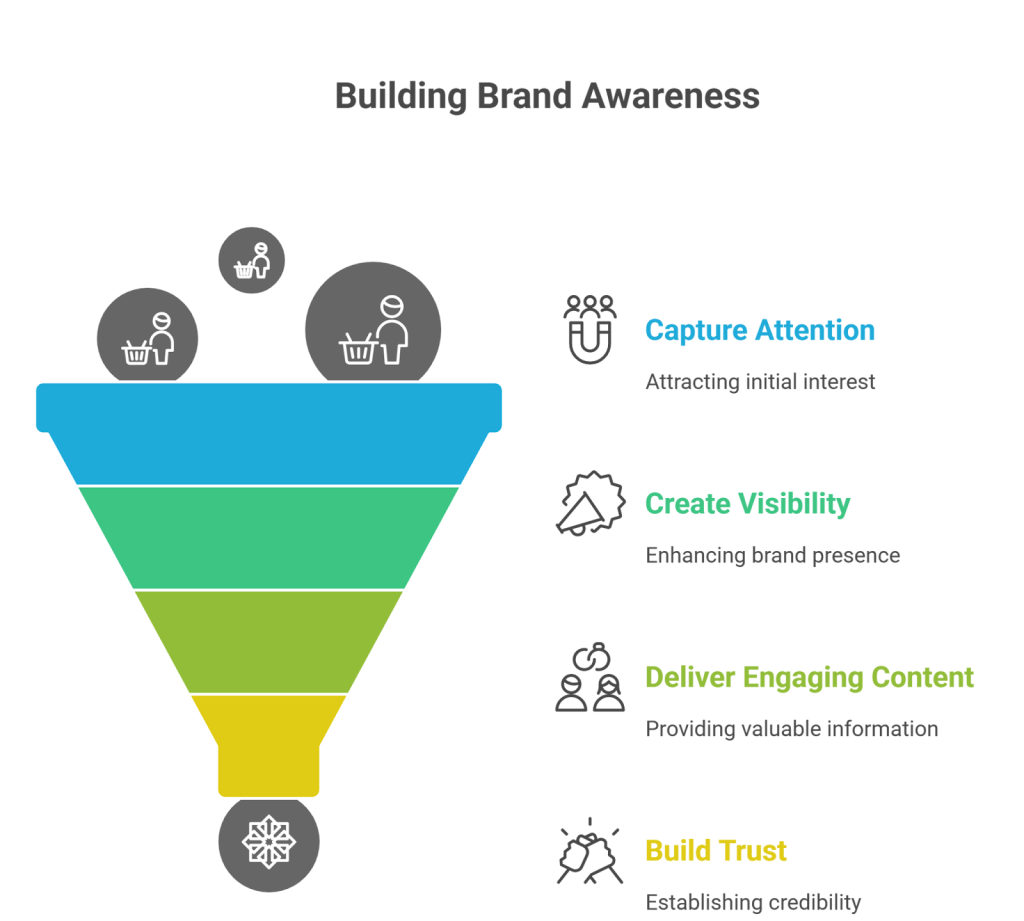
The awareness stage is the first step of the sales funnel, where potential customers are introduced to your brand and become aware of its existence. At this stage, people are not yet ready to buy but are starting to recognize that your products or services might offer solutions to their needs or challenges. The main goal here is to capture attention and create visibility through channels like social media, blogs, infographics, podcasts, online ads, or even word of mouth.
Building awareness requires delivering engaging and authentic content that highlights your brand’s value and purpose. By focusing on trust and providing helpful, relevant information, businesses can leave a strong first impression that sparks curiosity. This initial connection helps turn casual viewers into interested prospects who are more likely to explore your brand further in the next stages of the sales funnel.
Interest
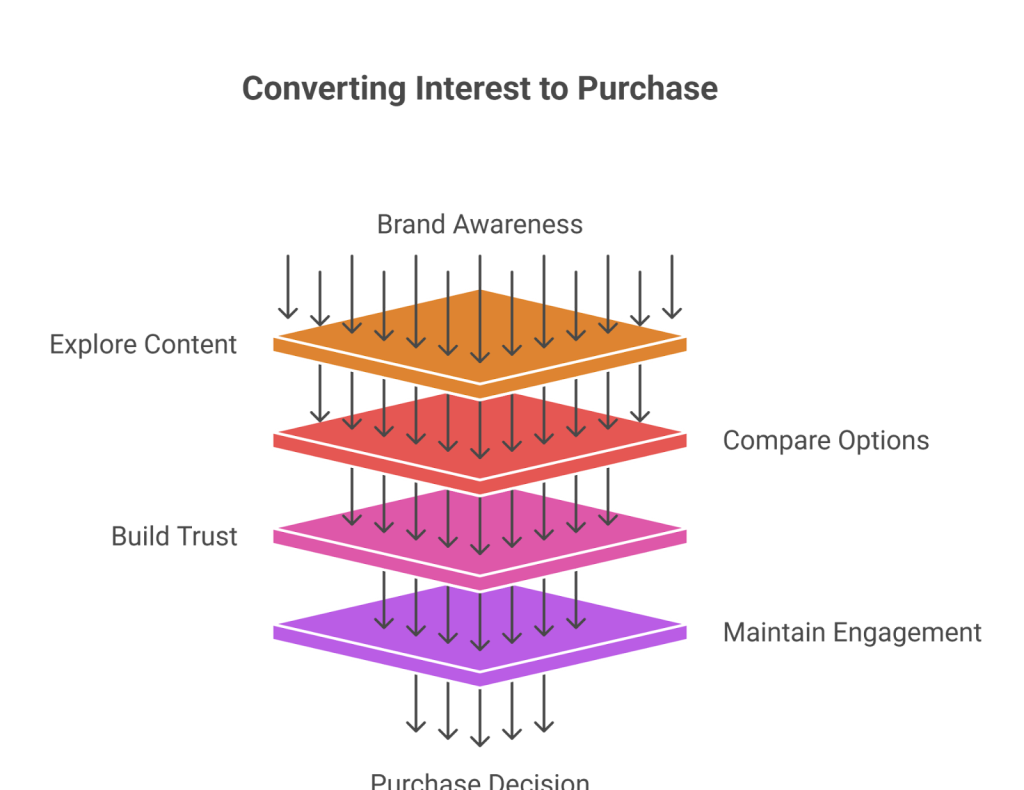
The interest stage is where potential customers move from simply knowing your brand to actively exploring it as a possible solution to their needs. They engage with informative content such as webinars, case studies, and emails to learn about your product’s features and benefits while comparing it with competitors. At this stage, the goal is to nurture curiosity, build trust, and show value through helpful, relevant information. Although prospects may express enthusiasm, not all will buy immediately—so maintaining engagement with personalized content and follow-ups is key to moving them closer to a purchase.
Decision
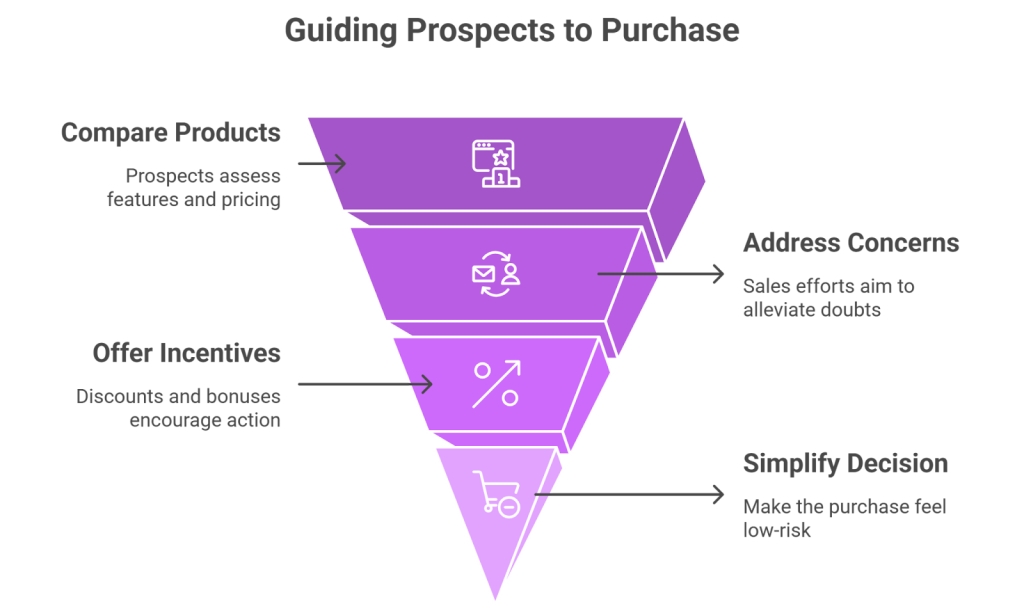
The decision stage is where prospects are close to making a purchase and carefully evaluate your product against competitors. They compare factors like pricing, features, reliability, and customer support to determine the best fit for their needs. At this point, clear communication, personalized assistance, and transparency are essential—sales pages, webinars, consultations, and follow-up emails can help address concerns and remove doubts. Offering incentives such as discounts, free trials, or bonuses can also encourage quick action. The goal here is to make the buying decision feel simple, low-risk, and valuable, guiding prospects confidently toward conversion.
Intent
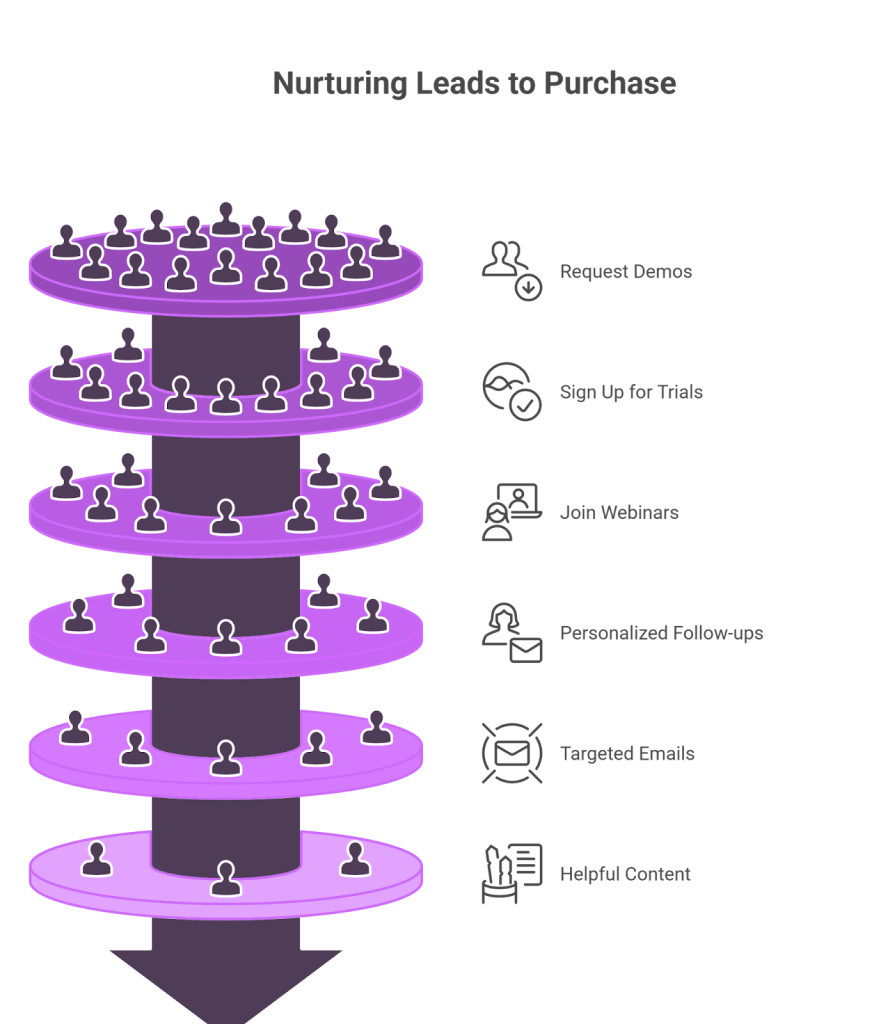
The intent stage is when potential customers show clear buying interest by requesting demos, signing up for trials, or joining webinars. They’re close to deciding and need reassurance that your product fits their needs. This stage focuses on nurturing leads through personalized follow-ups, targeted emails, and helpful content to keep your brand top of mind and guide them confidently toward purchase.
Evaluation and action
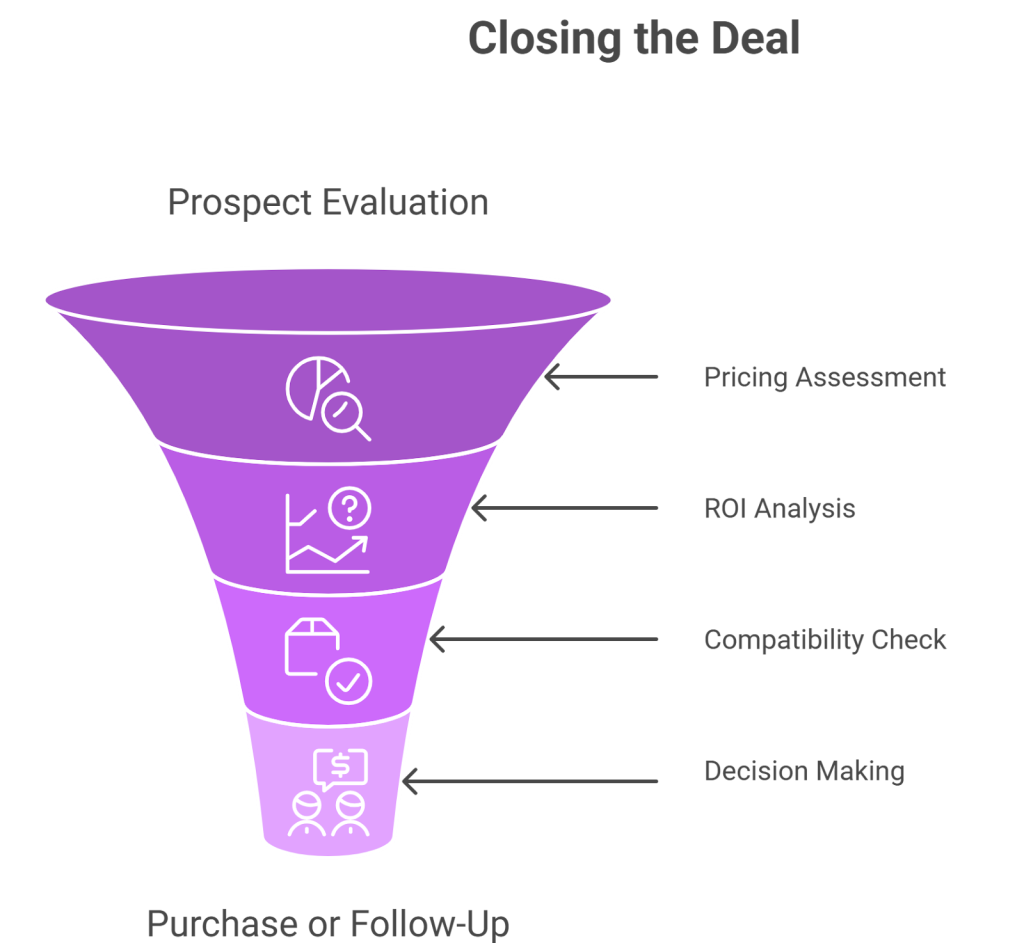
The evaluation and action stage is the final phase of the sales funnel, where prospects decide whether to make a purchase. They carefully assess factors like pricing, ROI, and compatibility before taking action. At this point, clear communication, simple next steps, and strong value propositions—such as limited-time offers or bonuses—can help close the deal. Even if a prospect doesn’t buy immediately, follow-up and nurture campaigns keep your brand top of mind for future opportunities.
Customer Loyalty and retention
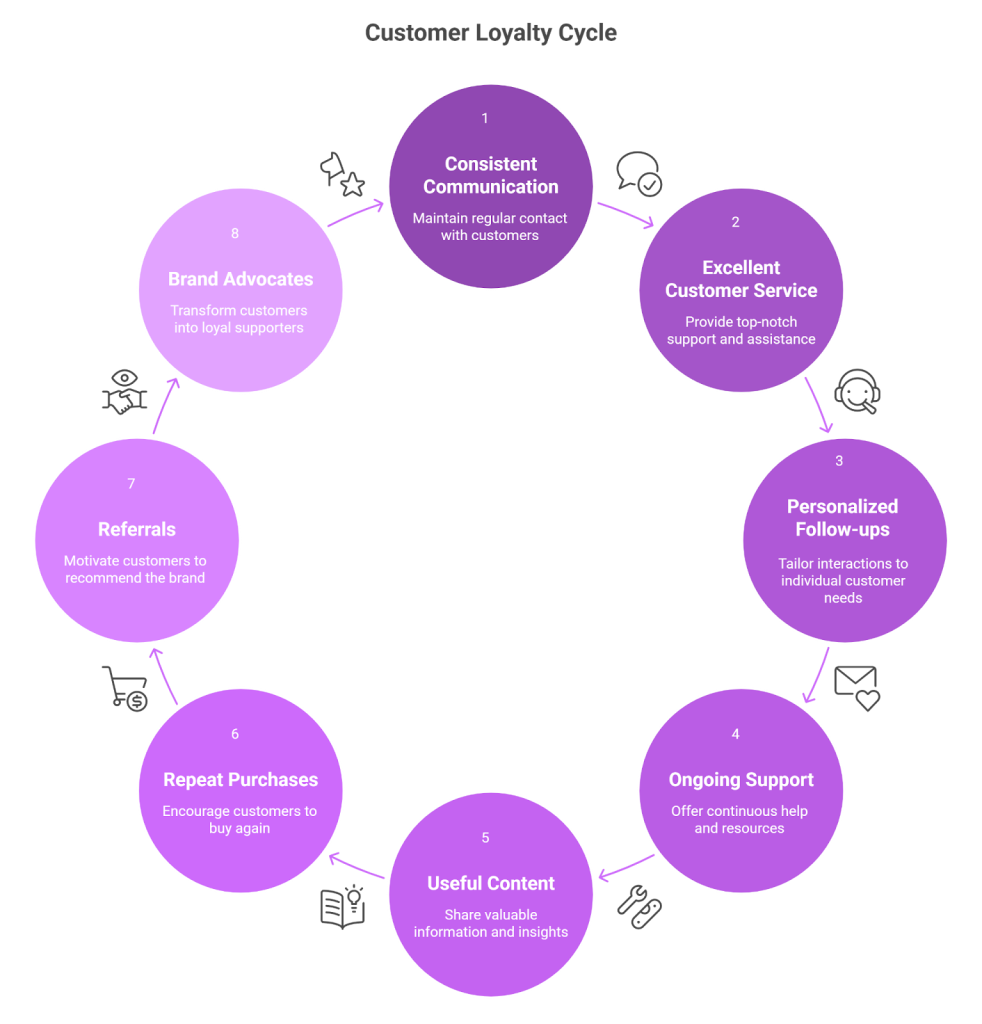
The customer loyalty and retention stage focuses on maintaining strong relationships after the purchase to ensure satisfaction and long-term engagement. Businesses can achieve this through consistent communication, excellent customer service, and personalized follow-ups like emails, special offers, and feedback surveys. Providing ongoing support and useful content helps customers feel valued and connected to the brand. This stage not only encourages repeat purchases and referrals but also strengthens future sales efforts by turning satisfied customers into loyal brand advocates.
📥Download the Professional Sales Funnel Tracker (Excel)
How Each Stage Supports the Buyer’s Journey
- Provides a clear roadmap: The sales funnel outlines each stage of the buyer’s journey—from awareness to retention—helping businesses understand how customers progress toward a purchase.
- Guides customer behavior: Each stage delivers tailored content and engagement strategies that match the customer’s needs and mindset.
- Aligns marketing and sales: It ensures both teams work together seamlessly, providing consistent messaging and smooth transitions between stages.
- Identifies and fixes drop-offs: By analyzing funnel data, businesses can detect where potential customers lose interest and take steps to improve those areas.
- Enhances customer relationships: Targeted communication at every phase builds trust and keeps customers engaged beyond the purchase.
- Boosts conversion and loyalty: By leading prospects step-by-step through their journey, the funnel increases sales success and long-term customer retention.
The Difference Between a Marketing Funnel and a Sales Funnel
Different objectives:
The marketing funnel focuses on attracting and engaging potential customers by building brand awareness, generating interest, and turning strangers into leads. In contrast, the sales funnel begins once those leads are qualified, guiding them toward making a purchase and building long-term relationships.
Marketing funnel purpose:
It targets a broad audience using strategies like content marketing, social media, advertising, and email campaigns to spark curiosity and showcase value.
Sales funnel purpose:
It works with prospects who already know the brand, providing personalized communication, demonstrations, and offers to close the deal.
Collaboration between both:
When marketing and sales funnels align, they create a seamless customer journey—from initial attraction to final purchase—boosting conversions and revenue.
How marketing funnels attract leads:
Through engaging content, compelling storytelling, and targeted outreach, marketing funnels draw in the right audience, nurture their interest, and prepare them for the sales process.
Lead Generation and Conversion Funnels
A lead generation funnel focuses on attracting and engaging potential customers who are new to your brand. It uses strategies like content marketing, social media, and lead magnets (e.g., free guides, webinars, or trials) to capture interest and collect contact information. Once these leads are qualified, they move into the conversion funnel, where the focus shifts toward guiding them to make a purchase through personalized communication, offers, and relationship-building.
Types of Lead Generation Funnels (B2B, B2C, Digital)
B2B Lead Generation Funnels:
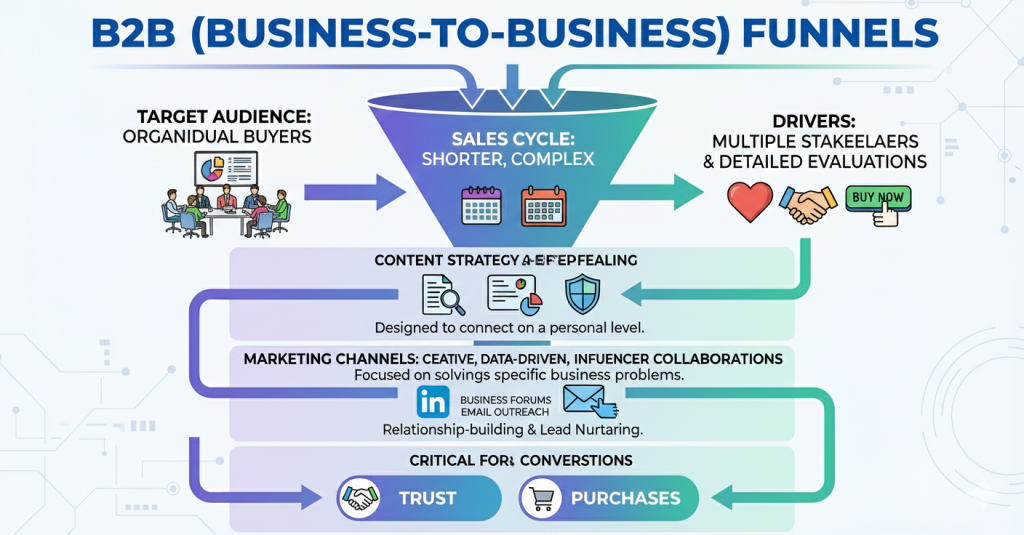
B2B (business-to-business) funnels target organizations and decision-makers rather than individual consumers. These funnels typically have longer sales cycles because decisions involve multiple stakeholders and detailed evaluations. The content is informative, data-driven, and professional, focusing on solving specific business problems.
Common channels include LinkedIn, business forums, and email outreach. Relationship-building and lead nurturing are critical, as trust and reliability drive conversions in this space.
B2C Lead Generation Funnels:
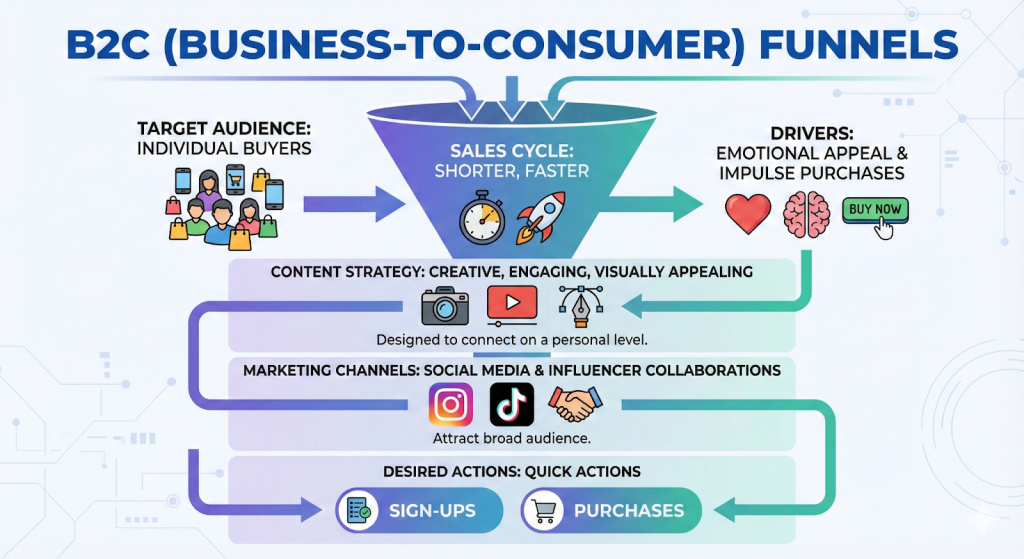
B2C (business-to-consumer) funnels target individual buyers and usually have shorter, faster sales cycles, driven by emotional appeal and impulse purchases. Content is creative, engaging, and visually appealing, designed to connect on a personal level.
Marketing often relies on social media platforms like Instagram, TikTok, and influencer collaborations to attract a broad audience and encourage quick actions such as sign-ups or purchases.
Digital Lead Generation Funnels:
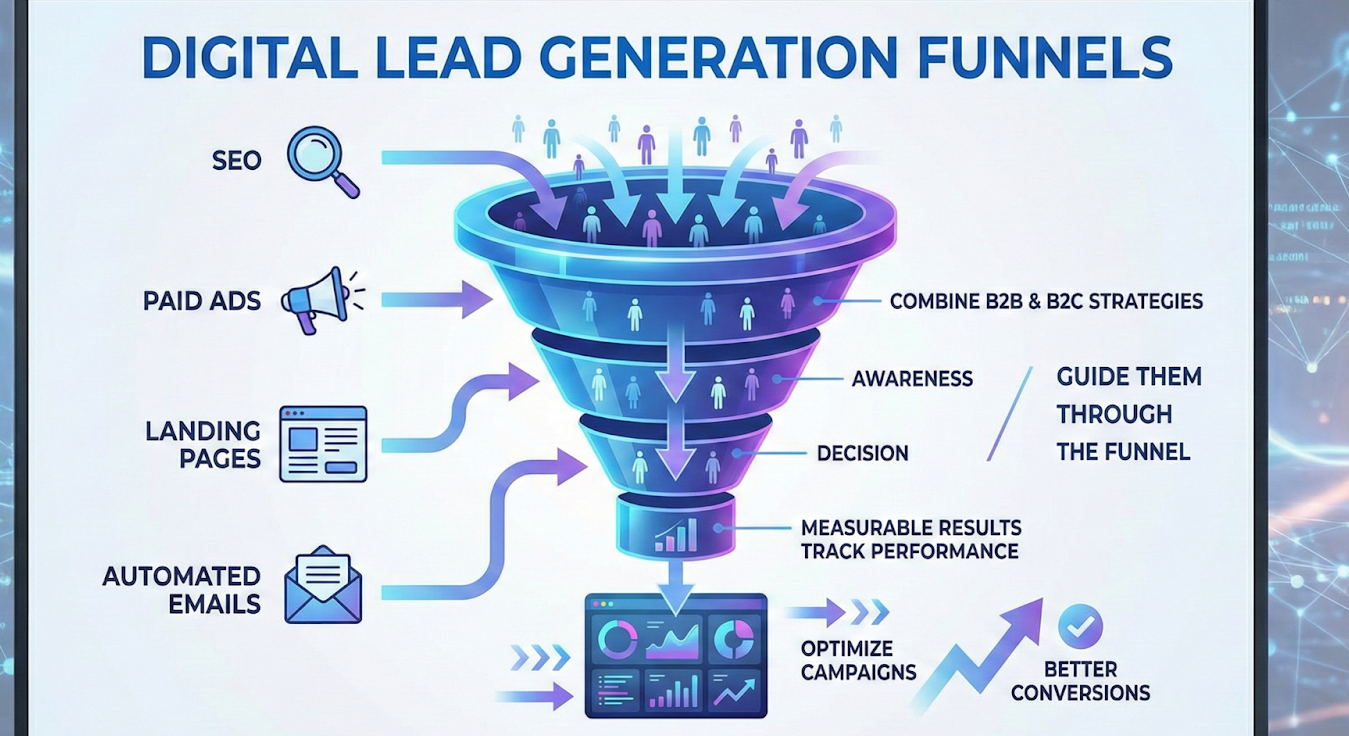
These combine both B2B and B2C strategies in online spaces using SEO, paid ads, landing pages, and automated emails to capture leads and guide them through the funnel. Digital funnels offer measurable results, helping businesses track performance and optimize campaigns for better conversions.
How Lead Nurturing Increases Conversion Rates
Lead nurturing helps maintain consistent engagement by delivering personalized, valuable, and timely content that builds trust with prospects throughout their journey. Using methods like automated email sequences, retargeting ads, and helpful resources, businesses can address customer concerns, strengthen relationships, and keep their brand top of mind. This ongoing engagement not only boosts conversion rates but also supports long-term customer loyalty and repeat business.
A lead generation funnel focuses on attracting and engaging potential customers who are new to your brand. It uses strategies like content marketing, social media, and lead magnets (e.g., free guides, webinars, or trials) to capture interest and collect contact information. Once these leads are qualified, they move into the conversion funnel, where the focus shifts toward guiding them to make a purchase through personalized communication, offers, and relationship-building.
The Role of CRM and Automation in Funnel Management
- A CRM system (“Customer Relationship Management” system) helps track each opportunity across every stage of the funnel—especially in B2B environments where multiple touch-points and stakeholders complicate the journey.
- CRM systems bring greater visibility into what’s happening in the funnel: which leads are at which stage, where they’re stalling, and how marketing efforts are feeding into sales.
- Automation built into CRMs can remove manual work, enforce consistent processes (e.g., lead scoring, follow-up tasks, segmentation), and help keep prospects moving through the funnel systematically.
CRM Integration and Pipeline Management
- Integrating CRM with marketing and sales tools ensures better alignment: data flows between teams, campaign sources are visible in the pipeline, and leads can be routed to the right rep at the right time.
- One of the core benefits: defining “opportunity stages” inside the CRM that mirror your funnel stages (awareness → interest → decision → action) so you can measure how long leads stay in each stage and where they drop out.
- Pipeline management via CRM means you can analyse metrics like win rate, average sales cycle length, lead-to-qualified conversion, and spot bottlenecks or under-performing reps.
Automating Sales and Marketing Workflows
- Automation in CRMs enables: social media tracking and interaction logging, lead scoring based on predefined criteria, automatic task assignment or follow-ups, and integration with email or marketing automation tools.
- During the decision and action stages, automation helps with deal tracking, forecasting, and the analysis of deals won vs lost. It can flag stagnant leads and help you decide what to do next.
- By automating these workflows, you reduce administrative burden, ensure a consistent customer experience, and keep the funnel moving rather than letting leads languish without attention.
Funnel Analytics and Performance Measurement
- Monitor key numbers at each step such as how many visitors become leads, leads become opportunities, and opportunities turn into customers to spot where prospects fall off.
- Critical metrics include conversion rate, average deal size, sales cycle length, and customer acquisition cost—these illuminate both efficiency and value.
- By tracking these metrics continuously you gain visibility into funnel health and can pinpoint friction points for improvement.
How Funnel Analysis Improves Conversion Rate
- Funnel analysis reveals exactly where people drop off in the journey, enabling targeted fixes (e.g., simplify steps, improve messaging, refine lead qualification).
- With clear insight into behavior patterns, businesses can optimize the flow from first contact to purchase thereby reducing wasted effort and increasing conversions.
Tools for Measuring Funnel Success
- A range of software tools exist that enable visualizing funnels, segmenting users, tracking drop-offs, and integrating with marketing/sales stacks.
- Key features to look for in tools include: custom event tracking, funnel path visualisation, segmentation ability, integration with CRM/marketing systems and real-time insights.
Once you understand how a sales funnel works, the next step is to create one using the right platform. Each tool below caters to different business needs — whether you’re running an eCommerce store, managing a marketing agency, or promoting a digital course. Here are detailed descriptions of key tools for measuring funnel success
- Userpilot: This platform offers in-app funnel analytics that let you define a series of events (e.g., “signed up” → “used feature” → “upgraded”), track drop-off points, and segment users by plan, date, geography or behavior. You can also run in-app surveys and use session recordings to understand why users pause in the funnel
- Pipedrive CRM: A sales-centric CRM with visual pipeline management. It helps you map out your funnel (leads → contacts → proposals → won), move deals through stages via drag-and-drop, and track metrics like average deal value, win rate and time to close. It also automates follow-ups, routing and reminders to keep leads moving.
- Adobe Journey Optimizer: An enterprise-level tool for orchestrating multi-channel customer journeys. It enables you to connect interactions across web, mobile, email, ads and use data to trigger actions tailored for funnel stages. Good for tracking how users flow across channels, and making sure your messaging is aligned with their funnel progress.
- Mixpanel: A behavioral analytics tool focused on tracking user journeys and funnel conversions, especially for product-led companies. It supports event-based tracking and cohort analysis, so you can answer questions like: “Which user path leads to a higher conversion rate?”
- Heap: This is another analytics platform that automatically captures user interactions and supports funnel visualizations without needing manual tagging for every event. It’s useful when you want a broad view of how users navigate and drop off.
Build an Effective Sales Funnel Strategy
- Start by defining a clear target audience and aligning your messaging with their problem and buying motivations.
- Map out each major phase your customer will pass through, from becoming aware of your brand to making a purchase decision and design content and touch-points specific to each stage.
- Ensure that your marketing and sales teams share a common definition of funnel stages and collaborate around the same metrics and hand-off points.
Steps to Create and Optimize Your Funnel
- Define key funnel stages: For instance, start with awareness, then consideration, then decision. Each stage should have measurable goals.
- Design content and offers for each stage: Use educational materials or lead magnets early, and more detailed product info, trials or demos closer to decision.
- Track progress, identify drop-offs and refine: Monitor where prospects abandon the funnel, implement changes like simplified steps or stronger calls to action, and repeat the cycle of improvement.
Common Mistakes to Avoid in Funnel Building
1. Ignoring Audience Insights
Many businesses build funnels without truly understanding their audience’s needs or behaviors. Without customer research and accurate buyer personas, the funnel messaging often fails to connect or convert effectively.
2. Overcomplicating the Funnel
A common mistake is trying to include too many steps, offers, or goals. When a funnel becomes cluttered, it confuses potential buyers and increases the chances of drop-offs. Keep your funnel streamlined and focused on one clear objective.
3. Not Aligning Content With Funnel Stages
Each stage of the buyer’s journey requires different content awareness, consideration, and decision. Using the same generic messaging across all stages leaves prospects unsure of what to do next.
4. Weak Calls to Action
Even well-designed funnels fail when calls to action (CTAs) are unclear or too complex. Overly long forms, too many clicks, or confusing next steps can discourage conversions.
5. Poor Tracking and Analytics
Without properly tracking conversions or analyzing drop-off points, businesses can’t see where prospects are leaving the funnel. A lack of data-driven optimization keeps the funnel from improving over time.
6. Neglecting Post-Purchase Stages
Many marketers stop nurturing customers after the sale. Ignoring retention, upselling, and advocacy means losing out on long-term value and repeat business.
Conclusion: Start Building Your Sales Funnel Today
Building an effective sales funnel isn’t just a marketing trend it’s a long-term growth strategy that helps you understand, attract, and convert your audience with purpose. Whether you’re promoting digital products, managing client campaigns, or growing an eCommerce brand, a well-structured funnel acts as your silent salesperson working 24/7 to turn prospects into paying customers.
By applying the principles discussed in this guide and using the recommended platforms, you can create a funnel that not only drives conversions but also builds strong, lasting relationships with your customers. Each stage from awareness to retention plays a vital role in shaping trust and loyalty, ensuring that your marketing efforts deliver real results.
In my upcoming blog tutorials, I’ll share practical, step-by-step guides, complete with examples, templates, and strategies to help you design and optimize your own sales funnels. Start by choosing a platform that suits your business, define your audience journey, and take the first step toward building a system that scales your success. Learn more…
Frequently Asked Questions About Sales Funnels
What is a sales funnel in simple terms?
A sales funnel is a step-by-step process that shows how potential customers move from discovering a brand to making a purchase.
What are the main stages of a sales funnel?
The main sales funnel stages are awareness, interest, decision, action, and customer retention.
What is the difference between a sales funnel and a marketing funnel?
A marketing funnel focuses on attracting and engaging leads, while a sales funnel focuses on converting qualified leads into customers.
Why is a sales funnel important for businesses?
A sales funnel helps businesses understand buyer behavior, improve conversions, and align marketing and sales efforts.
What tools are used to build a sales funnel?
Common sales funnel tools include CRM systems, analytics platforms, email automation tools, and funnel builders like HubSpot, Pipedrive, and Mixpanel.
Can small businesses use sales funnels?
Yes. Sales funnels are especially useful for small businesses because they help prioritize leads and maximize limited marketing resources.

